


Tag: Georgia

  • Proposed Southeast Gas Pipelines Face Growing Opposition Ahead of Federal Decision

    Proposed Southeast Gas Pipelines Face Growing Opposition Ahead of Federal Decision

    Proposed Southeast Gas Pipelines Face Growing Opposition Ahead of Federal Decision

    A pair of proposed natural gas pipelines stretching nearly 500 miles across Alabama, Georgia, and Mississippi is drawing renewed criticism as federal regulators prepare to decide whether the projects can move forward.

    The Federal Energy Regulatory Commission (FERC) has completed its final environmental impact statement and is expected to issue a decision before the end of the month.

    If approved, the pipelines, proposed by Kinder Morgan, would cross hundreds of waterways throughout the three states. The company says the projects are necessary to meet increasing energy demand across the Southeast.

    Environmental groups, however, argue the pipelines would place significant environmental and property burdens on local communities while serving energy needs beyond Alabama’s borders.

    Cindy Lowry, executive director of the Alabama Rivers Alliance, said many Alabama residents would shoulder the risks even though much of the anticipated demand comes from neighboring Georgia, where rapidly expanding data centers are driving electricity consumption.

    Critics also question whether additional fossil fuel infrastructure is needed, arguing that investments should instead focus on cleaner energy sources.

    Concerns extend beyond environmental impacts. Louie Miller, state director of the Sierra Club’s Mississippi Chapter, said property owners along the proposed route could lose land through the use of eminent domain if FERC authorizes the projects. He said the process allows pipeline companies to acquire private property even when landowners object.

    Miller also argued that federal oversight of pipeline safety and inspections has been weakened under the Trump administration. Lowry added that Alabama’s lack of statewide water-use regulations could leave communities more vulnerable to the water demands associated with large fossil fuel projects.

    The White House has defended its regulatory approach, saying the changes support its broader goal of expanding domestic energy production under its “energy dominance” agenda.

  • FBI Broadens Fulton County Election Probe With Nationwide Review of Records

    FBI Broadens Fulton County Election Probe With Nationwide Review of Records

    FBI Broadens Fulton County Election Probe With Nationwide Review of Records

    Federal investigators are expanding their review of Georgia’s 2020 election by bringing in intelligence analysts from FBI field offices across the country to help examine thousands of records connected to the agency’s investigation in Fulton County.

    The effort follows months of investigative activity surrounding the county’s 2020 election materials. Earlier this year, the FBI seized physical ballots, ballot images, voter rolls, and vote-tabulation records while executing a search warrant. A Fulton County judge later rejected the county’s request to have those materials returned, allowing investigators to retain the evidence as the case moves forward.

    To accelerate the review, the FBI has directed offices nationwide to temporarily assign analysts to Atlanta, according to a bureau memo obtained by CBS News. The Directorate of Intelligence described the investigation as one of Director Kash Patel’s priorities, though the memo did not specify the case by name. Sources familiar with the directive confirmed it relates to the Fulton County election investigation.

    The bureau hopes to assemble 260 analysts. Depending on the size of each field office, between three and eight analysts will be assigned to the project. Each analyst has been tasked with reviewing 708 records before a July 17 deadline. These specialists typically support investigations by analyzing records, reviewing subpoena returns, examining digital evidence, and conducting intelligence research.

    The investigation originated after a referral from Justice Department attorney Kurt Olsen, who previously participated in legal efforts challenging the outcome of the 2020 presidential election. Olsen is now involved in a separate Justice Department inquiry examining allegations of a broader conspiracy involving officials from the Obama and Biden administrations.

    President Donald Trump has continued to argue that widespread fraud influenced the outcome of Georgia’s 2020 election, including claims that ineligible ballots were counted in Fulton County. He has not presented evidence supporting those allegations. Biden’s 11,779-vote victory in Georgia was reaffirmed through both a statewide machine recount and a hand audit conducted by every county.

    MS Now first reported the FBI’s nationwide staffing request. The FBI declined to comment on the investigation.

  • Georgia Domestic Violence Shelters Face Cuts After Kemp Vetoes $13 Million in Funding

    Georgia Domestic Violence Shelters Face Cuts After Kemp Vetoes $13 Million in Funding

    Georgia Domestic Violence Programs Face Funding Shortfall After Kemp Veto

    Domestic violence and sexual assault programs across Georgia are bracing for cuts after Gov. Brian Kemp vetoed $13 million in new funding that lawmakers approved in the state budget, according to reporting from The Georgia Recorder.

    “Survivors are not going to be able to get everything they need from a reduced staff, and staff are going to burn out, and it’s going to be a vicious cycle,” said Jan Christiansen, executive director of the Georgia Coalition Against Domestic Violence.

    The funding included $9.4 million for domestic violence services and $3.3 million for sexual assault programs. Kemp cut the spending as part of broader vetoes aimed at offsetting a budget deficit tied to a state income tax package.

    Advocates say the loss comes as demand for services continues to grow. The Georgia Commission on Family Violence reported that certified domestic violence agencies answered more than 110,000 crisis calls in 2024, while reports of domestic violence increased 12% from the year before.

    In Valdosta, The Haven serves nine counties through its domestic violence shelter and sexual assault center. Executive Director Michelle Girtman told The Georgia Recorder that the organization already struggles to meet demand and often has to place survivors in hotels or refer them to programs in other counties when shelter space runs out.

    Without the additional state funding, advocates warn programs may be forced to reduce services, freeze hiring, or cut staff, leaving survivors with fewer options, especially in rural communities.

    “We’re 24 hours a day, seven days a week. We never close. There’s never a holiday,” Girtman said. “If you start cutting services to domestic violence and sexual assault, where do victims go?”

  • Georgia voters set statewide November matchups in key down-ballot races

    Georgia voters set statewide November matchups in key down-ballot races

    Georgia voters set statewide November matchups in key down-ballot races

    The ballots for Georgia lieutenant governor and secretary of state races were decided Tuesday as well as other statewide elections.

    State Sen. Josh McLaurin won Georgia’s Democratic runoff for lieutenant governor and will face State Sen. Greg Dolezal, who won the Republican runoff, in the November election. 

    McLaurin defeated former state Sen. Nabilah Parkes with nearly 55% of the vote, and Dolezal beat former state Sen. John Kennedy with 54% of the vote.

    Georgia state Rep. Tim Fleming and former Fulton County State Court Judge Penny Brown Reynolds won their respective primaries to win a spot on the November ballot.

    Fleming defeated Vernon Jones on the Republican ballot with 65% of the vote while Reynolds led the Democratic primary with 63% of the vote.

    Former Georgia state Rep. Keisha Sean Waites won the Democratic primary for Commissioner of Insurance and will face the incumbent, Commissioner John King in November.

    After barely missing the 50% minimum for the May primary election, state School Superintendent Richard Woods won the Republican primary for a chance to be re-elected to his seat. He is running against Democrat Lydia Powell.

    Nikki Porcher won the Democratic primary for Commissioner of Labor. Current Commissioner of Labor Bárbara Rivera Holmes won the nomination for the Republican ticket in the May primary.

    Republican Josh Tolbert will face Democrat Shelia Edwards in the race for the Georgia Public Service Commission District 5. 

  • Genetic testing may help personalize mental health treatment in Georgia

    Genetic testing may help personalize mental health treatment in Georgia

    Genetic testing may help personalize mental health treatment in Georgia

    A national survey by Myriad Genetics found that many people with depression or anxiety would feel more confident with a personalized mental health plan instead of a one-size-fits-all approach.

    Crystal Nelson, a board-certified psychiatrist in Newnan, said treatment does not have to work that way especially when using pharmacogenetic testing. Nelson has been using the testing for 11 years.

    “It’s a simple cheek swab test that any clinician can order on their patient,” Nelson explained. “It will give them some information back telling them how the patient’s genes could impact the outcomes to the medication.”

    In Georgia, 1.8 million adults struggle with a mental health condition, which is a 31% increase since 2023, according to the National Alliance on Mental Illness-Georgia.

    Nelson said genetic testing helps narrow down the list of 60 potential medications to as few as three, depending on the results. One of Nelson’s patients had tried multiple medications without success.

    “She was on medications that were not working, and when we did the GeneSight test, it suggested some medications that I would’ve never gone to,” Nelson recounted. “I put the lady on this medication, and she went into remission on a very low dose. I was able to take her from two medications down to one.”

    Critics say the evidence for genetic testing is still developing and changing, but a 2025 study showed promising results. The study found that testing improved symptom-free remission by 41%.

    Nelson encourages patients to ask their providers about testing. 

  • Georgia lawmakers return for special session on maps, ballots, taxes

    Georgia lawmakers return for special session on maps, ballots, taxes

    Georgia lawmakers return for special session on maps, ballots, taxes

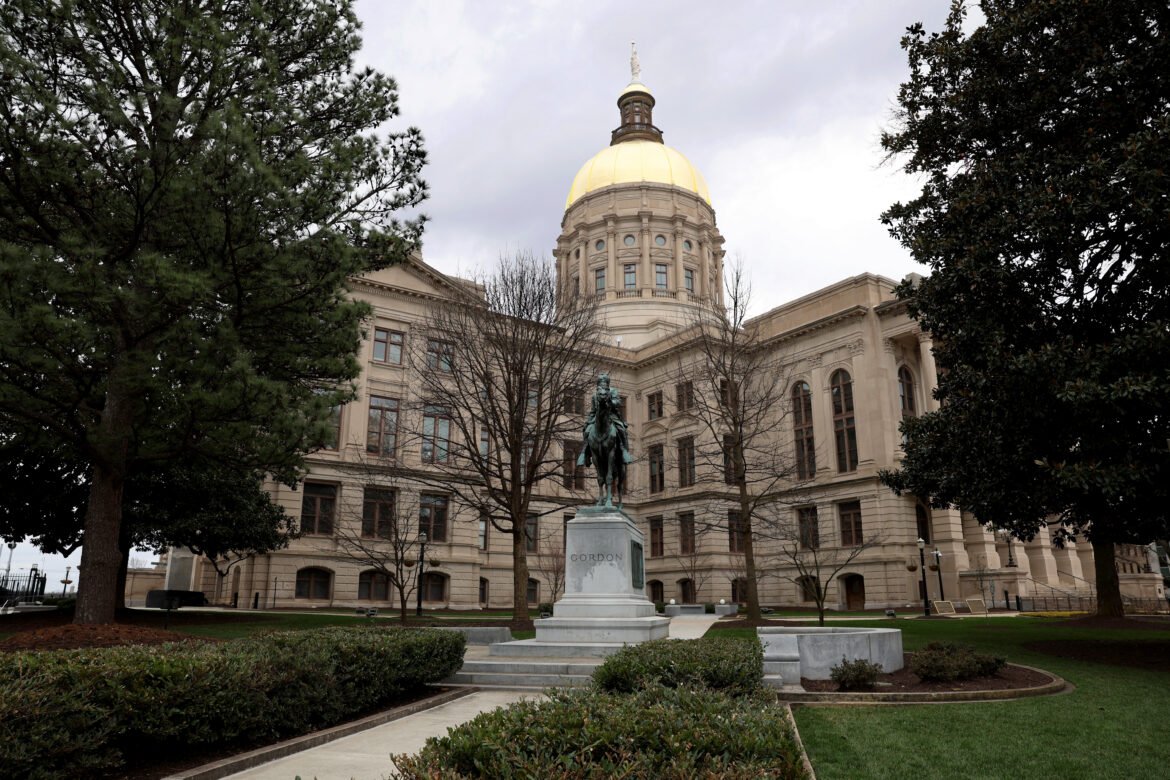
    Today Georgia lawmakers head to the State Capitol for a special session that will likely shape how votes are counted in the upcoming elections and the state’s political map.

    Kemp called the session for legislators to consider redrawing district maps ahead of the 2028 election cycle after the U.S. Supreme Court essentially gutted the Voting Rights Act. 

    However,  the session was likely to be called anyway to address a July 1 deadline that requires the elimination of QR codes on Georgia ballots. Measures to deal with the looming deadline failed to pass during the 2026 legislative session, and state election officials have given conflicting guidance as to how localities should comply with the law.

    In addition, Kemp recently amended his proclamation for the special session to include language that will allow lawmakers to consider adding local referendums on the November ballot to create homestead tax exemptions.

    Although redistricting will likely dominate the political debate, lawmakers will have plenty to discuss when they reconvene today.

  • Trump, Kemp make key endorsements ahead of Georgia primary runoffs

    Trump, Kemp make key endorsements ahead of Georgia primary runoffs

    Trump, Kemp make key endorsements ahead of Georgia primary runoffs

    The polls will open at 7 a.m. Tuesday for the runoff elections for Georgia’s primaries. Leading up to the election that will determine the tickets for federal and state races, some candidates received last minute endorsements.

    President Donald Trump endorsed U.S. Rep. Mike Collins on Sunday for U.S. Senate in the race against Derek Dooley on the Republican ticket, according to the Atlanta Journal-Constitution. 

    Gov. Brian Kemp endorsed Dooley and has spent months supporting his campaign, according to WABE. 

    “We have a diverse state, but it ain’t 98% of the time with Joe Biden, and that is where Ossoff has been,” Kemp said at a campaigning event in Alpharetta. “We need a political outsider to stay on offense against his record and not have to defend their own.”

    Dooley argues that Democrats have been attacking him more than Collins because they know he is the tougher candidate to beat.

    Kemp also announced Sunday that he has endorsed Lt. Gov. Burt Jones over Rick Jackson for the 2026 governor’s race. Kemp made a post on social media announcing his endorsement.

    “Burt knows how to get things done as governor because that’s what he has done as a state senator and as your Lt. Governor,” Kemp said in the post on X. “The hardest part about being governor is making decisions that aren’t always popular or easy. I’ve worked alongside Burt for nearly fifteen years and I’m confident that he will always put hardworking Georgians first.”

    The polls will remain open until 7 p.m. Tuesday night. 

  • Fulton officials warn seniors about scams during World Cup in Atlanta

    Fulton officials warn seniors about scams during World Cup in Atlanta

    Fulton officials warn seniors about scams during World Cup in Atlanta

    Fulton County leaders are trying to raise awareness about a wave of scams targeting seniors as the FIFA World Cup is underway in Atlanta.

    Fulton County District Attorney Fani Willis held an event Thursday to bring together law enforcement partners to help seniors and their families recognize and avoid fraud.

    “Our seniors are the best of us,” Willis said at the event. “They are the people that are going to try to help us, and sometimes, because they don’t like conflict and they have that foundation, it makes them a good target.”

    As other crimes have declined, scams targeting seniors have remained consistent with the most common scheme being phone calls threatening arrest unless payment is made immediately. Another scam includes calls claiming that money was wrongly deposited into a senior’s bank account.

    Willis encouraged seniors to use the acronym SAFE to avoid falling victim to scams. Stop, Assess the situation, reach out to a Family member or Friend, and Exit the situation.

    “There aren’t any emergencies where you have to react right then and there,” Willis said. “If you take that moment, you usually can think through the situation and realize something about this is not right.”

  • Emory leads $15 million study on Superfund sites and Coastal Georgia health

    Emory leads $15 million study on Superfund sites and Coastal Georgia health

    Emory leads $15 million study on Superfund sites and Coastal Georgia health

    Emory University will lead a research project to explore the link between Superfund sites and the health of Glynn County residents.

    Superfund sites refer to industrial areas that the federal government has designated as highly contaminated and requiring monitoring and ongoing cleanup.

    The five-year, $15 million study is funded through the National Institutes of Environmental Health and was awarded after Emory researchers completed a pilot study in 2023 in the county, which is home to Brunswick and St. George’s Island.

    The research will be conducted in partnership with university faculty from the University of Georgia, Georgia Institute of Technology, Morehouse School of Medicine, Spelman College, and Texas Tech University.

    Dana Barr is the director of the new Superfund Research Center and professor of environmental health at Emory University’s Rollins School of Public Health.

    She told GPB News that it is important to understand whether exposure to toxic chemicals is an ongoing issue.

    “We can prevent further exposure, and then we can try to understand what these chemicals are doing inside their bodies to them,” Barr said. “More than anything, I think the people in the area really want answers.” 

    Healthy Coastal Neighborhoods, a group dedicated to promoting healthy neighborhoods, and Emory researchers will hold a community meeting at 6:30 p.m. on June 24 at Howard Coffin Park to share updates about the project.

  • Federal judge declines to block Georgia’s voter line food and water ban

    Federal judge declines to block Georgia’s voter line food and water ban

    Federal judge declines to block Georgia’s voter line food and water ban

    Georgia has a ban on people giving food and water to voters while waiting in line at their polling place. The law was challenged in court by a coalition of voting rights groups, churches and other organizations.

    On Thursday, a federal judge denied a request to block the law.

    The reason given by U.S. District Judge J.P. Boulee was the defendants listed in the case. Boulee determined that the list of defendants could not “enforce criminal laws or leverage criminal penalties.” The list included Gov. Brian Kemp, Secretary of State Brad Raffensperger and individual members of the Georgia State Election Board.

    Boulee argued that only state and county prosecutors could do that job.

    “Aside from a passing mention that Defendants can refer violations of election law to a district attorney, Plaintiffs have offered no evidence to establish that Defendants play any role in prosecuting violations of the Food, Drink and Gift Ban,” Boulee wrote. “Certainly, Plaintiffs have not presented evidence which would show that Defendants can control a district attorney’s decision to charge a crime if a violation of the law occurs.”

    The Election Integrity Act went into effect in Georgia in 2021. In addition to the gift ban, it included other election rules, such as limits on absentee ballot drop boxes, new ID requirements for absentee ballots and changes to early voting.

    Critics of the gift ban argue that offering food and water to voters standing in line represents a protected form of civic engagement while supporters says it limits attempts to influence voters in line.