


Tag: Georgia news

  • Kemp orders state agencies to hold spending steady amid tax cuts

    Kemp orders state agencies to hold spending steady amid tax cuts

    Kemp orders state agencies to hold spending steady amid tax cuts

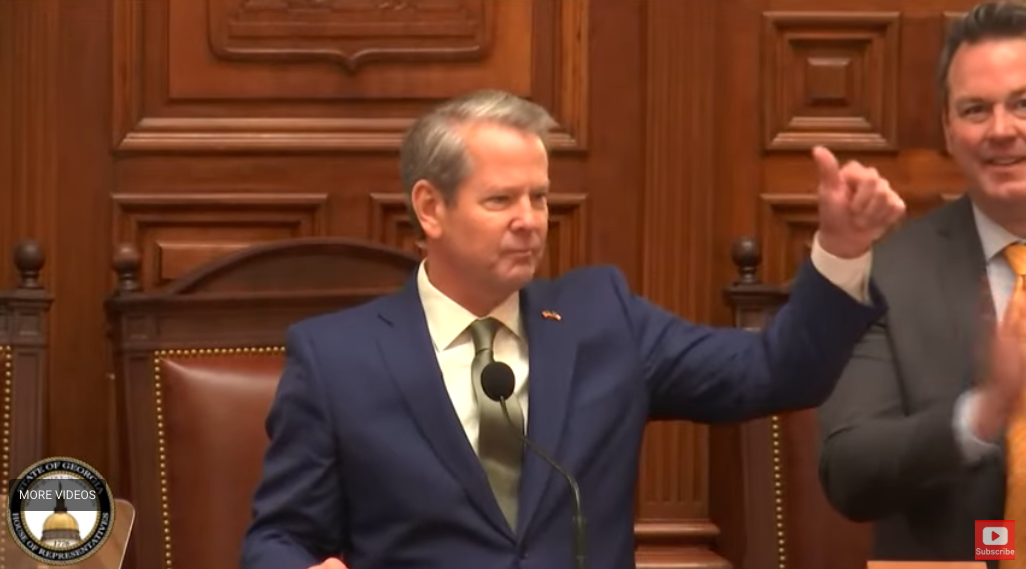
    Gov. Brian Kemp is directing state agencies to keep their spending at stable levels as Kemp prepares to leave office and as the state reduces income taxes.

    A memo was sent in July instructing agencies to maintain their current spending levels. Richard Dunn, the director of the Georgia Office of Planning and Budget, sent the memo saying the move was necessary to ensure development in the state continues while also accommodating for the recent reduction in the state’s income tax.

    “To sustain these achievements while implementing historic tax relief for our citizens, responsible fiscal management principles require that we continue to live within our means,” the memo reads.

    Republican state Sen. Blake Tillery, chairman of the Georgia Senate Appropriations Committee and a large supporter of eliminating the state income tax, told Atlanta News First that the state is coming down from a pandemic-era high.

    “All that sugar high has finally bled out of the system, and you’re seeing a return to normal on state revenues,” he said.

    Democrat state Sen. Reshaun Kemp told Atlanta News First that freezing the budget impacts education and health care the most.

    “While we continue to see hospitals close and students that are languishing in their education, we should not be cutting or freezing spending,” he said.

    Kemp signed the Georgia Economic Growth and Tax Relief Act in May to reduce Georgia’s state income tax from 5.19% to 4.99%. The law allows for an annual reduction of 0.125% until the rate reaches 3.99% as well as increased the standard deduction for single and married filers.

    To offset the cost of the decrease and the recent suspension of the gas tax, Kemp cut $300 million from the state’s $36.6 billion budget, including from agencies like the Department of Community Health and the Department of Behavioral Health and Developmental Disabilities.

    Dunn wrote that agencies should prepare for additional cuts by making contingency plans for the worst-case scenario.

  • Atlanta funds teen-led effort to expand safe spaces for young people

    Atlanta funds teen-led effort to expand safe spaces for young people

    Atlanta funds teen-led effort to expand safe spaces for young people

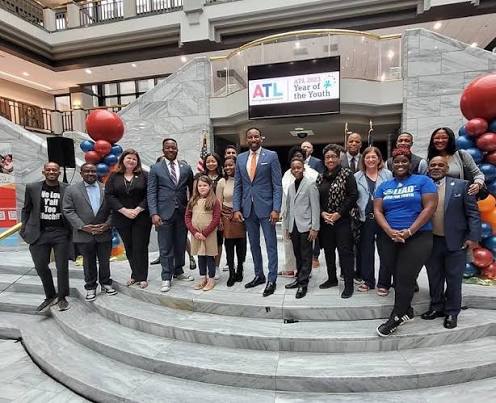
    Atlanta is turning to young people to help create more places where teenagers can gather safely, awarding $50,000 to a pair of local student leaders behind a youth-focused community organization.

    The funding will support 17-year-olds Devin Mitchell and Haile Irving, founders of The Spot, an Atlanta-based organization dedicated to promoting community safety and providing positive opportunities for teens. Working alongside city officials, the two will help organize pop-up events and gather feedback from young people about the types of spaces and activities they want to see.

    The initiative comes as cities across metro Atlanta continue looking for ways to respond to large gatherings organized through social media. Rather than limiting where teenagers can spend their time, many young people say communities should invest in more places designed for them.

    Marietta brothers Yinka and Deji Karunwi said they often run out of options for places to hang out, leaving them to rotate through the same activities or stay home. They said destinations such as skate parks, bowling alleys and Decatur Square offer positive environments where teens can spend time with friends.

    The brothers also emphasized that young people should be able to enjoy public spaces as long as they are respectful of others. City leaders hope the partnership with The Spot will encourage more youth-driven programming while giving teenagers a direct role in shaping future community events.


  • Federal investigation finds safety failures fueled catastrophic BioLab fire in Conyers

    Federal investigation finds safety failures fueled catastrophic BioLab fire in Conyers

    Federal investigation finds safety failures fueled catastrophic BioLab fire in Conyers

    A federal investigation has concluded that long-standing maintenance failures and unsafe chemical storage practices led to the massive BioLab fire that blanketed parts of Rockdale County in toxic smoke nearly two years ago.

    The final report from the U.S. Chemical Safety and Hazard Investigation Board found the Conyers facility was storing approximately 14 million pounds of reactive pool treatment chemicals, more than double the amount originally anticipated for the warehouse. Investigators said the volume of chemicals, combined with deteriorating fire suppression equipment, created conditions that allowed a small equipment failure to escalate into a major industrial disaster.

    According to the board, chlorine gases released by the stored chemicals gradually corroded the warehouse’s sprinkler system over several years. Moisture in the building reacted with the fumes to form hydrochloric acid, damaging metal components designed to control fires.

    A routine inspection in late 2023 documented more than 1,100 corroded sprinkler heads, but the system remained in service.

    When a corroded sprinkler fitting failed on Sept. 29, 2024, water reached incompatible chemicals, triggering a powerful chemical reaction. The resulting fire released toxic gases and thick orange-and-black smoke, forcing thousands of residents to shelter in place as emergency crews worked to contain the blaze.

    Chemical Safety Board Chair Steve Owens said the warehouse lacked adequate safeguards for the amount of hazardous material being stored. He also said the way the chemical bags were stacked limited firefighters’ ability to stop the incident before it spread throughout the facility.

    The board is urging federal regulators to expand oversight of reactive pool chemicals to help prevent similar incidents.

    BioLab, a manufacturer of pool and spa treatment products and a subsidiary of KIK Consumer Products, said it is reviewing the investigation’s findings. The company said it fully cooperated with investigators, has completed cleanup of the property, and established programs to assist nearby residents and businesses affected by the fire.

    The company previously announced it would not reopen the Conyers plant. Separate from the federal investigation, the U.S. Department of Labor cited BioLab for six workplace safety violations and proposed more than $60,000 in penalties.

  • Levi’s Call issued for missing 13-year-old believed abducted in Baxley

    Levi’s Call issued for missing 13-year-old believed abducted in Baxley

    Levi’s Call issued for missing 13-year-old believed abducted in Baxley

    Georgia authorities are asking for the public’s help after issuing a Levi’s Call for a 13-year-old girl believed to have been abducted and to be in extreme danger.

    The Georgia Bureau of Investigation says Layla Alexis Nubian Carter disappeared around 1 a.m. Thursday from James Drive in Baxley.

    A Levi’s Call is Georgia’s statewide emergency alert system used in cases involving missing children who investigators believe face an immediate threat of serious bodily harm or death.

    Investigators believe the teen may be traveling with 32-year-old Giavannie Alexis Carter in a gray Jeep Renegade displaying Georgia license plate SLU9322. The National Center for Missing and Exploited Children identified Giavannie Carter as the suspected abductor, while the GBI says Layla is believed to be in extreme danger.

    Layla is described as 5 feet, 2 inches tall, weighing about 100 pounds, with blonde braided hair and brown eyes. She was last seen wearing a T-shirt and pajama bottoms.

    Giavannie Carter is described as 5 feet, 2 inches tall and approximately 140 pounds. Authorities say she was last seen wearing a gray-and-white tank top, black shorts and a black baseball cap with blue trim.

    Authorities are asking anyone who spots the vehicle, recognizes either individual or has information about Layla’s whereabouts not to approach them, but instead call 911 immediately or contact the Baxley Police Department at (912) 367-8305.

  • Georgia ethics commission fines Frontline Policy over lobbying, disclosure violations

    Georgia ethics commission fines Frontline Policy over lobbying, disclosure violations

    Georgia ethics commission fines Frontline Policy over lobbying, disclosure violations

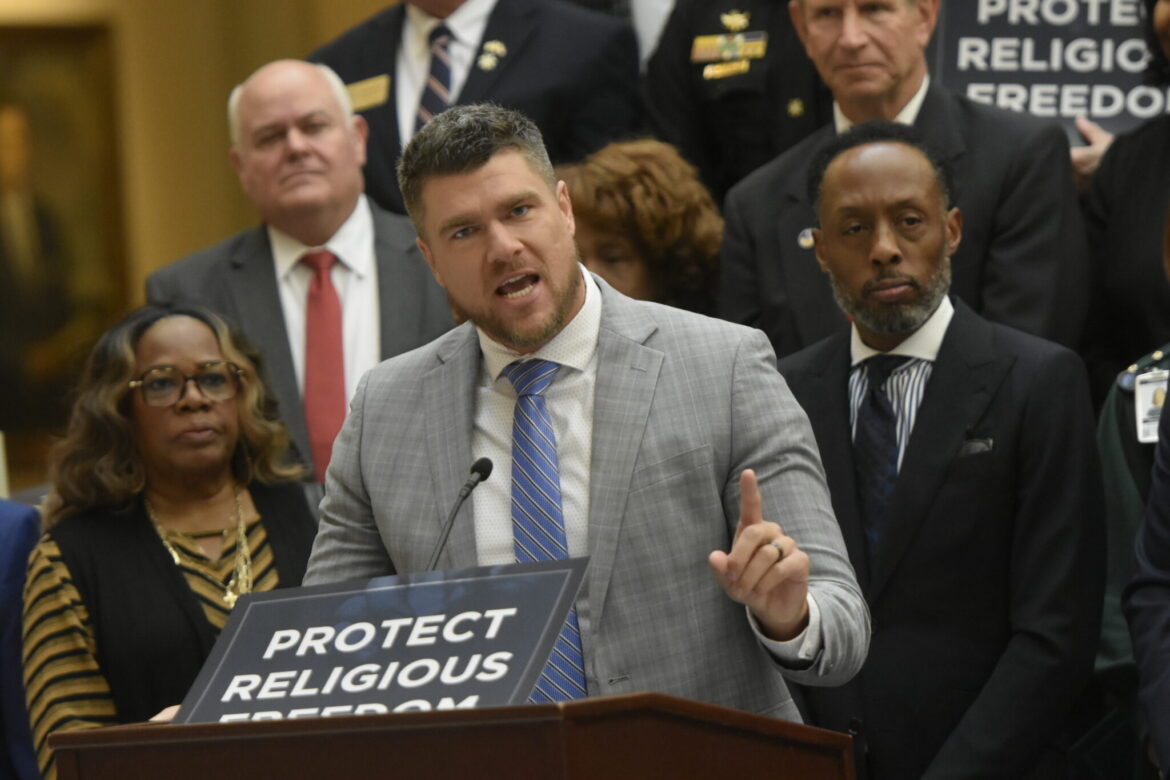
    State ethics officials say one of Georgia’s most influential conservative advocacy organizations violated lobbying and campaign finance laws, resulting in $17,500 in civil penalties.

    The Georgia Recorder reports that The Georgia State Ethics Commission determined that Frontline Policy’s advocacy arm failed to properly register for lobbying activities and did not submit required reports disclosing more than $380,000 in political contributions during the 2024 election cycle.

    Commission Executive Director David Emadi said the penalties rank among the largest the agency has issued for lobbying-related violations. He also said repeat offenses could eventually lead to more serious consequences, including the suspension of an organization’s ability to lobby lawmakers.

    The case originated from a complaint filed by attorney Bryan Sells, who accused Frontline of several ethics violations, including improper campaign coordination, missing advertising disclosures and incomplete reporting. After its investigation, the commission concluded that only the allegations involving campaign finance reports from the 2024 election cycle and lobbying registration were supported by the evidence.

    A June 24 consent order assessed a $10,000 fine after investigators found Frontline failed to report more than $380,000 in contributions. A separate consent order imposed another $7,500 penalty after the commission identified 24 instances in which Frontline Policy Action conducted lobbying activities without registering.

    According to ethics officials, Frontline Policy Action had no registered lobbyists during 2023 or 2024 despite sending mass emails and publishing social media posts urging supporters to contact state legislators. Commissioners determined those communications qualified as lobbying under Georgia law.

    Sells said the outcome was less about punishing an organization than ensuring transparency in Georgia politics. He argued that voters have a right to know how advocacy groups raise and spend money while attempting to influence elected officials.

    Frontline founder and president Cole Muzio said the organization disagrees with any suggestion of intentional misconduct. In a statement, he characterized the reporting issues as clerical mistakes that have since been corrected and said Frontline remains committed to complying with state ethics laws.

    Frontline, founded in 2021, describes itself as a Christian ministry and conservative public policy organization. The group has supported several high-profile measures at the Georgia Capitol, including legislation restricting transgender girls from participating in girls’ school sports, the Religious Freedom Restoration Act and Georgia’s private school voucher program.

    According to the Georgia Recorder, the organization has faced ethics sanctions before. According to the Southern Poverty Law Center, Frontline was previously fined more than $4,000 for separate lobbying law violations.

  • Atlanta Farm Plants Seeds of Self-Sufficiency

    Atlanta Farm Plants Seeds of Self-Sufficiency

    Atlanta Farm Plants Seeds of Self-Sufficiency

    A College Park nonprofit is showing that a garden can do more than produce vegetables. At Metro Atlanta Urban Farm, agriculture is being used to improve food access, support veterans, train future farmers and bring communities together.

    Founded nearly two decades ago, the five-acre farm teaches sustainable growing practices that participants can replicate at home. Instead of relying on synthetic chemicals, the nonprofit emphasizes heirloom seeds, compost and natural growing methods, giving families practical tools to reduce grocery costs and grow fresh produce themselves.

    Founder Bobby Wilson said the organization’s vision has always been about people first.

    “We understood the therapeutic value of agriculture, of growing food,” Wilson said, adding that the goal is to improve the quality of life in communities that have historically had fewer resources.

    That mission recently expanded through a partnership with the Wounded Warrior Project. Veterans from multiple military branches now meet at the farm every other week to plant, harvest and learn gardening skills they can continue after returning home. Each participant leaves with vegetables, seeds and planter bags to start growing their own food.

    For combat veteran and Wounded Warrior Project Peer Leader Teak Wilson, the program has provided more than practical gardening experience. She said spending time outdoors and working alongside other veterans has reduced stress, strengthened community ties and offered a sense of belonging. As grocery prices continue to climb, she said the ability to grow food at home has become an added financial benefit.

    The farm is also investing in the next generation of agricultural professionals. Joshua Good, an agricultural business student at Alcorn State University, is spending eight weeks at Metro Atlanta Urban Farm learning hands-on skills such as operating tractors, building garden beds and working with different soil types—experience he said goes beyond what can be learned in a classroom.

  • DeKalb educator has spent nearly three decades building a summer tradition of inclusion

    DeKalb educator has spent nearly three decades building a summer tradition of inclusion

    DeKalb educator has spent nearly three decades building a summer tradition of inclusion

    For most teachers, summer marks a break from the classroom. For Timothy Strozier, it’s another opportunity to work with children.

    The DeKalb County School District exceptional education teacher has devoted the past 27 summers to FOCUS Camp Hollywood, where children and teens with physical and developmental disabilities spend their days exploring recreation, theater, cooking, arts and other activities in an inclusive environment.

    Strozier says the camp is driven by one guiding principle: ensuring every child can participate. Whether a camper is nonverbal or has a physical disability, he modifies activities so everyone can join in rather than watch from the sidelines.

    That philosophy has made a lasting impression on families who return each year. Fourteen-year-old Olivia Frey, who has cerebral palsy, has been attending the camp since she was about 3 years old. She says the annual tradition gives her more than just summer activities—it reconnects her with friends she’s grown up alongside.

    Frey also says Strozier has become one of the camp’s most recognizable figures. She credits him with making every camper feel known, pointing to something as simple as remembering names without checking a badge and naturally adjusting his communication style to meet each child’s needs.

    Strozier says his perspective comes from home. Growing up with a mother who was paralyzed after a stroke showed him that a disability should never define a person’s potential. Those experiences continue to influence how he teaches, encouraging him to focus on each child’s strengths instead of their limitations.

    That mindset carries into every summer at Camp Hollywood. Before each activity, Strozier says he asks himself what kind of experience he would want if his own child were attending. The answer, he says, is always the same: a place where children feel safe, accepted and included.

    Over the course of nearly three decades, Strozier has watched campers grow into adults, with some still recognizing him years after leaving the program. Those unexpected reunions, he says, are a reminder that the relationships built at camp can last long after summer ends.

  • Supreme Court ruling reinforces Georgia’s ban on transgender athletes in girls’ school sports

    Supreme Court ruling reinforces Georgia’s ban on transgender athletes in girls’ school sports

    Supreme Court ruling reinforces Georgia’s ban on transgender athletes in girls’ school sports

    Georgia’s law barring transgender girls and women from competing on female sports teams in public schools is likely to face stronger legal footing after a U.S. Supreme Court decision issued Tuesday.

    According to Rough Draft Atlanta, the nation’s highest court upheld separate laws in Idaho and West Virginia that restrict participation on girls’ and women’s school athletic teams based on sex assigned at birth. The decision is expected to influence similar laws already enacted in more than two dozen states, including Georgia.

    The legal challenges were brought by two transgender students: Lindsay Hecox, a former college athlete in Idaho, and Becky Pepper-Jackson, a West Virginia high school student who wanted to compete on her school’s girls’ track team. Both previously won favorable rulings in lower federal courts, where judges concluded the state laws likely violated constitutional protections and Title IX. The Supreme Court reversed those decisions.

    The court’s conservative majority concluded that the Idaho and West Virginia laws do not violate either the Equal Protection Clause of the Constitution or Title IX, the federal law that prohibits sex discrimination in education.

    According to Rough Draft Atlanta, the ruling continues a series of Supreme Court decisions allowing states to enforce laws that limit certain rights and protections for transgender people.

    Georgia enacted its own restrictions after the General Assembly approved legislation signed by Gov. Brian Kemp prohibiting transgender girls and women from participating on female athletic teams at public elementary schools, high schools and colleges. Advocates on both sides of the issue expect Tuesday’s decision to play a significant role in future legal challenges involving similar state laws.

  • Social Security cuts could shrink benefits for Georgia retirees

    Social Security cuts could shrink benefits for Georgia retirees

    Social Security cuts could shrink benefits for Georgia retirees

    Millions of Americans who depend on Social Security could see their monthly checks reduced by up to 22% beginning in 2032 if lawmakers fail to address the program’s finances, according to the latest report from Social Security’s trustees. The projection has left many retirees in Georgia concerned about the future of the 90-year-old program, which also serves as a major economic driver across the state.

    About one in five Americans receives Social Security benefits, making the program a financial lifeline for millions, said Bill Sweeney, AARP’s senior vice president of government affairs. For many retirees and people who are no longer able to work, those monthly payments represent their primary source of income. Sweeney also cited recent polling showing that eight in 10 Americans age 50 and older oppose reducing Social Security benefits to strengthen the program, unlike changes approved by Congress in 1983.

    “When prices continue to rise and people are already feeling financial pressure, cutting Social Security benefits is the last thing lawmakers should be considering,” Sweeney said. “Instead, they should strengthen the program’s finances without reducing the benefits people have earned.”

    More than 1.9 million Georgians receive Social Security benefits, and the program helps keep roughly 515,000 older adults in the state from living in poverty. Georgia also exempts Social Security income from state taxes, making it a more attractive retirement destination than states that tax those benefits.

    Meanwhile, Sen. Bernie Sanders, I-Vermont, has again introduced legislation that would increase Social Security benefits by $2,400 annually while extending the program’s financial stability for the next 75 years. His proposal would eliminate the payroll tax cap, noting that billionaires currently pay the same amount into Social Security as workers earning $185,000 each year.

    Although Social Security remains one of the federal government’s most widely supported programs, demographic shifts are putting increasing pressure on its finances. Lower birth rates and declining immigration have reduced the number of workers paying payroll taxes, contributing to the projected funding gap. According to the Center for Economic and Policy Research, the shortfall is projected to cost less than half of the increase in military spending proposed in the Trump administration’s 2027 budget.

    Sweeney encouraged Georgia voters to press candidates for Congress on how they plan to protect the program before November’s midterm elections.

    “The people we elect will ultimately decide how Social Security is addressed,” Sweeney said. “Voters should be asking every candidate what their plan is and whether their ideas match what Americans want for the future of Social Security.”

  • Marjorie Taylor Greene Says She’s Done Supporting the Republican Party

    Marjorie Taylor Greene Says She’s Done Supporting the Republican Party

    Marjorie Taylor Greene Breaks With Republican Party, Says Conservatives Are ‘Fed Up’

    Former Georgia congresswoman Marjorie Taylor Greene says she no longer identifies with the Republican Party, arguing that GOP leaders have lost touch with the voters who put them in office.

    Greene’s latest criticism came in two social media posts this week, where she described herself as politically homeless despite remaining firmly conservative.

    “I’m way too conservative to be a Democrat and too honest and free thinking to be a Republican,” Greene wrote on X. “But I’m 1000% a proud American!!!”

    The former Georgia lawmaker suggested she is not alone in her frustration. Responding to comments from political commentator Tucker Carlson, Greene wrote, “There is A LOT of us that are absolutely fed up and will not support a party that betrays its voters and country.”

    She added, “That does not mean we are turning into Democrats either. But we are DONE with the America LAST Republican Party.”

    The posts reflect Greene’s growing distance from a political movement she once helped champion. After resigning from Congress earlier this year, the former representative for Georgia’s 14th District has increasingly challenged both Republican leadership and President Donald Trump.

    Greene has argued that Republicans have failed to follow through on key promises and said the MAGA coalition is no longer unified. Speaking at a Ron Paul Institute event in May, she said Trump publicly calling her a “traitor” led to threats against her family. Greene also contended that conservatives should begin thinking about a political future beyond Trump.

    The White House has rejected Greene’s characterization of recent events, but her comments underscore a widening divide within the Republican coalition.