


Tag: Georgia news

  • Kemp calls special session on Georgia maps, ballot deadline fix

    Kemp calls special session on Georgia maps, ballot deadline fix

    Kemp calls special session on Georgia maps, ballot deadline fix

    Gov. Brian Kemp signed a proclamation Wednesday calling the state legislature in for a special session to consider redrawing the state’s political maps and finding a solution to a looming election deadline.

    The Georgia General Assembly will reconvene on June 17, the day after the runoff elections for the May primaries. The session will focus on redrawing district maps after a U.S. Supreme Court ruling essentially gutted the Voting Rights Act.

    Any maps redrawn during the special session will not take effect until the 2028 election cycle.

    Republicans have praised the decision while Democrats issue warnings about discrimination.

    Josh McKoon, Georgia Republican Party Chairman, told Fox 5 that the maps need to change.

    “The Supreme Court decision is clear,” he said. “That we can’t have these racially gerrymandered maps anymore. They’re illegal.”

    State Sen. Nikki Merritt, chair of the Georgia Legislative Black Caucus, said at a news conference Thursday that the decision is an attempt to silence Black voters.

    “This is an attack on metro Atlanta; this is an attack on Black political power,” she said. “This is an attack on the growing coalition of voters reshaping Georgia’s future.”

    State Sen. Harold Jones II, the Minority Leader in the Senate, told Fox 5 the decision is a direct attack on minority communities.

    “We are now in a fight that we thought was over, we thought was fought in the 50s and 60s, and that’s our fight,” he said.

    Before the Supreme Court decision, a special session was likely to be called to address a July 1 deadline that requires the elimination of QR codes on Georgia ballots. Because the state legislature did not address the issue during the 2026 legislative session, election officials have no guidance as to how to comply with the 2024 law.

  • Georgia programs receive Lumina grant to streamline path to college

    Georgia programs receive Lumina grant to streamline path to college

    Georgia programs receive Lumina grant to streamline path to college

    Two Georgia institutions have been chosen to receive part of $3.5 million in funding from the Lumina Foundation to simplify the journey from high school to college.

    The Governor’s Office of Student Achievement was chosen to receive funds to integrate financial aid, career exploration and transcript movement into Georgia MATCH, and the Technical College System of Georgia was chosen to receive funds to pilot a streamlined credit for prior learning process tied to admissions.

    Scot Lingrell, project lead for Georgia’s Career Navigator Project, said the “GEORGIA MATCH” program has already helped many high school seniors.

    “There’s a group of students that didn’t ever go to college,” Lingrell said. “Now we expect because they’re going to be admitted so directly that more students will go to college because now they know very quickly and they know the institutions for which they’re eligible.”

    Enrollment in the program has grown tremendously over the past three years, outpacing the national average. The program covers all 22 technical colleges and 22 of 25 universities in Georgia.

    Melanie Heath is the strategy director of access for the Lumina Foundation. She said the traditional application process to colleges and universities creates unnecessary pressure for students.

    “I think that’s a hugely problematic piece of how we in higher ed have designed this college-going journey,” Heath said. “Not only does it impact how students feel about college through all of this uncertainty, I think it also impacts how they feel about their future and what’s possible for them.”

    In the U.S., 28 states are implementing admissions redesigns impacting nearly 70% of high school students, and Georgia’s agencies are two of 10 new grantees in Lumina’s 2026 cohort.

  • South Georgia wildfires threaten 1,000 homes, destroy dozens

    South Georgia wildfires threaten 1,000 homes, destroy dozens

    South Georgia wildfires threaten 1,000 homes, destroy dozens

    More than 1,000 homes are being threatened by two major wildfires raging in South Georgia

    As of Wednesday night, the Georgia Forestry Commission reported that the Pineland Road Fire in Clinch County covered nearly 30,000 acres and was only 10% contained. The commission said it responded to 34 new wildfires across the state on Wednesday.

    Brantley County Manager Joey Carson said at a news conference Wednesday that the Highway 82 Fire had destroyed at least 54 homes and spread to roughly 5,000 acres. This fire is reportedly only 15% contained.

    “I’ll be very honest with you and say it’s a miracle that we have not had any lives lost,” Carson said Wednesday afternoon. “Obviously, this fire became a lot larger than we thought it would be on Monday. We’ve got resources that have come in from all over South Georgia and now from the state.”

    Brantley County Sheriff Len Davis said at the news conference that residents need to stay vigilant.

    “These winds may shift rapidly which will create unpredictable fire behavior, so just stay alert, and for the public, be prepared to evacuate immediately,” he said.

    Gov. Brian Kemp is scheduled Friday afternoon to survey the fire damage from the Highway 82 Fire and meet with first responders who are fighting the flames, according to a news release.

    Kemp declared a state of emergency Wednesday to send additional resources to assist with the fires, including mobilizing around 150 National Guardsmen.

  • Refundable adoption tax credit brings relief to Georgia families

    Refundable adoption tax credit brings relief to Georgia families

    Refundable adoption tax credit brings relief to Georgia families

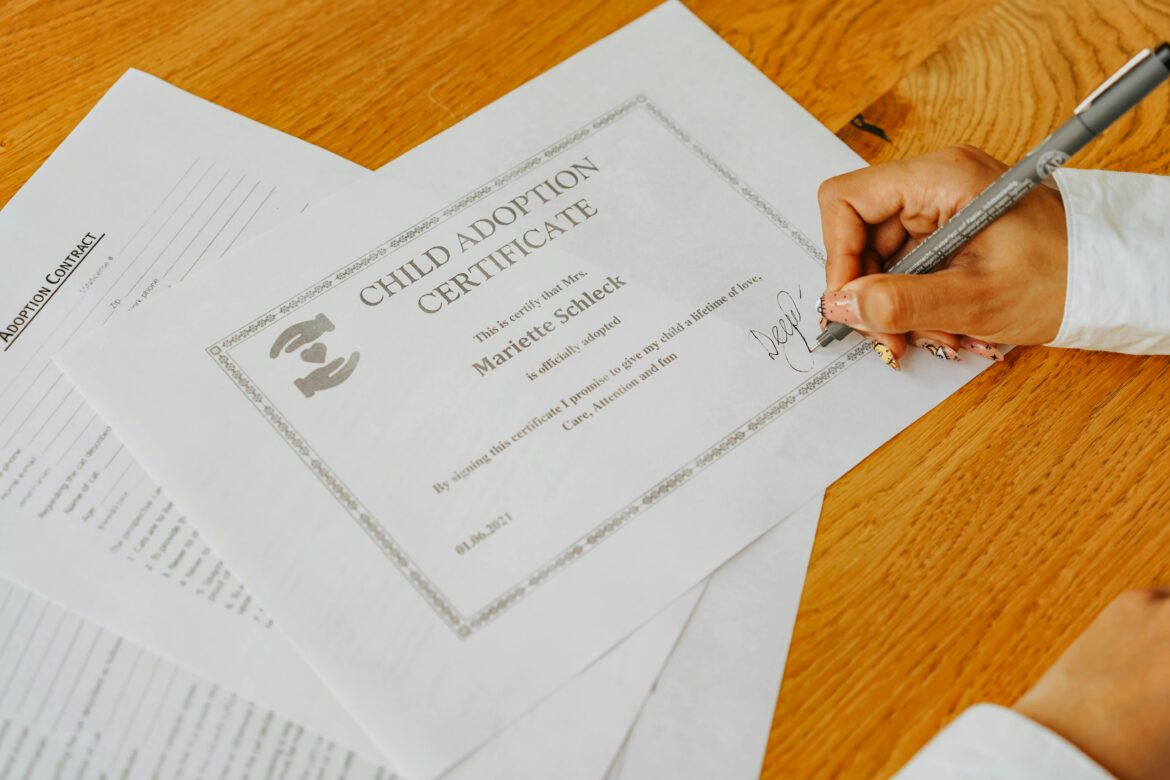
    A newly refundable adoption tax credit is giving Georgia families some financial relief as they take on the often expensive process of adoption.

    One Georgia mother says she didn’t even realize the credit existed until after her daughter’s adoption was complete. Now that recent changes allow part of the credit to be refunded, she believes it will make a meaningful difference in her family’s future.

    Katelyn Ward finalized the adoption of her daughter, August, in February after first meeting her while coaching softball. She said learning about the credit after the fact was an unexpected but welcome development.

    “I was pretty excited about it. I’m sure you know it, and anyone else knows that the economy now is very high, and it takes a lot to be able to live comfortably,” she said.

    Ward said she and her husband both work hard and want to give their daughter opportunities they didn’t have growing up. Under changes that took effect for the 2025 tax year through the “One Big Beautiful Bill Act,” families can now claim up to $5,000 as a refundable credit. That means eligible families may receive the money as a refund, even if they do not owe federal income taxes.

    According to a report from the U.S. Government Accountability Office, many adoptive parents are unaware the credit exists or are unsure how to properly claim it.

    Ward said the additional financial support will allow her family to go beyond meeting basic needs for August, who spent several years in foster care before being adopted. She hopes it will help create more opportunities and stability moving forward.

    “I’m an ordinary person just like anybody else,” Ward emphasized. “My husband, our family, we all work for what we want and need, and like I said before, this is going to be able to provide more than what we have now. So it’s going to be great.”

    Ward plans to claim the credit for the first time when filing her 2026 taxes. The Government Accountability Office has recommended that the Internal Revenue Service improve outreach efforts so more families—especially those working with state adoption agencies—are aware of the benefit.

    The full credit is available in cases involving special needs adoptions, which includes most foster care placements like August’s. Her adoption was made possible through a partnership between the Dave Thomas Foundation for Adoption and the state of Georgia.

  • Oakwood City Council urges DHS to stop plans for 1,500-bed ICE detention facility

    Oakwood City Council urges DHS to stop plans for 1,500-bed ICE detention facility

    Oakwood City Council urges DHS to stop plans for 1,500-bed ICE detention facility

    Leaders in a small North Georgia city are asking federal officials to pause plans for a large immigrant detention facility.

    The Oakwood City Council voted unanimously Monday night to approve a resolution urging the U.S. Department of Homeland Security to halt planning, construction and preparations for a proposed detention center that could hold up to 1,500 inmates.

    City officials say they were not informed about the project before the federal government moved forward with acquiring the property. In the resolution, the council states the city was not consulted or provided environmental, infrastructure, public safety or operational documentation about the facility.

    Oakwood leaders say they first learned about the proposal in February from the Gainesville field office of U.S. Rep. Andrew Clyde, a Republican who represents the area in Georgia’s 9th Congressional District.

    City Manager B.R. White said the news came as a surprise.

    “It feels like we were blindsided and that we’ve been steamrolled over,” White said.

    Oakwood, a city of roughly 7,000 residents, could face financial and infrastructure challenges if the project moves forward. Officials say the proposed site — two warehouses about a mile from City Hall — could reduce tax revenue and strain the city’s sewer system.

    Documents shared by officials in Social Circle, another Georgia city under consideration for a similar facility, describe the Oakwood site as a regional processing center. The center could house between 1,000 and 1,500 people for average stays of three to seven days before transfers or removals.

    The resolution also asks DHS and Immigration and Customs Enforcement to provide documentation and encourages nearby governments to adopt similar resolutions.

  • USPS approves Sandy Springs mailing address update

    USPS approves Sandy Springs mailing address update

    USPS approves Sandy Springs mailing address update

    Residents in Sandy Springs may soon see a change in how their mailing addresses appear. Instead of Atlanta, many pieces of mail delivered within the city will now list Sandy Springs.

    The U.S. Postal Service approved the city’s request to update its Address Management System so Sandy Springs becomes the default city name for most ZIP codes inside the city limits. The change affects seven of the eight ZIP codes serving Sandy Springs.

    The update does not include ZIP code 30092, which also covers parts of Peachtree Corners and Gwinnett County.

    City leaders say the effort has been years in the making. Sandy Springs incorporated in 2005 and officials have been working with the postal service since then to have the city formally recognized on mailing addresses.

    Not everyone believes the update will make a major difference. Resident Malik Deshawn said he still sees the area as closely tied to Atlanta.

    “I don’t see Sandy Springs as separate from Atlanta like most people,” Deshawn said. “I see Sandy Springs as part of Atlanta as I do Fayetteville as I do any surrounding area.”

    The change could also clear up tax confusion for some residents and businesses. Previous reporting by Rough Draft Atlanta suggested some people may have unknowingly paid Atlanta’s 8% sales tax instead of Sandy Springs’ 7% rate because their mailing address listed Atlanta.

    In a statement, Mayor Rusty Paul said the update will help improve economic development, public safety and ensure proper sales tax allocation.

    The mayor’s office said the postal service is now working to implement the change, though it could take several weeks before it fully takes effect. Residents may need to notify banks, businesses and other organizations that send them mail about the updated city name.

  • Mableton passes ordinance protecting natural hairstyles in schools and workplaces

    Mableton passes ordinance protecting natural hairstyles in schools and workplaces

    Mableton passes ordinance protecting natural hairstyles in schools and workplaces

    The city of Mableton has approved a new ordinance designed to prevent discrimination based on natural hairstyles in schools and workplaces.

    The measure mirrors the CROWN Act, which protects styles such as braids, locks, Afros and twists. Supporters say the protections are meant to address long-standing concerns from Black residents who say they have faced pressure to change their appearance in professional or academic settings.

    The ordinance establishes local protections against discrimination tied to natural hair and protective styles within Mableton.

    City Councilwoman Keisha Jeffcoat said the proposal was inspired by personal stories shared by students and workers who felt they had to alter their hair to meet school dress codes or workplace expectations.

    “I’ve had a lot of personal stories… students who were having to make adjustments to their hair because it didn’t fit the uniform code of the school, and also in the workplace.”

    With the ordinance’s approval, Mableton becomes the first city in Cobb County to adopt local protections similar to the CROWN Act. Nationally, more than 40 municipalities and several states have enacted similar policies aimed at preventing discrimination based on natural hair.

  • Fort Gordon raises security amid U.S. military action in Iran

    Fort Gordon raises security amid U.S. military action in Iran

    Fort Gordon raises security level amid U.S. military action in Iran

    Security measures have been heightened at Fort Gordon as fighting involving the United States and Iran continues, and drivers in the Augusta area may notice longer wait times at installation gates.

    WRDW-TV reports that the installation raised its Force Protection Condition, known as FPCON, due to global security concerns tied to ongoing military operations in Iran. The move means employees, visitors and service members entering the post should expect additional screening and possible delays.

    Installation officials said anyone heading onto the base should have identification ready and allow extra time to pass through security checkpoints. Increased inspections at entry gates could also cause traffic backups on nearby roads outside the installation.

    In a statement, base officials said the change reflects the current international situation. WRDW-TV reports that leaders did not disclose the exact FPCON level or detail the specific security steps being implemented, which is standard practice for military installations.

    FPCON is a Department of Defense system used to guide security posture at military bases across the country. The system includes five levels, ranging from FPCON Normal, which reflects routine operations with no specific threats, to FPCON Delta, the highest level, which is used when a terrorist attack has occurred or is imminent.

    Intermediate levels include Alpha, which indicates a general threat environment; Bravo, signaling a more predictable threat; and Charlie, used when intelligence suggests an attack may be imminent.

    The heightened security posture could remain in place as long as global tensions continue.

  • Iranian Atlantians struggle to contact family as unrest disrupts communication

    Iranian Atlantians struggle to contact family as unrest disrupts communication

    Iranian Atlantans struggle to contact family as unrest disrupts communication

    Iranian Americans in metro Atlanta say they are anxiously waiting for messages from loved ones as unrest continues in Iran.

    “It’s been very exciting, but also very stressful at the same time,” said Mayra Yazdari. “We’re worried… it’s kind of like an emotional roller coaster.”

    Yazdari, who has lived in the United States for nine years, said the first hours of the unrest were filled with texts and calls from relatives inside Iran. But internet disruptions have made communication unreliable, leaving many checking their phones and hoping messages get through.

    She said friends back home have told her they are ready for change.

    “What I hear from close friends is, ‘We are willing to go back to the streets, but we need help,’” Yazdari said.

    For Yazdari, the situation is deeply personal. She said she hopes to one day safely return to Iran and see her family again.

    “We are hoping that we can go back, at least see our families, see our relatives, see our friends, see the country, and help to build the country for the next generation,” she said.

  • Atlanta student found dead, hanging in Cobb County park as new report on modern-day lynchings is released

    Atlanta student found dead, hanging in Cobb County park as new report on modern-day lynchings is released

    Family mourns Atlanta student found dead, hanging in Cobb County park as new report on modern-day lynchings is released

    New report details modern-day lynchings as family mourns Atlanta man found dead in Cobb County park

    A new national report is reigniting conversations about racial terror in America, even as a Georgia family grieves the loss of a 21-year-old Atlanta man found dead in a Cobb County park.

    JULIAN, a civil rights organization, has released “A Crimson Record: SEVEN STATE MODERN-DAY LYNCHING (MDL) REPORT 2000 – 2025.” The study documenting more than 70 suspected MDL across seven Southern states between 2000 and 2025. The report challenges the widely held belief that lynching effectively ended in the late 20th century, arguing instead that it has evolved—often misclassified as suicide or left insufficiently investigated.

    Inspired by Ida B. Wells’ 19th-century anti-lynching documentation, “A Red Record,” the new analysis defines a modern-day lynching as a multiple-perpetrator homicide driven by race, gender identity or other bias, intended to terrorize a community or carry out an extrajudicial killing. Researchers argue that many of these cases initially are ruled suicides, making them among the hardest hate crimes to prove.

    The Grio reports the study identified more than 70 suspected cases across Texas, Mississippi, Georgia, Louisiana, Florida, Tennessee and Alabama, with Mississippi reporting the highest number at 20. Among the cases cited are Black men found hanging from trees in recent years, including incidents in Wisconsin and Mississippi that prompted families to question official findings.

    The report’s release comes amid heightened sensitivity surrounding deaths involving young Black men found hanging, including a case now under investigation in Cobb County.

    According to 11Alive, the family of 21-year-old Kyle Bassinga confirmed that he was the man found dead Feb. 18 in Fair Oaks Park, located at 1465 W. Booth Road. Cobb County Police said officers responded around 9:46 a.m. to a 911 call reporting a body in a wooded area of the park.

    Police said witnesses reported seeing the man enter the wooded area alone on Valentine’s Day at approximately 4:28 p.m. Detectives found no evidence indicating anyone else was involved and said there were no signs of foul play. Authorities initially declined to release the man’s name, citing respect for the family and the sensitive nature of the case.

    According to 11Alive, the Atlanta Police Department confirmed Bassinga had been reported missing Feb. 15. While law enforcement agencies did not initially confirm that the missing person and the deceased man were the same individual, Bassinga’s family later told 11Alive that he was the person found in the park.

    In a statement shared with the outlet, Cobb County Police said the investigation remains ongoing pending the medical examiner’s final autopsy. “The Cobb County Police Department takes every death investigation seriously and conducts a thorough review of all available evidence before making any determinations,” the department said, adding that any new information would prompt updates.

    Since the discovery, online speculation has grown, with some social media users suggesting racial motives despite law enforcement statements indicating no evidence of foul play. Bassinga’s family addressed the public conversation, telling 11Alive they are focused on mourning their son rather than engaging in online debate.

    “Right now, online speculation is the least of our worries. We are focused on burying our son and am happy to have found him,” the family said.

    While authorities have not indicated any connection between Bassinga’s death and the broader findings outlined in “The Crimson Record,” the timing of the study’s release has intensified public dialogue around how such cases are investigated and classified.

    Authorities in Cobb County say the investigation remains active and that final conclusions will depend on the medical examiner’s findings.