Category: Featured

  • SNAP cuts hit refugees in Georgia as demand for aid sharply rises

    SNAP cuts hit refugees in Georgia as demand for aid sharply rises

    SNAP cuts hit refugees in Georgia as demand for aid sharply rises

    Families who immigrated to the U.S. due to persecution in their home country have historically been able to apply for social services here, such as the Supplemental Nutrition Assistance Program (SNAP).

    However, the One Big Beautiful Bill Act eliminated SNAP eligibility for certain non-U.S. citizens, even those granted legal political asylum, according to Georgia Public Broadcasting.

    Paedia Mixon is the director of New American Pathways, a nonprofit in Clarkston that helps refugees settle in Georgia. She spoke with GPB News about the impact of the change.

    “I read it and saw, ‘Oh my god, they’re cutting SNAP benefits for refugees,’ and just sort of started to feel this panic,” she said.

    Congressional leaders say the measure will save the federal government $187 billion over 10 years while states like Georgia with higher than average SNAP payment error rates could have to pay millions more due to a change in requirements.

    Around 8,000 refugees, asylees and other legally present immigrants who are served by resettlement agencies were actively receiving SNAP benefits in Georgia as of December. 

    Kyryll Levterov with New American Pathways told GPB they are seeing an increase of families coming to the agency for help after losing SNAP benefits.

    “A couple of months ago it was like maybe one emergency a week, maybe a couple of times,” he said. “Now it’s a few times a day, so now it’s very different.”

    SNAP benefits average from $700 to $900 per month for a family of four, and larger families can receive closer to $1,000 per month.

    Amid the turmoil with SNAP benefits, Mixon said her team is already preparing for the next emergency approaching this fall. Immigrants without green cards will no longer be eligible for Medicaid.


  • Georgia voters begin early voting ahead of May 19 primaries

    Georgia voters begin early voting ahead of May 19 primaries

    Georgia voters begin early voting ahead of May 19 primaries

    Voters across Georgia will be casting their ballots for the first time today for the May 19 primary elections and general elections.

    Early voting begins April 27 and runs through May 15, including two Saturdays. Counties can also decide to hold voting on Sunday. Voters can locate their precinct through their My Voter Page or through the Georgia Secretary of State’s website.

    Primary elections that will be on the ballot include the U.S. Senate, Georgia Governor, and Lieutenant Governor as well as several statewide positions.

    For general elections, three Georgia Supreme Court seats will be decided with only two of those elections having contenders.

    Michael Barnes, Deputy Director of Voting Systems IT, told WJBF that counties have been preparing to start early voting for a long time.

    “I have 100% confidence in all 159 counties on being prepared. This is something they’ve done before. We’ve been doing primaries and elections in the state with this system since 2020. They are experts at getting it ready, and I feel like they are going to be confident and ready to go once advanced voting begins on Monday,” he said.

    Georgia Secretary of State Brad Raffensperger said that every legal vote will count and warned that voter fraud could lead to serious penalties.

    “We’re recognized right now as having probably the cleanest voter list in the country. Number one is we are the first state in the country that actually went back and checked citizenship. We did that in 2021,” Raffensperger said.

    The July 1 deadline to get rid of QR codes on Georgia ballots will not impact the May 19 primaries nor the runoff elections that will be held in June.

  • South Georgia wildfires threaten 1,000 homes, destroy dozens

    South Georgia wildfires threaten 1,000 homes, destroy dozens

    South Georgia wildfires threaten 1,000 homes, destroy dozens

    More than 1,000 homes are being threatened by two major wildfires raging in South Georgia

    As of Wednesday night, the Georgia Forestry Commission reported that the Pineland Road Fire in Clinch County covered nearly 30,000 acres and was only 10% contained. The commission said it responded to 34 new wildfires across the state on Wednesday.

    Brantley County Manager Joey Carson said at a news conference Wednesday that the Highway 82 Fire had destroyed at least 54 homes and spread to roughly 5,000 acres. This fire is reportedly only 15% contained.

    “I’ll be very honest with you and say it’s a miracle that we have not had any lives lost,” Carson said Wednesday afternoon. “Obviously, this fire became a lot larger than we thought it would be on Monday. We’ve got resources that have come in from all over South Georgia and now from the state.”

    Brantley County Sheriff Len Davis said at the news conference that residents need to stay vigilant.

    “These winds may shift rapidly which will create unpredictable fire behavior, so just stay alert, and for the public, be prepared to evacuate immediately,” he said.

    Gov. Brian Kemp is scheduled Friday afternoon to survey the fire damage from the Highway 82 Fire and meet with first responders who are fighting the flames, according to a news release.

    Kemp declared a state of emergency Wednesday to send additional resources to assist with the fires, including mobilizing around 150 National Guardsmen.

  • Rep. David Scott, longtime Georgia congressman, dies at 80

    Rep. David Scott, longtime Georgia congressman, dies at 80

    Rep. David Scott, longtime Georgia congressman, dies at 80

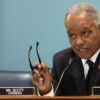
    U.S. Rep. David Scott of Georgia’s Thirteenth Congressional District died Wednesday, according to a statement from his office. He was 80 years old.

    The Democratic congressman served in Congress for more than 23 years and was running for re-election for a 13th term in the House representing Henry, Clayton, DeKalb, Rockdale, Newton and Gwinnett counties.

    Georgia House Minority Leader Carolyn Hugley, D-Columbus, released a statement Wednesday to give her condolences.

    “Rep. David Scott was an admired statesman with a long history of public service working on behalf of Georgians. I will always remember the grace he showed me, a brand-new member of the legislature, from his senior position as Chair of the Senate Rules Committee when I was just starting to learn my way around the Gold Dome. He was a fighter, and that’s how he was later elected to Congress, where he cast a key vote for passing the Affordable Care Act. He will be missed, and our condolences go out to his family and many friends.”

    Scott made history when he became the first Black chairman of the House Agriculture Committee. Before Congress, Scott served in the Georgia Senate for 19 years representing the 36th district and in the Georgia House for seven years.

    In the state Senate, Scott wrote laws that are still in place today. One of those laws allow women undergoing breast cancer surgery to determine the length of medical care through physician consultation and another provides sex education and AIDS prevention curricula in Georgia public schools.

    During his time in the Georgia House, Scott advocated for gun safety laws, including making it a felony to knowingly provide or sell a firearm to a minor. He also helped create PeachCare, which provides health insurance for Georgia children.

    “Atlanta joins the state of Georgia in mourning the passing of Congressman David Scott, one of Georgia’s longest-serving voices in Washington D.C. and a tireless advocate for the people he served. For decades, he fought for Georgia farmers, advocated for our veterans and ensured his constituents were supported at the street level with job and health fairs, serving tens of thousands of Georgians over the years. His legacy is one of service, perseverance and deep commitment to this state. My thoughts are with his wife Alfredia Aaron, his children, extended family, his colleagues, and all who were impacted by his work,” said Atlanta Mayor Andre Dickens, in a statement.

    Under Georgia’s election law, Gov. Brian Kemp needs to call for a special election within 10 days of a vacancy, and the special election must be held within 30 days of that declaration.


  • Kemp declares emergency as South Georgia wildfires spread rapidly

    Kemp declares emergency as South Georgia wildfires spread rapidly

    Kemp declares emergency as South Georgia wildfires spread rapidly

    Gov. Brian Kemp declared a state of emergency Wednesday due to the wildfires in South Georgia.

    “With much of Georgia remaining in extreme drought conditions, wildfires have already surpassed the state’s 5-year average and continue to spread,” Kemp said in a news release. “My team and I are working closely with Georgia State Forester Johnny Sabo and his team, along with federal, state and local officials, to ensure we are doing everything possible to combat the fires and provide assistance to affected communities.”

    The state of emergency applies to 91 Georgia counties and was issued for 30 days. Kemp also directed the Georgia Forestry Commission and other state agencies to use all available resources to fight the fires.

    The state forester also issued a burn ban on Wednesday for the same 91 counties for 30 days. The burn ban prohibits prescribed burns and the burning of yard debris and agricultural material in the area.

    The Georgia Department of Agriculture also announced Wednesday that 126 Georgia counties have been designated as primary natural disaster areas due to the ongoing drought, which opens up financial relief to farmers that meet the eligibility requirements.

    A wildfire off of Pineland Road in Clinch County has covered around 16,000 acres forcing evacuations and is only 10% contained, according to WALB.

    The state of emergency allows for the mobilization of the Georgia National Guard to assist with the response and prohibits price gouging.

    “We are praying for the families who have lost their homes in these devastating conditions, as well as for the first responders working around the clock,” Kemp said.

  • Georgia high court weighs long-term health monitoring after BioLab fire

    Georgia high court weighs long-term health monitoring after BioLab fire

    Georgia high court weighs long-term health monitoring after BioLab fire

    The Georgia Supreme Court heard arguments Tuesday related to the 2024 BioLab fire in Conyers.

    Residents are seeking long-term medical monitoring regardless of whether they currently show symptoms.

    The fire at the BioLab facility in September 2024 caused more than 17,000 people to evacuate and another 90,000 people to shelter in place.

    Larry Cox, a vice president of Dan-Kel Concrete Cutting, told CBS News that his company used to be located near the BioLab facility but the company has since moved because their employees did not feel safe.

    “It’s still impacting my business since September of 2024; we have been somewhat displaced because of the BioLab incident,” he said.

    Scott Smith, an independent testing expert, told CBS News that the exposure concerns are significant.

    “It was a lot of toxic gases, a mixture of very dangerous chemicals,” Smith said.

    Smith conducted independent testing of the area that found elevated levels of dioxin at 22 in soil near the site, which is five times more than the federal screening level.

    Smith also said symptoms of exposure may not appear immediately.

    “It can take years for health symptoms to show up,” he said.

    After the fire, the Georgia Department of Public Health said more than 1,000 people sought medical treatment.

    Advocates for medical monitoring say that it could help identify problems before they become more serious while critics, including the U.S. Chamber of Commerce, argue that awarding this monitoring to people who are not sick raises legal concerns.

  • Georgia sees major drop in ACA enrollment after subsidy cuts

    Georgia sees major drop in ACA enrollment after subsidy cuts

    Georgia sees major drop in ACA enrollment after subsidy cuts

    More than half a million Georgians have dropped health insurance coverage after Affordable Care Act plans faced substantial price hikes with recent changes.

    An investigation by The Current and The Georgia Recorder shows that 550,000 Georgians have not signed up for Georgia’s healthcare plan. That is a 37% drop in enrollment compared to January 2025.

    Health insurance policies on Georgia’s healthcare marketplace saw an increase in premiums after the U.S. Congress and President Donald Trump decided not to extend health insurance subsidies from the coronavirus pandemic. The subsidies ended on Dec. 31, 2025, causing the increase in prices.

    “I don’t know what we’re going to do, honestly” Monty Veazey, president of the Georgia Alliance of Community Hospitals, told The Current. “It’s a larger number than I anticipated.”

    The decline in enrollment could cause major issues for Georgia’s rural hospitals that already face challenging financial circumstances and may face more uncertainty as Georgia’s uninsured rate increases after years of progress.

    Emma Wager, a senior policy analyst on the ACA at the health research nonprofit KFF, said a large amount of disenrollment could impact hospitals across the state.

    “A larger uninsured population means that hospitals have to provide more uncompensated care. And we also know that people who are uninsured are more likely to delay or forgo medicare care…they may have severe needs by the time they actually see a doctor.”

  • Refundable adoption tax credit brings relief to Georgia families

    Refundable adoption tax credit brings relief to Georgia families

    Refundable adoption tax credit brings relief to Georgia families

    A newly refundable adoption tax credit is giving Georgia families some financial relief as they take on the often expensive process of adoption.

    One Georgia mother says she didn’t even realize the credit existed until after her daughter’s adoption was complete. Now that recent changes allow part of the credit to be refunded, she believes it will make a meaningful difference in her family’s future.

    Katelyn Ward finalized the adoption of her daughter, August, in February after first meeting her while coaching softball. She said learning about the credit after the fact was an unexpected but welcome development.

    “I was pretty excited about it. I’m sure you know it, and anyone else knows that the economy now is very high, and it takes a lot to be able to live comfortably,” she said.

    Ward said she and her husband both work hard and want to give their daughter opportunities they didn’t have growing up. Under changes that took effect for the 2025 tax year through the “One Big Beautiful Bill Act,” families can now claim up to $5,000 as a refundable credit. That means eligible families may receive the money as a refund, even if they do not owe federal income taxes.

    According to a report from the U.S. Government Accountability Office, many adoptive parents are unaware the credit exists or are unsure how to properly claim it.

    Ward said the additional financial support will allow her family to go beyond meeting basic needs for August, who spent several years in foster care before being adopted. She hopes it will help create more opportunities and stability moving forward.

    “I’m an ordinary person just like anybody else,” Ward emphasized. “My husband, our family, we all work for what we want and need, and like I said before, this is going to be able to provide more than what we have now. So it’s going to be great.”

    Ward plans to claim the credit for the first time when filing her 2026 taxes. The Government Accountability Office has recommended that the Internal Revenue Service improve outreach efforts so more families—especially those working with state adoption agencies—are aware of the benefit.

    The full credit is available in cases involving special needs adoptions, which includes most foster care placements like August’s. Her adoption was made possible through a partnership between the Dave Thomas Foundation for Adoption and the state of Georgia.

  • Georgia counties brace for paper ballots as QR code deadline looms

    Georgia counties brace for paper ballots as QR code deadline looms

    Georgia counties brace for paper ballots as QR code deadline looms

    Election officials are advising counties to prepare for a move to hand-marked paper ballots for the November election as a July deadline approaches with no other solution in place.

    After July 1, QR codes can no longer be used to count ballots due to a Georgia law that was passed in 2024.

    The 2026 legislative session ended in Georgia without extending the deadline or providing guidance as to how election boards across the state should comply with the law.

    State Election Board officials have said counties should prepare to move to hand-marked paper ballots by November in order to comply with the law if the Georgia legislature does not resolve the issue.

    Secretary of State Brad Raffensperger told GPB News that paper ballots could be an option.

    “We want to make sure we pull in all the key stakeholders in that, and at the end of day, make sure that voters don’t have to worry about anything,” he said. “But obviously, we’re good until June 30.”

    Gov. Brian Kemp could call a special session for lawmakers to address the issue, but that would interfere with fundraising efforts for the upcoming elections because state law prohibits lawmakers from fundraising during a legislative session.

    Several advocacy groups, including a conservative-leaning group called Georgia First, have called on Kemp to convene a special session, according to the Georgia Recorder.

    Joseph Kirk, the Bartow County elections director, told the Georgia Recorder that without clear guidance, election workers are left to navigate the conflicting laws without any additional funds.

    “That kind of contradiction we can’t resolve on the county level,” he said. “The only folks who can resolve that are either the Legislature; the secretary of state, who has the authority to set the statewide system; or a judge as a result of the lawsuit.”

  • Trump taps Dr. Erica Schwartz to lead CDC amid agency concerns

    Trump taps Dr. Erica Schwartz to lead CDC amid agency concerns

    Trump taps Dr. Erica Schwartz to lead CDC amid agency concerns

    President Donald Trump has nominated Dr. Erica Schwartz to serve as the next director of the Centers of Disease Control and Prevention.

    Schwartz served as the deputy surgeon general during Trump’s first administration and retired as a Rear Admiral in the U.S. Public Health Service Commissioned Corps. She is a preventative medicine physician and also served as the chief medical officer of the U.S. Coast Guard.

    “When I was a military physician, my job was all about readiness. It was all about public health: prevention, vaccines, early detection. If we get that right, we change lives before illness ever begins,” Schwartz said in a video on Instagram.

    If confirmed, Schwartz will answer directly to Robert F. Kennedy, Jr., secretary of the Department of Health and Human Services.

    Admiral Paul Zukunft, the former commandant of the U.S. Coast Guard, chose Schwartz as their chief medical officer in 2015. He told NPR that Schwartz was a brilliant doctor and lawyer.

    “She was not in the least bit reticent when it came to talking truth to power,” he said.

    Health professionals and former CDC employees told the Atlanta Journal-Constitution that they were encouraged by the nomination, but they remain wary about whether Schwartz will be able to stabilize the agency.

    “You’re putting a director in place into an organization that is so deeply dismantled that it’s going to take much longer than a year or six months to get it up and functioning the way that it was just a year and a half ago,” said Abby Tighe, who is now the executive director of the National Public Health Coalition. She was one of the many people fired from the CDC in February of last year.