-
 play_arrow
Georgia NOW Live Streaming Now
-
 play_arrow
Amateur Hour




State survey finds AI becoming a regular classroom tool for Georgia teachers
Most Georgia teachers say AI is helping them teach, but many remain concerned about student use
Artificial intelligence is becoming a routine part of instruction in Georgia classrooms, with a new state audit showing educators are increasingly embracing the technology to save time and improve lesson planning. At the same time, many say they worry students are using the same tools in ways that could undermine learning.
According to The Georgia Recorder, a survey conducted by the Georgia Department of Audits and Accounts gathered responses from more than 13,000 teachers statewide. Nearly 60% said they now use generative AI as part of their teaching, making it one of the first large-scale looks at how the technology is reshaping K-12 education in Georgia.
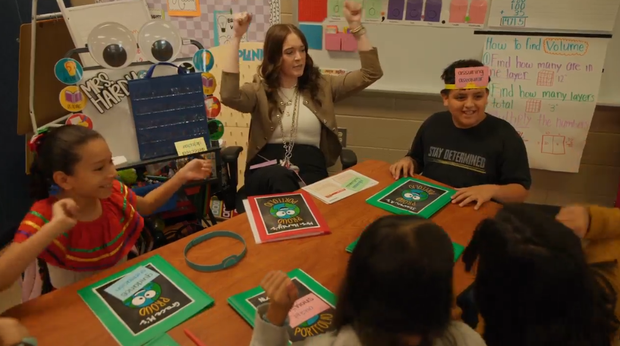
Savannah-Chatham County middle school English teacher Venecia Whyte-Foster said she decided early that AI would become part of her classroom instead of something to avoid.
“I embraced it immediately as it came out,” she said. “I’m like, ‘OK, this is not going away. My kids are going to use it. How do I use it in my class effectively?’”
Whyte-Foster now creates AI-powered learning games that function like digital escape rooms. Students must answer questions correctly before moving to the next challenge, turning review sessions into interactive exercises.
The report found that educators who use AI overwhelmingly view it as beneficial. Many credited the technology with reducing preparation time, improving instructional materials and increasing student participation.
According to The Georgia Recorder, teachers who have chosen not to use AI cited concerns ranging from data privacy and inaccurate responses to fears that students could become dependent on chatbots instead of developing their own reasoning skills.
Those concerns appear to grow as students get older. While elementary teachers reported relatively limited student use of AI, most high school teachers said students use it on assignments at least half the time. Middle and high school educators were also more likely to say the technology has had a negative effect on learning.
University of Georgia associate professor Xiaoming Zhai, who leads the AI4STEM Education Center, said educators should focus on teaching students to use AI responsibly rather than avoiding it altogether.
“Regardless of whether they’re using AI in their own profession, their students in the future will be using AI in their career,” Zhai said. “So if they’re not able to use AI, how can they expect them to educate the future workforce to be able to use AI responsibly and ethically?”
To address concerns about misuse, many teachers reported assigning more work to be completed during class, clearly defining what qualifies as AI-assisted cheating and using software to identify AI-generated assignments.
Whyte-Foster said she also spends time explaining that AI is not always accurate, teaching students about “hallucinations”—instances when chatbots generate convincing but false information.
“We have to use our minds,” she said. “We have to put things into place to make sure we are thinking for ourselves, that it’s giving us information so that we can use it in our thinking, as a part of our brainstorming.”
State education leaders have already begun issuing recommendations for AI use in schools. Georgia Department of Education guidance emphasizes that artificial intelligence should support teaching and learning—not replace educators or students’ critical thinking.

-

The Stephanie Miller Show
Weekdays at 10am
National morning drive radio and television star Stephanie Miller hosts The Stephanie Miller Show, reaching over six million listeners weekly on satellite and terrestrial radio, simulcast on FreeSpeech TV. A ratings powerhouse who dominated at KABC, KFI, and stations in New York and Chicago, she's been ranked on Talkers Magazine's "Heavy Hundred" for over a decade and won their Woman of the Year Award. Her sold-out Sexy Liberal Comedy Tour became the fastest-selling comedy tour in history, earning three Pollstar nominations and producing America's #1 comedy album. Praised by Rachel Maddow as "the high priestess of excellent liberal talk" and by Carol Burnett as "the Carol Burnett of radio," this Liberal icon—ironically the daughter of Barry Goldwater's 1964 VP running mate—is known as "The Voice of The Resistance."
close  From CBS News
- Trump says Greenland oil, gas and mineral exploration "getting ready to begin" October 14, 2026The announcement comes four weeks after the U.S. signed a deal with Greenland and Denmark to bolster American military presence on the island.
- Trump pardons 2 auto workers on stage during rally in Alaska October 14, 2026President Trump granted onstage pardons to two Alaska auto shop owners who pleaded guilty to violating the Clean Air Act during a rally Tuesday — an unusually public use of the president's clemency power.
- Judge blocks Trump's White House ban targeting CNN, MS NOW and Politico October 14, 2026U.S. District Judge Timothy Kelly said the White House's revocation of hard passes for CNN, MS NOW and Politico journalists likely violated their First and Fifth Amendment rights.
- Dolly Parton's nephew pushes back on restraining order October 14, 2026Dolly Parton's nephew disputed a restraining order that was filed against him by her estate, which accused him of threatening to do violence and destroy her legacy and business empire.
- New details in text messages between Jane Doe and frat members October 14, 2026One of the accused fraternity members, who was later expelled, wrote to her: "I genuinely hope ur not catching as much heat from this as we r."
- Kimberly Guilfoyle ousted as ambassador over corruption allegations October 13, 2026Kimberly Guilfoyle said she is stepping aside as U.S. ambassador to Greece, days after reports that she offered access to officials in exchange for help paying off her debt.
- Pope Leo diagnosed with lung cancer after undergoing surgery October 13, 2026Tests confirmed a diagnosis of lung cancer for Pope Leo XIV, the Vatican said in a medical update after he underwent surgery.
- Six Flags closes 9 rides across 6 parks after deadly incident October 13, 2026Six Flags has temporarily closed rides similar to Goliath, the roller coaster at Six Flags Over Georgia that a man fell from.
- Trump officials now leaning against execution livestream, sources say October 13, 2026Last week, the Pentagon had said the execution of the ex-Army major convicted of killing 13 in 2009 would be livestreamed.
- OpenAI employee accused of planting recording device in office October 13, 2026A Saudi national who worked at OpenAI as an engineer is suspected of planting a recording device in one of the company's conference rooms.
- Trump says Greenland oil, gas and mineral exploration "getting ready to begin" October 14, 2026
Post comments (0)