-
 play_arrow
Georgia NOW Live Streaming Now
-
 play_arrow
Let's Vote For A Different World



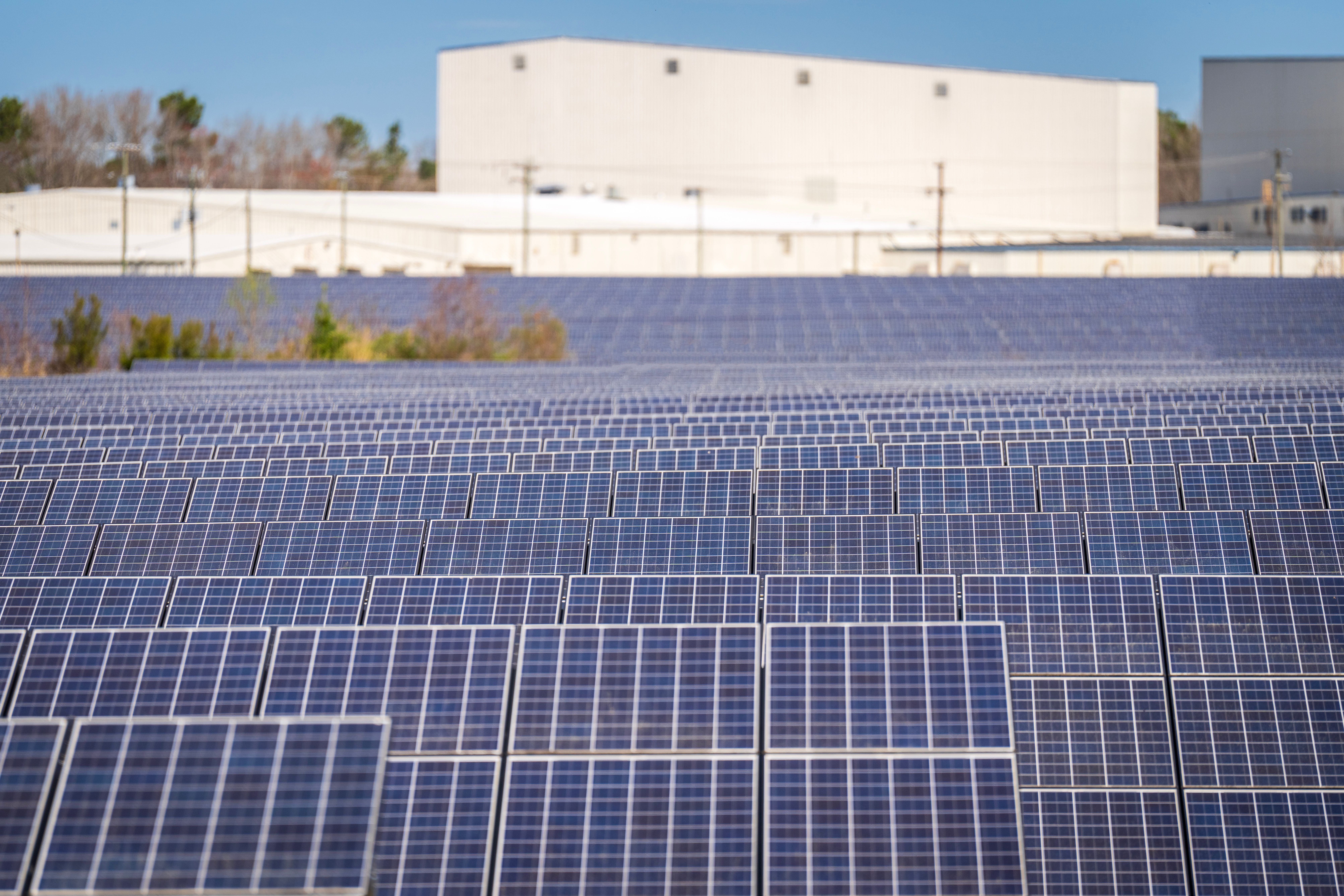
Qcells expands Georgia solar factory as U.S. solar policy shifts
Workers and an assembly of robots move ultra-thin slices of polysilicon through a process to create cells inside the Qcells factory in Cartersville, Georgia.
The thin cells are the building blocks of a solar panel.
The facility is located about an hour northwest of Atlanta, and in June, it started an expansion to bring the entire process of making a solar panel under one roof.
Scott Bell of Qcells said producing a solar panel fully in one facility is a large-scale project.
“The $2.5 billion, the 3.5 million gallons of water, the 90 megawatts of power, the 60 tons of chemicals on site, and all of the football fields’ worth of infrastructure you’ve seen is to arrive at this,” he said.
China has dominated solar panel manufacturing since the 2010s. The U.S. is now trying to bring back domestic production, and the facility will be a major milestone for the industry in the U.S.
The Biden administration attempted to attract solar panel manufacturers through the 2022 Inflation Reduction Act, which included tax credit bonuses for solar projects. The South Korean firm QCells credited those incentives as the reason for its Cartersville plant.
However, the Trump administration has taken a different approach. The “One Big Beautiful Bill Act” revoked most of the tax credits and made solar equipment from certain countries, like China, ineligible for the remaining tax credits. With the new tariffs as well, U.S. manufacturers might be able to compete with Chinese imports.
Ben Damiani is the chief technology officer at Atlanta-based solar developer Cherry Street Energy. He said the shifting policies create a challenge.
“Look at the investment from Q Cells. You can’t make that investment, and then fully expect to reap the profit within an election cycle of four years,” he said.
The clean energy advocacy group E2 tracked nearly $13 billion in abandoned investments in solar, wind, and battery projects in the first quarter of this year while some $18 billion in new projects were announced to meet the deadline of the expiring tax credits.

-

ReRon
Daily Rerun of The Ron Show
Ron Roberts is a Georgia-born radio veteran and host of The Ron Show, Atlanta's only progressive audio platform airing weekdays on AmericaOne Radio. With an extensive background as an FM radio program director and broadcaster skilled in audio editing, voice acting, and commercials, Ron brings nearly three decades of radio experience to his show. The show covers Atlanta, metro Atlanta, Georgia, and national politics from a unique perspective—he's a self-described "run-of-the-mill Georgia-born gay progressive cat-dad realtor & talk show host". Ron frequently welcomes guests ranging from local activists to prominent national figures, including Marianne Williamson, Rep. Nikema Williams, actor Michael Kelly, and Sen. Shea Roberts.
close  From CBS News
- Hawaii under another hurricane watch as new storm closes in September 24, 2026Nolo is expected to become a hurricane sometime Thursday night and could become a major hurricane by the weekend as it approaches Hawaii's Big Island.
- Election year "poop water" claims lead wealthy suburb to drop recycling plan September 24, 2026A Phoenix suburb ditched a plan to send recycled water from toilets and other sources directly to residents' taps after political candidates made unproven claims that the water is contaminated "poop water."
- Florida gov. candidate Byron Donalds responds after Trump mentions removed from site September 24, 2026Some prominent references to President Trump were scrubbed from Florida gubernatorial candidate Byron Donalds' campaign website in recent weeks, but the Republican said he isn't backing away from the president's agenda.
- Sen. Tim Scott says GOP in "fight for our lives," sees path to holding Senate September 24, 2026With just under six weeks until the midterms, Sen. Tim Scott of South Carolina laid out the NRSC's strategy to try to hold onto the Senate amid a tough political environment.
- Trump rolls out the red carpet for Xi despite U.S.-China tensions September 24, 2026It's not clear what specific goals President Trump wants to accomplish in his meeting with the Chinese leader.
- ICE officer who shot Venezuelan man wasn't wearing body camera, sources say September 24, 2026The ICE officer who shot a Venezuelan delivery driver was not wearing a body camera at the time of the shooting, sources familiar with the investigation told CBS News.
- Dolly Parton's estate granted restraining order against her nephew September 24, 2026A Tennessee judge granted Dolly Parton's estate a temporary restraining order Wednesday against the late singer's nephew Bryan Seaver and his private security company.
- East Coast faces threat of powerful winds, flooding as Nor'easter builds September 23, 2026Both coasts are bracing for the possibility of extreme weather as a Nor'easter builds in the East and California is threatened by Hurricane Polo. Rob Marciano breaks it down and shares the forecast.
- Judge dismisses Trump's 2024 lawsuit against Iowa newspaper over poll results September 23, 2026An Iowa judge sided with pollster J. Ann Selzer and The Des Moines Register, saying that allowing the lawsuit and its "faulty" claims to proceed could "discourage others from reporting on and debating public affairs."
- 9/23: CBS Evening News September 23, 2026Both coasts bracing for extreme weather; Trump hosts China's Xi Jinping amid media boycott.
- Hawaii under another hurricane watch as new storm closes in September 24, 2026
Post comments (0)