-
 play_arrow
Georgia NOW Live Streaming Now
-
 play_arrow
The Politics Bar After Hours - Hide Your Couches!



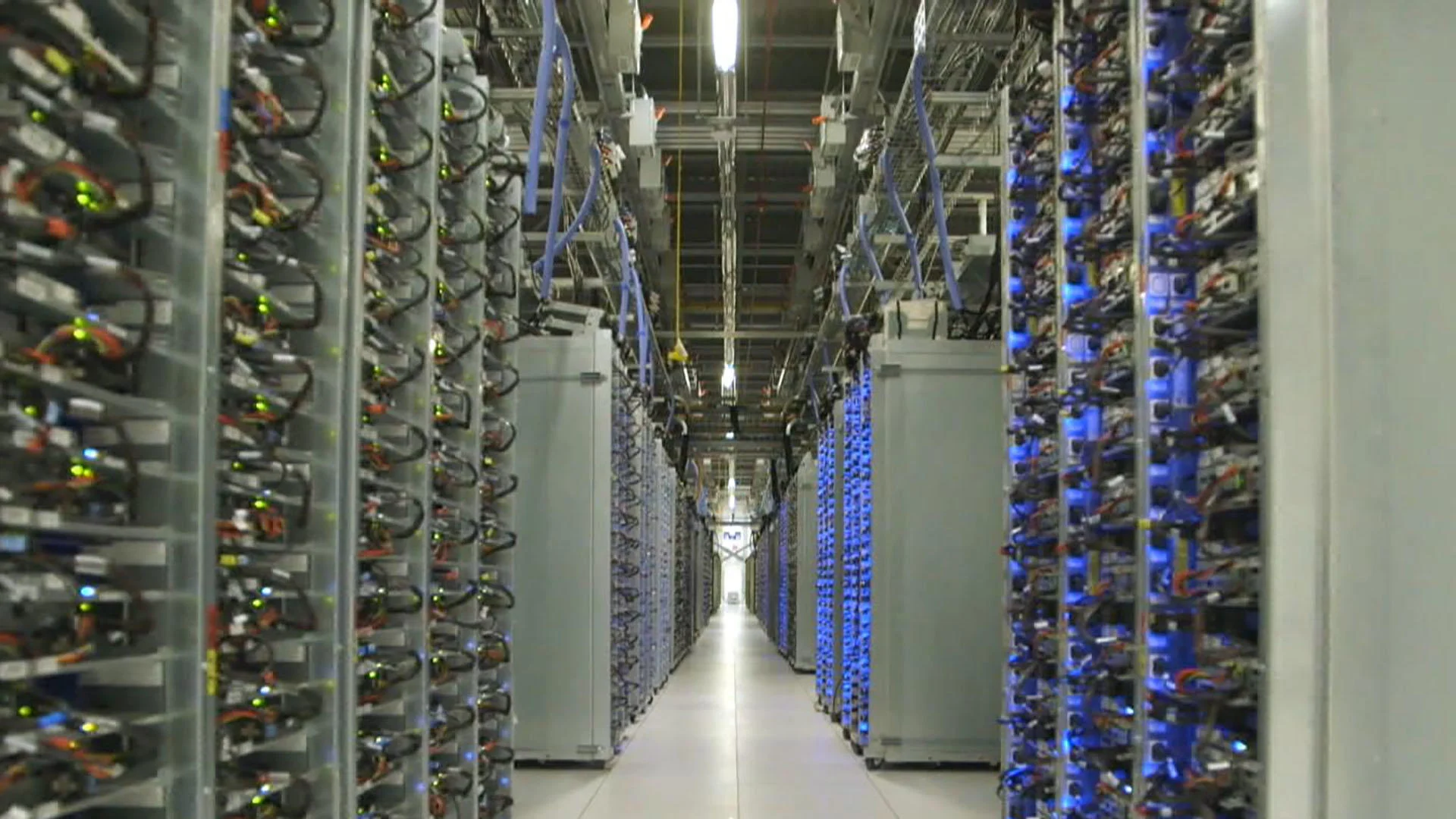
Environmental Concerns Rise as Georgia Data Centers Multiply

Environmental Concerns Rise as Georgia Data Centers Multiply
As Georgia becomes one of the nation’s fastest-growing data center hubs, communities and environmental groups warn of mounting risks to water supplies, wildlife habitat and the electric grid.
In rural Twiggs County, residents are fighting a proposed data center complex they say could overwhelm limited water resources and reshape the local landscape. Nancy Lubeck told Georgia News Connection that county leaders have not provided basic information about how much water or electricity the facility would require.
“Nobody really seems to know the impact of the water and the electrical,” Lubeck said.
Residents are asking for a delay and for independent studies on water demand, grid impacts and community health. They have also filed a lawsuit challenging the rezoning — arguing the public was not properly notified and that required transportation reviews were missing.
The proposed facility borders the Ocmulgee corridor, an area under consideration for national park status and home to Georgia’s most isolated black bear population. Lubeck said constant noise and lighting could drive the animals out.
“This may be the beginning of the end for the bears,” she told Georgia News Connection.
Concerns reach beyond rural counties. In Fayette County, residents protested newly installed high-voltage transmission lines built to serve a hyperscale data center.
Georgia Power’s Expanding Role
The Ledger-Enquirer reported that data center growth is also reshaping Georgia Power’s long-term energy planning. The utility has told state regulators that rising electricity demand from hyperscale data centers is contributing to its push for new natural gas units, expanded transmission corridors and major grid upgrades.
In Fayette County, residents told the Columbus newspaper that Georgia Power used eminent domain to place steel transmission poles through established neighborhoods to connect a QTS data center, clearing trees and lowering property values.
While residents confront local impacts, the statewide scale of development remains hard to track. The Ledger-Enquirer reported that estimates place Georgia’s data center count between 100 and 160, with many details shielded by nondisclosure agreements. Research cited by the paper found that Georgia is now the nation’s fastest-growing data center market.
Growth accelerated after a 2018 state tax exemption for data center equipment and property tax abatements, later extended to 2031. An effort to suspend the incentives in 2024 passed the legislature but was vetoed by Gov. Brian Kemp.
Undeterred, House Speaker Jon Burns created a special resource committee to study the effects of data centers on water and energy systems. State officials told the Ledger-Enquirer that transparency improvements are on the way.
The Department of Community Affairs plans to create a dedicated category for data centers in the state’s Development of Regional Impact review process. The new rule is expected Nov. 20.

-

The Thom Hartmann Program
Weekdays at 1pm
Thom Hartmann is a New York Times bestselling, four-times Project Censored Award-winning author and host of The Thom Hartmann Program, which broadcasts live nationwide each weekday from noon to 3pm Eastern. For 20 years, the show has reached audiences across AM/FM stations throughout the US, on SiriusXM satellite radio, and as video on Free Speech TV, YouTube, Facebook, and X/Twitter.
close  From CBS News
- Trump faces pressure as midterms inch closer September 20, 2026President Trump triggered a showdown over the First Amendment after several journalists had their White House access revoked this weekend. The ban followed a week of bad economic news for the president. Aaron Navarro reports.
- ICE agent shoots and wounds man in Austin, Texas September 20, 2026The lawyer for the man identified him as a 28-year-old Venezuelan national, Wilber Rafael Garces Perez. Officials said he was shot at least once in the torso and was in serious but stable condition.
- Trump to meet Mamdani tomorrow in New York City September 20, 2026New York City Mayor Zohran Mamdani and President Trump have met at least twice since Mamdani was elected last year.
- Cassidy: Trump needs to be "radically honest" on vaccines amid measles outbreak September 20, 2026GOP Sen. Bill Cassidy of Louisiana urged the president to be "radically honest" when he's speaking about vaccines, as the U.S. this year has recorded the most measles cases in more than three decades.
- 18 suspects in killing of Haiti's president being extradited to Florida for trial September 20, 2026Eighteen suspects who were arrested in the July 2021 killing of Haitian President Jovenel Moïse were awaiting extradition to the U.S. on Sunday.
- Full transcript of "Face the Nation with Margaret Brennan," Sept. 20, 2026 September 20, 2026On this "Face the Nation with Margaret Brennan" broadcast, Reps. Ro Khanna and Maria Elvira Salazar join Margaret Brennan.
- Bessent meets with Chinese counterpart ahead of Trump-Xi summit September 20, 2026Treasury Secretary Scott Bessent is meeting with Chinese Vice Premier He Lifeng, ahead of the planned summit between President Trump and Chinese President Xi Jinping this week.
- Salazar tells Trump on Hispanic voters: "Preserve that fortune" September 20, 2026GOP Rep. Maria Elvira Salazar of Florida warned in a campaign ad last week that President Trump's immigration enforcement policy has "gone too far."
- Trump says proposed arch will also be a "top grade Military Complex" September 20, 2026President Trump said that he has agreed to convert plans for a massive triumphal arch into a "top grade Military Complex," equipped with snipers and drone storage.
- Trump says proposed 250-foot arch will be used as military complex September 20, 2026President Trump posted on social media early Sunday that his proposed 250-foot arch near Arlington National Cemetery will be used as a military complex, saying there will "large numbers of drones, plus Snipers, on both the roof and plaza areas, and additionally have and hold large quantities of sniper ammunition in storage."
- Trump faces pressure as midterms inch closer September 20, 2026
Post comments (0)