-
 play_arrow
Georgia NOW Live Streaming Now
-
 play_arrow
Friends & Operatives


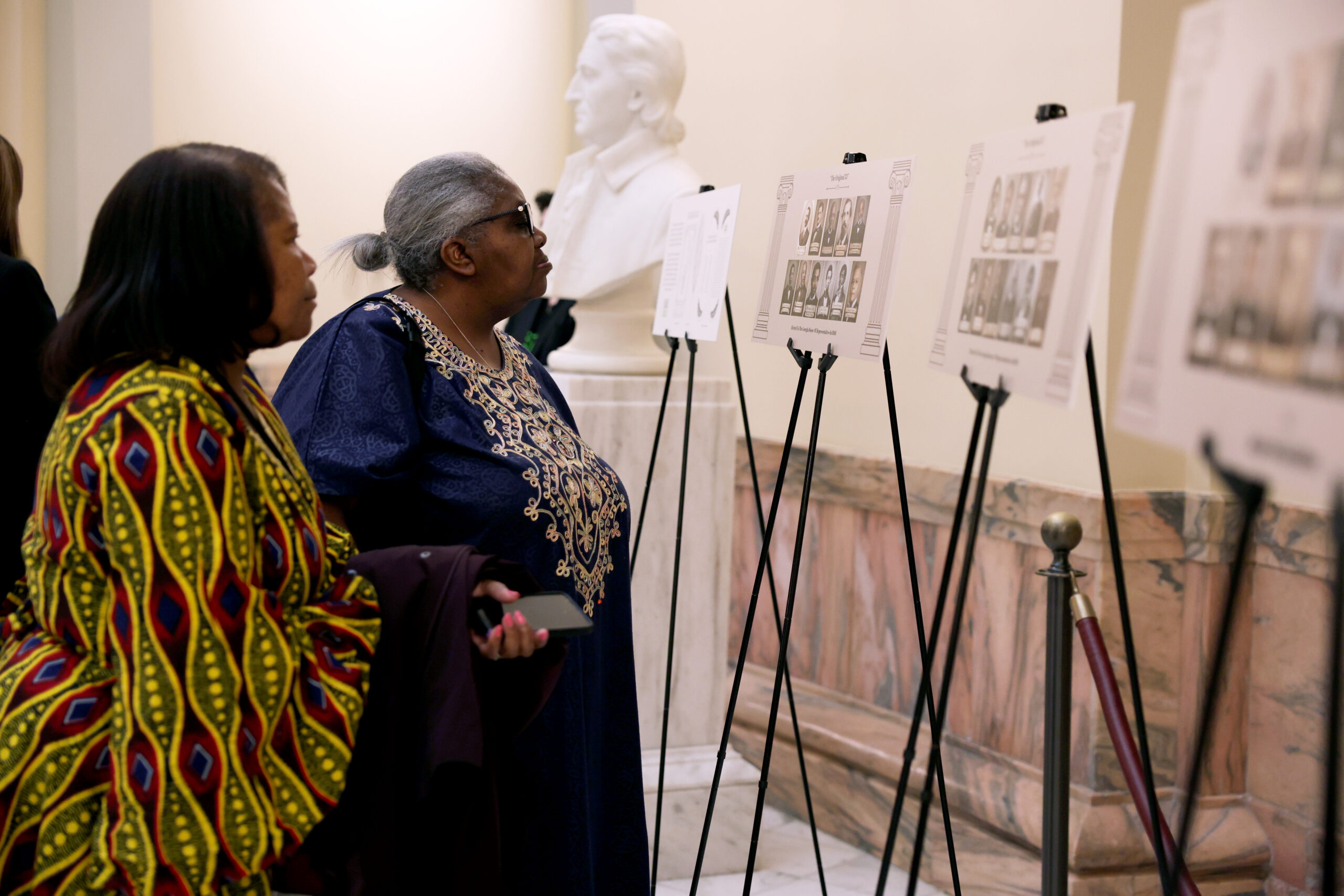
Jacquelin Ransom and Julia Britt, left to right, look at photos of the Original 33, the first African American members of the Georgia state legislature.
Crossover Day halts two Georgia voting bills, advocates weigh wins and losses
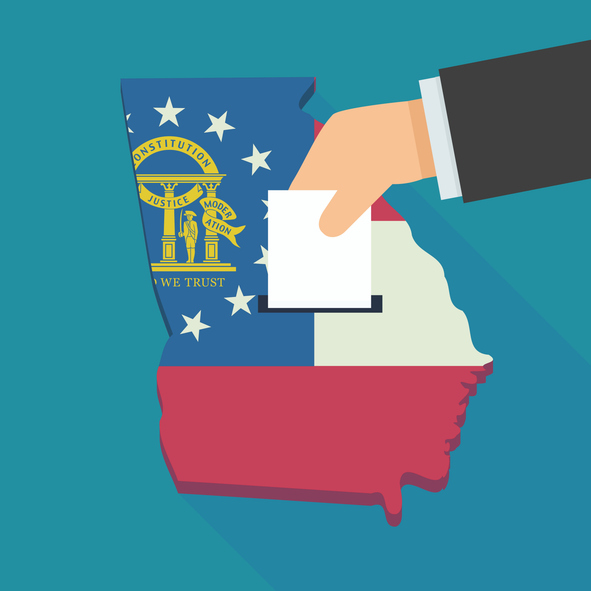
Two election bills failed to pass their chambers before Crossover Day. One voting rights activists celebrated. The other was a disappointment.
“Crossover sort of tells a little bit of the story of like, there was some progress made in two different directions. There’s a very clear pro voter agenda happening here, where we defeated (Senate Bill) 568, which was a bad bill for voters, and we have promoted this other bill, the Henry McNeal Turner Voting Rights Act, to stop any more kind of dangerous things from happening to voters,” said Isabel Otero, Georgia Policy Director for the Southern Poverty Law Center.
Senate Bill 568 was a massive bill that would have drastically changed the way voters cast their ballots in Georgia. It was narrowly defeated in the Senate on Crossover Day. However, activists expect some aspects of the bill to reemerge as amendments to bills that did survive March 6.
“It would have affected early voting sites for voters. It would have done a lot of things that, in our mind, are unnecessary and not well thought out,” Otero said.
Senate Bill 536, or the Henry McNeal Turner Voting Rights Act, also failed to pass its chamber, never receiving the opportunity for a vote.
What would the Voting Rights Act do?
The bill was named after Bishop Henry McNeal Turner, who was a former member of the state legislature, activist and leader in the African Methodist Episcopal church. He was among the 14 Black state representatives that were expelled by white lawmakers in 1868 shortly after being elected.
“His name attached to this bill sort of shows we believe in full citizenship. We believe in protecting the rights that allow us to safeguard that because these things are not guarding themselves,” Otero said. “We need to be proactive about protecting our rights, especially the voting rights because without voting rights, you can’t protect anything else.”
The Voting Rights Act would create a commission that would be in charge of determining whether any changes for elections would be discriminatory and increase the transparency on changes to election laws.
“Instead of waiting for a voter to be harmed, for their voice not to be heard,… we are saying before any of that, let’s actually make sure that this is a necessary change and that it will not impact any community inequitably,” she said.
Why do we need it?
Otero said the federal Voting Rights Act has slowly been chipped away at by the courts, and the reason voter discrimination has decreased has been because of the checks put in place to limit it.
“We need to at the state level start protecting ourselves, start making sure that we are putting forth a vision for what we want to see,” she said.
“We’re trying to reframe the conversation, which is yes, some of these federal protections exist, but they continue to go through changes because of the courts, and so rather than sort of waiting for a new set of legislation that will help, we need to do it at our state level,” she said.
What’s next?
Before the 2026 legislative session ends, Otero said they hope to receive a hearing for the bill, and they plan to meet with communities across the state to try to build momentum for the bill to pass next session.
“We’re trying to get a hearing on it, even if it’s post-crossover. We still want people to be heard. There’s a lot of community support and encouragement behind that bill,” she said. “We are going to put forth a vision for what we want and make it happen, and so this is our vision for what it would look like to truly protect voting rights in our state.”

-
The Thom Hartmann Program
Weekdays at 1pm
Thom Hartmann is a New York Times bestselling, four-times Project Censored Award-winning author and host of The Thom Hartmann Program, which broadcasts live nationwide each weekday from noon to 3pm Eastern. For 20 years, the show has reached audiences across AM/FM stations throughout the US, on SiriusXM satellite radio, and as video on Free Speech TV, YouTube, Facebook, and X/Twitter.
close  From CBS News
- Charlie Kirk's family blames Utah officials for failing to prevent his murder September 16, 2026The university has faced harsh criticism for a lack of key safety measures on the day of the shooting.
- How Olympian Aly Raisman learned to advocate for her own health September 16, 2026In the latest episode of "Healthful," Olympic gold medalist Aly Raisman discusses what she's learned about speaking up for herself and taking care of her body.
- A trusted seal made websites look legit. The weight-loss drug they sold wasn't. September 16, 2026Selling retatrutide commercially is prohibited by federal law. Yet, companies have promoted the drug on social media, thanks in part to being certified by LegitScript.
- Coast Guard, FBI boarded Texas-bound oil tanker to investigate cyberattack September 16, 2026The U.S. has so far not attributed the potential breach to a specific actor, but Iranian state media amplified the story in the weeks following the attack.
- Georgia execution delayed for hearing under new law that may reduce sentence September 16, 2026A Georgia judge has put an execution on hold to allow time for a hearing on whether the sentence should be reduced under a new state law that lets victims of abuse have their sentences reconsidered.
- House votes to limit Trump's power to strike Iran for 3rd time September 16, 2026The previous votes have failed to stop President Trump from waging war with Iran.
- Board votes to close Kennedy Center immediately for renovations, source says September 16, 2026Earlier Tuesday, a federal judge again blocked the board from adding President Trump's name to the facade of the building.
- Trump lashes out at judges ruling against his priorities, pet projects September 16, 2026After a federal judge ruled once again that the Kennedy Center could not also bear the name of President Trump, unless Congress directed it, the president's hand-picked board voted to shut the whole thing down. Ed O'Keefe reports from the White House.
- Father and daughter pilots happen to cross paths over air traffic control September 16, 2026Just before taking off for Munich, Germany, United Airlines pilot Kent Katnik, checked in with the tower and heard his daughter, Kenny Katnik, herself a pilot, about to take off for Syracuse. Tony Dokoupil has the story.
- New photos show widespread damage at U.S. positions caused by Iranian attacks September 16, 2026The images were sent to CBS News by active service members under condition of anonymity.
- Charlie Kirk's family blames Utah officials for failing to prevent his murder September 16, 2026
Post comments (0)