Category: Housing

  • Georgia lawmaker pushes rent reform, targets hidden fees and AI pricing

    Georgia lawmaker pushes rent reform, targets hidden fees and AI pricing

    Georgia lawmaker pushes rent reform, targets hidden fees and AI pricing

    In a tirade of affordability legislation, state Rep. Gabriel Sanchez, D-Smyrna, has garnered support and introduced several pieces of legislation to address housing affordability issues and protect renters.

    Sanchez recently introduced House Bill 1188, which would prohibit landlords from withholding the full rental price of a property and from charging hidden fees. The goal of the legislation is to increase transparency and fairness in residential rent pricing, according to the news release.

    “Georgia is one of the worst states to be a renter, and hidden fees only deepen housing insecurity for working class people,” Sanchez said in the release.

    In an interview with Sanchez, he said he is continuing his work on housing bills from the last legislative session.

    “We introduced last year House Bill 679 in particular, which got a hearing, which bans the use of AI software to artificially increase rents, which has been a huge issue, especially here in Georgia, including my own apartment complex that I live in,” he said.

    House Bill 864 would require more transparency from corporations about their ownership of single-family homes, and Sanchez said the bill would end ownership of single-family homes by major corporations.

    “I mean, obviously people are really, really struggling right now,” Sanchez said. “We have to make systemic change and have a government that actually works for the people, not just those at the top.”

    House Bill 1188 and 679 have been referred to the Judiciary Committee, and House Bill 864 has been referred to the Governmental Affairs Committee.

    “There’s a lot of work that needs to be done to take back our government and make it actually representative of the people and create a government and economy that works for all of us,” he said.


  • Rep. Kendrick rolls out package of bills aimed at affordability in Georgia

    Rep. Kendrick rolls out package of bills aimed at affordability in Georgia

    Rep. Kendrick rolls out package of bills aimed at affordability in Georgia

    State Rep. Dar’shun Kendrick, D-Lithonia, recently introduced three pieces of legislation that aims to address affordability and economic mobility issues.

    “Before affordability was like the buzzword, I’ve always worked on economic justice issues, so this is nothing new for me,” she said. “All these issues that we talk about down here are important… We can talk about voting rights and women’s rights and all these rights all day. It is on the pyramid of survival that you need to eat and have food and clothe yourself and have housing.”

    Here are the bills Kendrick is proposing.

    • House Bill 1016 would allow anyone living in a subdivision to request a squatter be removed from the premises. House Resolution 1046 is the accompanying constitutional amendment.
    • House Bill 1017, with the accompanying constitutional amendment House Resolution 1047, would require real property purchased by businesses to be assessed at 100 percent rather than 40 percent of its fair market value.
    • House Bill 1018 would exempt sales of clothing and school related supplies from sales and use tax during the month of August each year.

    For House Bill 1016, Kendrick said the greatest way to wealth for many Americans is home ownership, and squatters diminish property values and make it difficult for people to sell their properties. This law would give property owners more rights to address issues with squatters.

    “If you are living next to a squatter, like I was, and trying to sell your house, well, people that come and visit don’t want that energy,” she said.

    House Bill 1017 addresses issues with investment companies buying properties to rent and inflating prices.

    Although she didn’t want to ban corporate investment, Kendrick said she wanted to find a way to disincentivize investors.

    “It’s a win win for the state of Georgia and for single family homes that have individual homeowners,” she said.

    Georgia Republicans announced a plan to eliminate property taxes for homesteads by 2032 on Wednesday. Kendrick said that she had not read the legislation yet, but her proposal is a different approach to the issue than the Republicans.

    “A lot of what they are doing is tax cuts, tax cuts, tax cuts, and we all know if you bring in less, you have less to do things with that I think government is responsible for. My approach is to disincentivize by adding more taxes on bad players and on people who I think can take the monetary blow of having less money,” she said.

    Kendrick said House Bill 1018 tries to address everyday affordability issues for Georgians by reducing taxes on school supplies and clothes during the month of August.

    “So for me, affordability is… what am I going to do today that is going to save me money?” she said. “I’m trying to get something in people’s pockets every day.”

  • Metro Atlanta warming centers open as freezing temperatures grip region

    Metro Atlanta warming centers open as freezing temperatures grip region

    Metro Atlanta warming centers open as freezing temperatures grip region

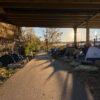
    As temperatures fall below freezing across metro Atlanta, warming centers are opening to provide overnight shelter for people facing dangerous winter conditions.

    One such center, operated by Tucker First United Methodist Church, began welcoming guests over the weekend ahead of the winter storm. By Monday evening, the facility had already reached capacity as more people sought relief from the cold.

    For Kareem, a 65-year-old man who has been unhoused for the past two years, the warming center has become a critical lifeline.

    “This warming center is a heaven-sent for everyone out here, including me,” he said.

    Before arriving at the church, Kareem spent nights sleeping outside a nearby grocery store. Now, he has access to a warm bed, showers, clean laundry and hot meals — services the center provides to every guest.

    “They let us have a shower, do our laundry, and have a nice hot meal,” he said.

    The warming center opens whenever temperatures drop below 30 degrees, and Kareem says he plans to stay until conditions improve.

    Operating the center is a round-the-clock community effort. Billy Bachman, a lead volunteer at the church, said volunteers work in three-person shifts to keep the center running.

    “No one gets paid,” Bachman said, adding that all meals are donated by local supporters.

    Even when the center reaches capacity, Bachman said no one is turned away on dangerously cold nights. Staff coordinate with Frontline, DeKalb County’s homeless services agency, to help locate additional shelter space when needed.

    “We will never send someone out on the street on a super cold night,” Bachman said.

    Advocates say warming centers can be lifesaving during extreme cold. Residents in need of shelter are encouraged to monitor local government updates and community resources for available locations as temperatures remain dangerously low.

  • McIntosh County voters overturn Sapelo Island zoning ordinance in Gullah Geechee referendum

    McIntosh County voters overturn Sapelo Island zoning ordinance in Gullah Geechee referendum

    McIntosh County voters overturn Sapelo Island zoning ordinance in Gullah Geechee referendum

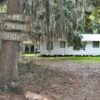
    McIntosh County voters on Tuesday repealed a controversial zoning ordinance affecting Sapelo Island, marking a major victory for the island’s Gullah Geechee residents after a prolonged fight to preserve their community and culture. The Atlanta Journal-Constitution reports the referendum overturns a 2023 decision by the McIntosh County Commission that allowed significantly larger homes to be built in the historic Hogg Hummock community.

    The special election capped more than two years of legal challenges, protests and organizing by residents and their supporters. AJC reports nearly 85% of voters backed the repeal, with turnout approaching a quarter of the county’s registered voters.

    The repealed ordinance had opened the door for two-story homes of up to 3,000 square feet on Sapelo Island. Many Gullah Geechee residents live in homes of about 1,400 square feet or less and warned that larger vacation homes would accelerate outside development, drive up property values and taxes, and threaten the survival of one of Georgia’s last intact Gullah Geechee communities, AJC reports.

    Sapelo Island’s Hogg Hummock community is home to descendants of formerly enslaved Africans who settled the island after the Civil War. Residents argued the zoning change would erode a way of life that has endured for generations.

    Supporters of the referendum relied on a rarely used provision of the Georgia Constitution that allows voters to overturn local government actions through petition. Organizers collected more than 2,300 signatures, though the effort faced multiple legal challenges before the Georgia Supreme Court allowed the vote to proceed, AJC reports.

    “I am definitely encouraged and grateful and proud of not only our community on Sapelo but the voters of McIntosh,” Josiah “Jazz” Watts, a Gullah Geechee descendant, said in an interview with AJC, calling the result a clear sign of countywide support for protecting the island’s heritage.

    Despite the decisive vote, uncertainty remains about what zoning rules now apply. Attorneys for the Gullah Geechee community argue the referendum repealed the county commission’s action but did not eliminate previous development restrictions, according to the report.

    McIntosh County Commission Chairwoman Kate Pontello Karwacki has taken a different position, saying the repeal leaves no zoning restrictions in place for Hogg Hummock. County leaders have scheduled a special meeting to determine next steps.

    A court injunction already blocks permits for homes larger than 1,400 square feet on the island, and the referendum does not change that order. AJC reports county officials have spent more than $500,000 on legal defenses and election costs tied to the zoning dispute.

  • Atlanta presses Fulton County over funding shortfall for homelessness services

    Atlanta presses Fulton County over funding shortfall for homelessness services

    Atlanta presses Fulton County over funding shortfall for homelessness services

    Atlanta and Fulton County leaders gathered last week at the Beacon on Cooper, an upcoming rapid housing development in South Atlanta, to address the issue of homelessness.

    Atlanta Mayor Andre Dickens addressed Fulton County’s admittance in December that it does not have the promised funds to cover the cost of services, according to Georgia Public Broadcasting.

    “Health and Human Services is a requirement of the county government, so we are standing here today saying: Do what you say you’re gonna do,” Dickens said at the gathering. “And for the next 30 years, you’re supposed to put up at a minimum $4.8 million. You can’t walk back from that.”

    As part of a 30-year agreement signed in 2019, the city of Atlanta is responsible for funding the construction of 230 supportive housing units scheduled to be completed this year, and Fulton County is responsible to cover the cost of supportive services.

    The agreement committed Fulton County to $4.8 million annually, which Dickens said it is short in 2026 by about $2.1 million.

    Fulton District 4 Commissioner Mo Ivory said Fulton County needs to honor their commitment to reduce homelessness.

    “Fulton County is already paying for homelessness through jail operations, emergency care, and crisis services,” she said. “Supportive housing costs less and produces better outcomes. This is not spending more; it’s about spending smarter.”

    Fulton County Chairman Robb Pitts told Atlanta News First that the 2026 budget will be voted on Wednesday, and the missing $2.1 million will be in the final budget.

    “Read my lips. That $2.1 million dollars will be in the approved 2026 budget,” Pitts said.

    However, Pitts said the agreement between the city and county states that the county must only pay the funds if they are available.

    “2027 and beyond we’ll have to find the money, because we may or may not have it,” he said.

  • Metro Atlanta rent prices show signs of cooling, but costs remain high in key cities

    Metro Atlanta rent prices show signs of cooling, but costs remain high in key cities

    Metro Atlanta rents cool in some cities, but affordability remains uneven

    A new report shows rent prices in parts of metro Atlanta eased slightly in 2025, though many of the region’s most popular cities remain among the most expensive places to rent in Georgia.

    According to an annual report from apartment rental site Zumper, the median rent for a one-bedroom apartment statewide stood at $1,264 at the end of the year.

    In metro Atlanta, Alpharetta ranked as the most expensive city for one-bedroom apartments, with a median rent of $1,610. Atlanta followed closely behind at $1,600.

    For two-bedroom units, Atlanta topped the list with a median rent of $2,040, while Alpharetta came in second at $1,950.

    Sandy Springs ranked third among the most expensive metro Atlanta cities, with one-bedroom apartments averaging $1,410 and two-bedroom units at $1,800.

    Despite its high prices, Alpharetta also experienced one of the steepest month-to-month declines, with rents dropping 3.6% from November to December.

    On the lower end of the market, LaGrange posted the most affordable rents in metro Atlanta, with median apartment prices well below the statewide average at $850. Rome followed with a median rent of $970.

    LaGrange also recorded the largest year-over-year rent decrease, with prices falling 26.7% compared to 2024. Marietta and East Point were the only metro Atlanta cities to see rents increase year over year, rising 0.8% and 4.5%, respectively.

    The full report is available on Zumper’s website.