


Category: Health

  • Cyclospora outbreak highlights push for locally grown food in Georgia

    Cyclospora outbreak highlights push for locally grown food in Georgia

    Cyclospora outbreak highlights push for locally grown food in Georgia

    A nationwide cyclospora outbreak was linked to a corporate lettuce supplier. This has caused Georgia agriculture leaders to celebrate the value of locally grown food.

    Joe Maxwell is the co-founder of the advocacy group Farm Action. He said the outbreak highlights a much larger problem with the country’s industrial food system.

    “Forty percent of the mixed salad kits in the country are Taylor Farms,” Maxwell said. “Regardless of where you walk into, the likelihood is that you could be dealing with Taylor Farms. The restaurants and the others need to be asking more questions.”

    The Centers for Disease Control and Prevention confirmed more than 11,000 cases of cyclospora nationwide with nearly 500 hospitalizations and two deaths.

    Georgia has different programs such as Georgia Grown and the “Meet Me at the Market” campaign to encourage buying from local farmers and producers. Advocates say knowing where your food comes from is the “ultimate safety net.”

    Maxwell said policymakers need to rethink how the U.S. receives food because a large portion of the lettuce sold in the U.S. is grown and produced by Taylor Farms of Mexico.

    “Our government is the largest food purchaser in the United States and it needs to focus its purchasing power on helping secure local and regional food systems and stop going to the one-stop shop of the Taylor Farms and the other big concentrated companies,” Maxwell urged.

    The CDC reported that the infected products should no longer be available at restaurants or grocery stores because their best-by dates have passed.

  • Atlanta nurse urges early health care after unexpected brain tumor discovery

    Atlanta nurse urges early health care after unexpected brain tumor discovery

    Atlanta nurse urges early health care after unexpected brain tumor discovery

    A 24-year-old nurse in Atlanta encourages people to seek health care early after unexpectedly finding out that she had a brain tumor.

    Cameron Ferenchik went to a normal doctor’s appointment after noticing swollen lymph nodes in her neck. An MRI revealed that her lymph nodes were fine, but she had a tumor in her brain blocking the flow of spinal fluid.

    “My primary care doctor calls me the next day and was like, ‘Hey, your lymph nodes actually look fine, but we incidentally found a mass in your brain,’” Ferenchik said. “I was like, ‘What?’ You don’t ever expect that. I was just in shock and didn’t know what was going to happen. I didn’t expect to be going to surgery just a couple of days later.”

    Doctors were able to remove the tumor, which was not cancerous.

    Ferenchik says this is the reason people should seek treatment early because they might find something unexpected.

    “I think seeking care early and often is so important,” she said.

    Dr. Jim Robinson, a neurosurgeon at Northside Hospital, removed part of the tumor and said it was lucky they caught the tumor early.

    Robinson says headaches are a common symptom of brain tumors, but symptoms may vary depending on the tumor’s size and location. The Mayo Clinic recommends seeking care if symptoms persist.

  • Georgia Power clears deal to supply massive OpenAI data center

    Georgia Power clears deal to supply massive OpenAI data center

    Georgia Power clears deal to supply massive OpenAI data center

    Georgia’s regulatory review process cleared Georgia Power’s agreement to supply electricity to OpenAI’s massive data center in Effingham County as residents voiced concerns about the negative impacts of the facility.

    Georgia Public Service Commission staff reviewed the agreement, which calls for Georgia Power to supply 3,200 megawatts of electricity to Project Camellia that will be delivered in phases through 2032.

    Because the staff did not object to the contract, it moved forward.

    OpenAI predicts that Project Camellia will create thousands of construction and permanent jobs, provide $80 million in community benefits and generate millions in state and local taxes.

    Effingham County officials say the data center will provide the opportunity to eliminate residential property taxes in the county.

    Effingham County Commissioner Roger Burdette said at an information session on Aug. 26 that the data center was an opportunity to bring something different to the county while reaching the county’s property tax goal.

    “This was an opportunity to take a look at the property, make a decision that made sense, to do something, in my opinion, of higher and better use,” Burdette said.

    However, residents are not so sure. John Smith told GPB News that reducing property taxes would be a benefit, but the county may lose the reasons he bought his property five years ago.

    “If this is not done right, we could see serious harm to many of our neighbors, which could include lower home values and, essentially, a lower quality of life,” he said. “This isn’t what I remember calling home.”

    OpenAI says the project is a $20 billion investment, and Georgia Power claims that revenue from large load customers may save the typical residential customer around $15 per month starting in 2029.

  • Free screenings highlight prostate cancer risks for Georgia men

    Free screenings highlight prostate cancer risks for Georgia men

    Free screenings highlight prostate cancer risks for Georgia men

    September is Prostate Cancer Awareness Month, and as the month approaches, advocacy groups and lawmakers are encouraging men to receive screenings.

    Fulton County Commissioner Bob Ellis partnered with Emory’s Winship Cancer Institute to provide free prostate cancer screenings for men.

    Ellis told CBS News Atlanta that the work is personal for him.

    “I found out last fall that I was diagnosed with prostate cancer, and I learned early,” Ellis said. “That gave me the opportunity to develop a treatment plan that worked for me.”

    The American Cancer Society reports that about one in eight men will receive a prostate cancer diagnosis in his lifetime and estimates that nearly 334,000 men will be diagnosed in 2026. 

    Dr. Martin Sanda of Emory’s Winship Cancer Institute said Black men are disproportionately affected by the disease.

    “They have two to three times the risk of men of other races of developing prostate cancer, and importantly as well, their risk of developing it is at an earlier age,” he said.

    ZERO Prostate Cancer reports that Georgia ranks fifth nationally in prostate cancer diagnoses and eighth in prostate cancer deaths.

  • Georgia lawmakers scrutinize pharmacy benefit managers and drug pricing

    Georgia lawmakers scrutinize pharmacy benefit managers and drug pricing

    Georgia lawmakers scrutinize pharmacy benefit managers and drug pricing

    A Georgia House study committee is examining how pharmacy benefit managers, or PBMs, influence prescription drug prices and access, with independent pharmacists and industry representatives offering sharply different views.

    PBMs negotiate drug prices among insurers, manufacturers and pharmacies. Independent pharmacists say the companies’ market power can put community pharmacies at a disadvantage, particularly in rural Georgia.

    Hugh Chancey, a southwest Georgia pharmacist, told lawmakers about an elderly customer whose prescriptions were being moved to another pharmacy despite her objections. After the patient confirmed she wanted to remain with Chancey, he said the PBM still sent a fax ordering the prescriptions transferred.

    “We’re not asking for special treatment,” Chancey told the committee. “We’re asking for a level playing field.”

    Pharmacists say patient steering is one of several problems. They also cite reimbursement rates that can fall below the cost of dispensing medications, arguing those practices contribute to independent pharmacy closures.

    The issue is particularly significant in rural Georgia. Five or six counties have no retail pharmacy, while in counties with fewer than 15,000 residents, independent pharmacies outnumber corporate locations by about 6-to-1.

    Katie Bell, who closed Bell’s Family Pharmacy in Tate in 2024, said PBM reimbursement played a major role in the decision. She cited a case in which her pharmacy received $1.90 to dispense Lipitor, while publicly available State Health Benefit Plan data showed average payments of $46.87 to major chains for the same drug.

    PBM representatives reject claims that they deliberately disadvantage independent pharmacies. Michael Power, a lobbyist for the Pharmaceutical Care Management Association, said PBMs have saved Georgia and organizations paying for health insurance “almost $30 billion over the last 10 years.”

    CVS Health spokesman Phillip Blando said PBMs need a broad network that includes independent pharmacies to serve patients throughout the state. He also argued that isolated reimbursement examples do not represent the overall market.

    Georgia has taken some steps to regulate PBMs. A 2025 law established a minimum dispensing fee for prescriptions under the State Health Benefit Plan. A broader reimbursement-parity measure was vetoed in 2024 over concerns about its potential cost to the state.

    Committee Chairman Ron Stephens, a pharmacist and Savannah Republican, said transparency is a central concern.

    “You know, whenever our own Department of Community Health … cannot get information to base decisions on from the very PBM that they’re contracting with, it’s ridiculous,” Stephens said.

    The committee is also reviewing the federal 340B drug discount program, which has drawn competing claims from drug manufacturers and safety-net hospitals.

    Rep. Butch Parrish, a Swainsboro Republican, said lawmakers need to sort through the conflicting information.

    “There’s a lot of confusion,” Parrish said, adding that the committee hopes to “get down into the weeds” and gather enough information to make sound policy decisions.

  • GLAAD survey shows Americans still lack basic HIV knowledge

    GLAAD survey shows Americans still lack basic HIV knowledge

    Many Americans still misunderstand HIV, new GLAAD survey finds

    Medical advances have dramatically changed HIV prevention and treatment, but many Americans may still be relying on an outdated understanding of the virus.

    New findings from GLAAD’s biannual HIV Stigma Report point to a broad information gap, particularly among younger adults. The organization is calling for more current and realistic conversations about HIV in both public health education and entertainment.

    The generational divide is notable. Sixty percent of Generation X respondents said they felt knowledgeable about HIV, compared with only 31% of Generation Z.

    Jerrell Hardnett, associate director of education and advocacy for GLAAD, said having more access to information does not necessarily mean people understand the subject.

    “Generation Z has information everywhere but does lack knowledge. They lack a lot understanding of what’s actually happening, and it can be argued to say that they have the most resources to them today, and yet they feel as if they are not well-informed,” Hardnett told Public News Service.

    The survey also examined how often Americans encounter people living with HIV in popular culture. Seventy percent said they had not seen a television program or film featuring someone living with HIV in the previous year.

    That absence, advocates argue, leaves too much room for old stereotypes to remain part of the public conversation.

    Hardnett said entertainment has not kept pace with the reality of life with HIV, particularly as modern treatment allows people to maintain careers, relationships and families.

    “We are not doing stories that are reflective of people living with HIV today who are going to work every day, having sexual intimacy, having families, having mothers who are living with HIV and their children are negative. We don’t have stories that are portraying these real live people,” Hardnett said.

    The findings matter beyond representation. Stigma and misinformation can influence whether people feel comfortable discussing HIV, getting tested or seeking medical care.

    Modern medicine has also fundamentally changed HIV prevention. People who take effective treatment and maintain an undetectable viral load do not sexually transmit HIV, while preventive medications can significantly reduce the risk of acquiring the virus.

    Even with those advances, public awareness remains uneven.

    Hardnett said there is still a sizable portion of the population that could be reached with clearer, more accurate information about HIV.

    “We have 86 million movable middle audience (members) who we can have conversations with. These are people who can be moved and persuaded into moving more towards allies than resisters,” Hardnett said.

    The study suggests the challenge is not simply getting more HIV information in front of Americans. It is making sure that information reflects the current science and the lives of people living with HIV.

    For health educators and advocates, that means challenging misconceptions, making prevention information easier to understand and encouraging media organizations to portray HIV beyond the stereotypes associated with the earliest years of the epidemic.

    According to Public News Service, the gap identified by GLAAD also highlights a broader problem in public health: scientific progress does not automatically translate into public knowledge. As HIV treatment and prevention continue to evolve, advocates say the way Americans learn about the virus needs to evolve with them.

  • West Nile virus detected in mosquito traps in Atlanta area

    West Nile virus detected in mosquito traps in Atlanta area

    West Nile virus detected in mosquito traps in Atlanta area

    Mosquito traps in the Atlanta area have tested positive for the West Nile virus over the past week.

    Health officials said Monday that four more mosquito traps tested positive for the virus in DeKalb County. That’s the second time traps have come back positive in the county this summer.

    The traps were in Avondale Estates, Clarkston, Doraville and the Decatur-Stonecrest area.

    Fulton County reported its second positive test last week from a trap near Old National Park. County officials decided to close the park last week while they discussed next steps with health officials.

    Rico Jackson was walking through the park Wednesday when he told CBS News Atlanta that he was unaware the virus was detected nearby.

    “This should be the least we should worry about, mosquitoes,” Jackson said. “That’s crazy, man, you’ve got too many kids practicing over here and people who have been over here for years who probably don’t even know that.”

    According to the Centers for Disease Control and Prevention, only one case of the West Nile virus has been reported in a human in Georgia in Muscogee County. Symptoms include fever, headache, body aches, vomiting, diarrhea or rash.

    The CDC recommends using an insect repellent registered with the Environmental Protection Agency, wearing long, loose-fitting shirts and pants and avoiding being outside between dusk and dawn.

  • Georgia lawmakers examine rising foster care costs amid $85M budget shortfall

    Georgia lawmakers examine rising foster care costs amid $85M budget shortfall

    Georgia lawmakers examine rising foster care costs amid $85M budget shortfall

    A joint study committee of the Georgia General Assembly met Thursday to discuss the state’s foster care system amid rising costs.

    The Joint Study Committee on Evaluating Escalating Costs in Georgia’s Foster Care System was created to review the system, services and costs of those services.

    State Sen. Kay Kirkpatrick, co-chair of the committee, opened the meeting on Thursday saying the committee is the third of its kind in the past three years to examine these challenges. However, it is the first joint committee on the issue.

    “Many states are struggling with the rising costs of caring for foster children, particularly older children and those with medical or mental health needs, leading to a gap between available funding and the needs of the children in the system,” Kirkpatrick said.

    Georgia’s Division of Family and Children Services reported an $85 million shortfall in its budget. The deficit is due to a combination of reduced or delayed federal funds, increasing demand for the foster care system and increased operation costs and resulted in the reduction or elimination of certain services, according to the agency head.

    When Gov. Brian Kemp made an additional $300 million cut to the state budget to account for the cut in income taxes, $600,000 was taken from clothing and supplies for foster children.

    Wayne Naugle is a foster father and founder of Families 4 Families. He said he thinks local communities will need to fill the gap that the state is leaving.

    “I think it’s a really good time for our communities to step up, whether it’s communities or churches or social organizations,” Naugle said. “Not everyone can foster, but everybody can buy a backpack or help out with school clothes, and everyone can get a notebook, paper and pencils for kids.”

    Naugle said that in 2019, Georgia had about 7,500 foster homes. Today, that number has dropped to 4,500.

    The committee plans to have its next meeting on Sept. 17.

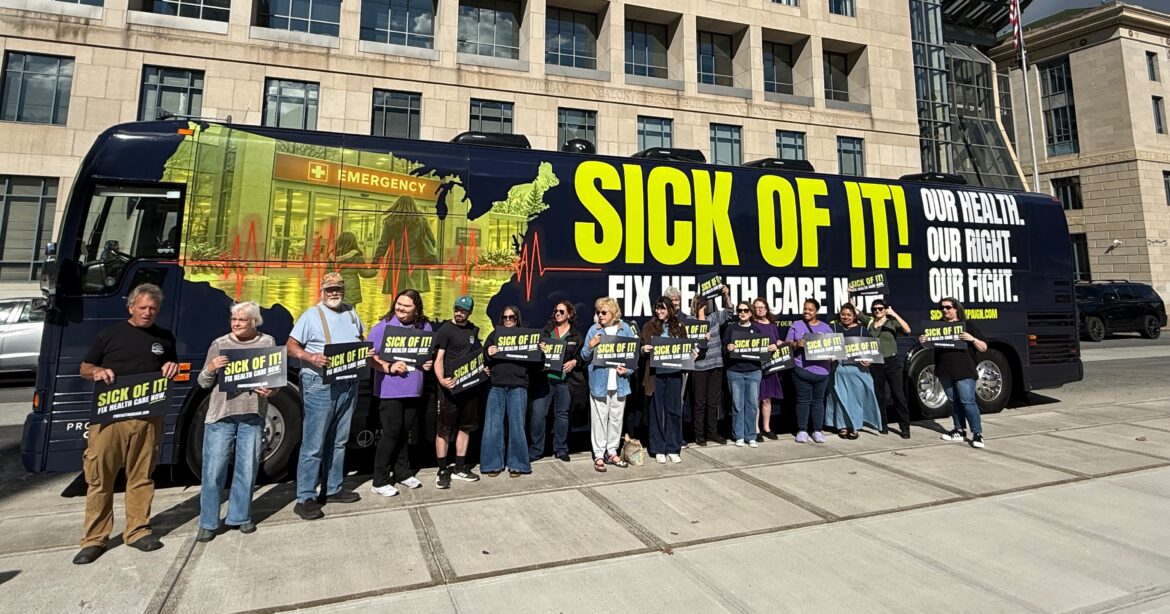
  • Georgia voters across party lines agree healthcare costs are too high

    Georgia voters across party lines agree healthcare costs are too high

    Georgia voters across party lines agree healthcare costs are too high

    A new statewide poll shows that Georgia voters on both sides of the aisle agree healthcare costs are too high, and the system requires changes.

    The poll was conducted by the University of Georgia’s Survey Research Center and found that more than three in five voters said health care is unaffordable.

    One in three skipped or delayed care in the past year because of cost.

    Teri Anulewicz is the vice president of government affairs for the consulting firm Capital City Public Affairs and a former state representative who served on the House Public Health Committee. She said the findings should be a wakeup call for politicians.

    “Healthcare costs are a massive concern, and when you’re looking outside of the metro areas, Atlanta, Augusta, Columbus, Savannah, you’ve got a large part of this state where people don’t feel like they can access the care that they need,” Anulewicz said.

    Here are some key findings:

    • 86% of voters say increasing access to behavioral health care should be a priority.
    • 81% say the same for maternal health access and ensuring everyone has health insurance.
    • Eight in 10 voters say the quality of care depends on the type of insurance you have and where you live.
    • 62% said health care costs too much.
    • 37% skipped or delayed care in the past year.

    Trey Hood is a professor of political science and director of the Survey Research Center at the University of Georgia. He said the most striking finding was the amount of agreement between Republicans and Democrats.

    “Three out of five likely voters in the state indicated that healthcare is not at all affordable or not very affordable. This would include half of Republicans, three-quarters of Democrats, and seven out of 10 independents,” Hood said.

    The Georgia Health Commission commissioned the poll and said the findings are being shared with policymakers, candidates and the public.

  • Georgia communities push back as data center boom raises water concerns

    Georgia communities push back as data center boom raises water concerns

    Georgia communities push back as data center boom raises water concerns

    As Georgia becomes a popular spot for data centers, local communities are finding ways to limit their expansion.

    Atlanta City Council member Kelsea Bond recently introduced legislation to create a task force to study the impacts of data centers on water, energy and health in an effort to fight back against the technology giants.

    “Just because there’s so many quickly moving parts, and I think a lot of legislators haven’t been able to take the time and sit down to fully understand what data centers are, how they work, or how they impact our communities,” Bond said.

    Georgia has 230 data centers across the state, making it the sixth most in the country. Despite a state data center moratorium failing to pass the state legislature this year, similar limitations have passed in at least 24 Georgia cities and counties.

    Telfair County has a population of about 12,000 people, and County Commissioner Dakkia Bradshaw said her little community is concerned about the data center boom.

    “I’ve been trying to push for a moratorium as well because I don’t want a data center to come in. We already have water issues. Our water quality is not the best. So if a data center came in, that would be detrimental to our aquifers here,” Bradshaw said.

    U.S. Sen. Raphael Warnock recently requested the Environmental Protection Agency to issue guidance to local communities regarding protecting water supplies amid data center expansion.

    Water supply has been a key concern in communities across Georgia with some reporting brown drinking water due to construction and others worried about the extensive use of water by the data centers.