Category: Featured

  • Meet the “liberal redneck” Trae Crowder & Dr. Kristin Lyerly, too

    Meet the “liberal redneck” Trae Crowder & Dr. Kristin Lyerly, too

    Comedian – “liberal redneck” – Trae Crowder is coming to Atlanta later this month for four nights of side-splitting laughs, so he spent some time jawing with Ron about the current state of politics, of course, but also provide a little background on his rise to fame, how he and his wife have managed to raise their sons to be less “redneck,” and most importantly, the proper pronunciation of Trae’s Tennessee hometown – because in the south, it’s never as it would seem.

    Trae explains how growing up in the rural South shaped his comedy and his political voice, and why changing minds isn’t always the goal.

    CBS News justice correspondent Jacob Rosen joined Ron to break down the newly unsealed affidavit behind the FBI’s seizure of hundreds of 2020 election ballots from Fulton County—and why legal experts are raising serious questions.

    Ron took a quick peak into Georgia political fundraising hauls for the state’s top two offices, quickly, too, and chronicled another small Georgia town about to be overwhelmed by an uninvited and unwanted ICE detention facility.

    To cap a thorough show, Ron caught up with famed OB/GYN and radio show and podcast host Dr. Kristin Lyerly, new Georgia NOW (Wednesday nights at 6pm). The two discuss health care, reproductive rights and her recent auto accident bringing her first-hand experience with health insurance shortcomings.


  • Federal job cuts push unemployment higher for Black women in Georgia

    Federal job cuts push unemployment higher for Black women in Georgia

    Federal job cuts push unemployment higher for Black women in Georgia

    Black women in Georgia are seeing their unemployment rate rise as federal diversity, equity and inclusion programs have been rolled back under the Trump administration.

    Recent data show federal workforce reductions and policy shifts have disproportionately affected Black women in public-sector and administrative roles. The unemployment rate for Black women rose by nearly 1.5% last year. In Georgia and nationwide, they are more likely than other groups to hold government and public-facing jobs, sectors hit by federal budget cuts.

    Chiquita Hall-Jackson, an employment and civil rights attorney, said federal employment has historically provided stability for Black women, making the recent job losses especially destabilizing.

    “The government is the number one employer of Black people, including Black women,” Hall-Jackson said. “When positions are eliminated through buyouts, forced retirements or firings — especially leadership roles — this is where we land.”

    Supporters of the administration and Project 2025 said shrinking the federal workforce and scaling back DEI programs reduces costs and increases efficiency. Critics argued the approach disproportionately affects workers of color and women.

    As displaced workers search for new opportunities, some face added uncertainty from rapid labor market changes. A Reuters-Ipsos poll found 71% of Americans worry artificial intelligence could lead to fewer jobs.

    In response to job losses, more Black women are turning to entrepreneurship. A 2025 Wells Fargo report found Black women-owned businesses grew more than 7% last year, continuing a long-term trend toward self-employment.

  • Fulton County seeks return of 2020 election materials after FBI raid

    Fulton County seeks return of 2020 election materials after FBI raid

    Fulton County seeks return of 2020 election materials after FBI raid

    Fulton County filed a motion in federal court Wednesday after an FBI raid at the county’s election hub removed hundreds of boxes of ballots, images and voter records tied to the 2020 election.

    County Commission Chairman Robert Pitts said the motion, filed on behalf of himself and the Fulton County Board of Registration and Elections, seeks the immediate return of all seized election materials and greater transparency around why they were taken. He said county leaders and outside legal experts warn the case could have consequences beyond Fulton County.

    “This case is not only about Fulton County, it’s about elections across Georgia and across the nation,” Pitts said.

    The county is also asking a judge to unseal the affidavit used to obtain the FBI search warrant.

    Since 2020, Pitts said, Fulton County has conducted 17 successful elections without issues, but questions remain about where the seized materials are now and how they’re being handled. Those concerns are shared by election security experts who say ballot handling is critical to election integrity.

    Mark Lindeman, policy and strategy director for Verified Voting, observed Georgia’s 2020 verification process in four counties and provided technical support during the state’s large-scale audits. Lindeman said what troubles him most about the FBI raid is that chain-of-custody rules required under Georgia law weren’t followed.

    “Every time ballots move from one location to another, all of that is documented,” he said.

    Lindeman noted Georgia’s 2020 results were verified through the original count, a full hand-count audit and a recount by rescanning ballots. County officials say they still do not know where the seized materials are or what is being done with them.

  • Fitz Johnson announces bid to reclaim Georgia Public Service Commission seat

    Fitz Johnson announces bid to reclaim Georgia Public Service Commission seat

    Fitz Johnson announces bid to reclaim Georgia Public Service Commission seat

    Fitz Johnson has officially announced that he is running to take back a seat on the Georgia Public Service Commission.

    In November 2025, Johnson, a Republican, faced off against Democrat Peter Hubbard and lost. Hubbard received nearly 63% of the vote.

    Districts 3 and 5 will be on the ballot this November, and Johnson wants to reclaim his seat. Hubbard has also announced he will run for reelection for a full six-year term.

    “Reliable, affordable power is not a luxury. It’s the backbone of family budgets, job growth and Georgia’s economic future,” Johnson said in his campaign announcement. “Conservative energy policy is the path to keeping the lights on and costs under control.”

    Johnson was originally appointed to the position by Gov. Brian Kemp in 2021 and did not face an election due to a lawsuit that suspended all PSC elections, according to WABE.

    Republican Tricia Pridemore has held the seat for District 5 since 2018. Angelia Pressley, a Democrat, has announced her candidacy for the seat, according to WABE.

    Candidates will qualify in March ahead of the May 19 primary.

  • Georgia Republicans roll out childcare, Pre-K bills to support families

    Georgia Republicans roll out childcare, Pre-K bills to support families

    Georgia Republicans roll out childcare, Pre-K bills to support families

    Georgia Republicans held a news conference last week to announce a package of legislation to support Georgia families. 

    “Every family deserves a chance to thrive, but for many working parents across our state, the cost of childcare is forcing them to make difficult decisions between remaining in the workforce and staying home,” said Georgia House Speaker Jon Burns.

    The initiative includes legislation and the allocation of funds to support families with children in Pre-K or rising Pre-K students.

    House Bill 1123 would expand after-school services to Pre-K students. The bill would require public schools that offer Pre-K and also offer after-school services to grades K-5 students to expand their after-school programs to include Pre-K students.

    The package includes allocating $9.7 million to fully fund before-school, after-school and holiday-care for low-income and priority eligible Georgia Pre-K students and uses $9.7 million in federal funds to increase the number of children with working parents covered by the childcare subsidy for low-income and priority-eligible children.

    It also invests $2 million in lottery funds to expand the Summer Transition Program for rising Pre-K students to help families with childcare assistance.

    “What you’ve heard today are tangible, meaningful, and significant policy changes, seven in total, both budgetary and legislative, that will make a real difference in the lives of Georgians. It demonstrates our continuing commitment to children, women, and families throughout Georgia,” said Georgia House Speaker Pro Tempore Jan Jones.

  • Georgia House passes bill expanding feral hog hunting, allows use of drones

    Georgia House passes bill expanding feral hog hunting, allows use of drones

    Georgia House passes bill expanding feral hog hunting, allows use of drones

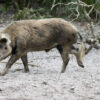
    The Georgia House passed a bill last Tuesday that expands feral hog hunting in the state.

    House Bill 946 would allow the use of drones in hog hunting and remove the requirement of a license for trapping feral hogs. The law would also remove the need for a wildlife control permit for hunting feral hogs from a moving vehicle.

    The bill passed the House with 163-1 votes.

    “I don’t think that this bill alone will solve our feral hog problem,” said Charlie Killmaster, the senior wildlife biologist with the Georgia Department of Natural Resources Wildlife Resources Division. “Systematically through law changes and regulatory changes, we have steadily reduced any potential restrictions that might get in the way of hog control efforts, and this is another one of those steps.”

    If passed, drones could be used to spot a sounder of hogs and increase efficiency for trapping and hunting efforts. The use of drones in hunting would be considered unethical under normal circumstances, Killmaster said.

    “With feral hogs, this is not hunting. It’s control,” he said. “We stick to fair chase principles for our native species that are supposed to be here, but with feral hogs, they don’t get any of those protections.”

    What’s the big deal?

    Feral hogs are an invasive species that were brought over when European settlers colonized the Americas. Issues with hogs arise in how they forage for food.

    “They root up the ground. They dig up the ground looking for insect grubs, tubers, things like that,” Killmaster said. “In the process of doing that they damage agricultural lands. They damage crops. They eat crops. They cause a lot of erosion and runoff in creeks and rivers.”

    In addition, the waste hogs produce can pollute waterways because hogs spend a lot of their time wallowing in water sources, which can negatively affect other wildlife species, Killmaster said.

    The Georgia Feral Hog Task Force works with several state and federal agencies as well as non-governmental organizations to manage feral hog populations, Killmaster said.

    The Georgia Department of Natural Resources launched the Hog Down Awards Program to incentivize hog control efforts and award participants with better tools to trap hogs. The department will award 20 whole-sounder feral hog traps per year to winners of the contest.

  • Republicans support birth control? Georgia GOP backs bill, expands access to contraceptives

    Republicans support birth control? Georgia GOP backs bill, expands access to contraceptives

    Republicans support birth control? Georgia GOP backs bill, expands access to contraceptives

    Georgia House Republicans announced Wednesday a batch of bills dedicated to putting “Georgia Families First.” 

    Among them was a measure to increase access to contraceptives across the state. House Bill 1138 would allow pharmacists to prescribe birth control and also allows patients to receive more than one month of birth control pills at a time.

    State Rep. Beth Camp, R-Concord, said 36 other states already have similar measures in place.

    “In my family, something that’s really important is opportunities, and when people have access to family planning such as contraception, they’re able to bring opportunities to light because they’re able to make plans for their future,” she said.

    Camp highlighted the importance of being able to receive more than a month of birth control at a time.

    “For some individuals who don’t have good transportation or live in more rural areas, who travel, who are in college, or for a litany of reasons, it allows them access for up to 12 months at a time,” she said.

    Camp said she was honored to bring the bill to the house because she has a 25-year-old daughter, and she hopes to get the governor’s signature soon.

    Georgia House Speaker Jon Burns said the bill would significantly increase access to family planning resources for women in Georgia.

    “As I often say, life is about timing, and for many families that means having the tools and resources they need to responsibly plan for the future and start their families when the time is right,” he said.

    The group also put forward House Bill 1118, which extends paid maternity leave for state employee birth mothers to 9 weeks, and plans to allocate $8.9 million to expand the Department of Public Health’s Home Visiting Nurse Program.

  • Rep. Barry Loudermilk won’t seek reelection, opening Georgia’s 11th District

    Rep. Barry Loudermilk won’t seek reelection, opening Georgia’s 11th District

    Rep. Barry Loudermilk won’t seek reelection, opening Georgia’s 11th District

    U.S. Rep. Barry Loudermilk announced Wednesday that he will not seek another term in Congress leaving Georgia’s 11th Congressional District open for the taking.

    Loudermilk, who has served six terms, marks the fourth departure of Republican representatives from Georgia. 

    “It is time to contribute to my community, state and nation in other ways,” he said to the Atlanta Journal-Constitution.

    U.S. Reps. Buddy Carter and Mike Collins dropped their positions to run for U.S. Senate, and Rep. Marjorie Taylor Greene resigned after a public dispute with President Donald Trump.

    Loudermilk released a public statement Wednesday explaining his reasons for throwing in the towel.

    “My wife and I have prayed diligently and discussed this extensively; and, while this is not an easy decision, we believe it is the right one,” he wrote. “While serving my constituents in Congress ranks among my greatest honors, being a husband, a father, and a grandfather holds even greater importance to me; and at this time, I wish to spend more dedicated time with my family.”

    Loudermilk serves on the U.S. House Financial Services Committee and the Committee on House Administration. He is also the Chairman of the Select Subcommittee of the House Judiciary Committee, which is investigating the Jan. 6, 2021 events at the Capitol.

    The 11th Congressional District covers a large swath of northwest Georgia, including parts of Cobb and Cherokee counties as well as Bartow, Gordon and Pickens counties.

    “Thank you to the great people of Georgia’s Eleventh Congressional District for allowing me to serve you, and to my incredible staff for your years of outstanding service to our district, state, and nation,” Loudermilk wrote.

  • Georgia Legislative Black Caucus pushes civil rights, Medicaid expansion at Capitol

    Georgia Legislative Black Caucus pushes civil rights, Medicaid expansion at Capitol

    Georgia Legislative Black Caucus pushes civil rights, Medicaid expansion at Capitol

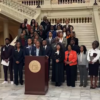
    The Georgia Legislative Black Caucus arrived at the Georgia Capitol Monday to advocate for their legislative priorities.

    Coinciding with the start of Black History Month, the organization laid out their priorities in six categories: health, housing, wealth, education, safety/justice and advocacy.

    State Rep. Jasmine Clark, D-Lilburn, said that Georgia needs its own civil rights legislation like Texas, Louisiana and North Carolina and is the lead sponsor in House Bill 670, which would be just that.

    “In a state that produced prominent Civil Rights leaders like Martin Luther King and John Lewis, Andrew Young and Hosea Williams and so many others, it is actually shameful that the state of Georgia has less protections against discrimination than some of our Southern neighbors,” Clark said. “We as a nation are watching the unraveling of civil rights happen right before our eyes all across the country.”

    Clark said the bill would also require the state to collect data on racial profiling and traffic stops by law enforcement.

    The caucus advocated for bipartisan support on voter accessibility, expanding protections for workers’ rights and increasing the state’s minimum wage.

    Here are the caucus’s top priorities in each category:

    • Full expansion of Medicaid under the Affordable Care Act
    • Incentivize affordable housing
    • Create tax incentives, grants and low-interest loans for Black-owned businesses
    • Ensure quality education for Black students in underfunded areas through equitable K-12 funding
    • Focusing on trust-based policing that includes de-escalation, mental health and anti-bias training
    • Improve living conditions and reduce pollution in Black communities

    Read the caucus’s full list of priorities at gablackcaucus.org.

  • Trump offers conflicting explanations for Tulsi Gabbard’s role in Georgia FBI raid

    Trump offers conflicting explanations for Tulsi Gabbard’s role in Georgia FBI raid

    Trump offers conflicting explanations for Tulsi Gabbard’s role in Georgia FBI raid

    President Donald Trump has offered shifting explanations for why Director of National Intelligence Tulsi Gabbard, who typically does not engage in domestic law enforcement activities, was present during an FBI raid last week at a Georgia election center, raising questions about her role in the operation. According to the Guardian, the contradictory accounts have intensified scrutiny of Gabbard’s involvement in the operation.

    Speaking Thursday at the National Prayer Breakfast, Trump said Gabbard attended the raid at the insistence of Attorney General Pam Bondi, claiming she went to look at Georgia votes “that wanted to be checked out.” The remarks contradicted Trump’s comments a day earlier to NBC News, when he said he did not know why Gabbard was there and instead suggested, without evidence, that China interfered in the 2020 election.

    Trump’s latest account also diverges from Gabbard’s explanation to lawmakers. In a letter sent Wednesday to senior House and Senate members, she said she traveled to Fulton County at Trump’s direct request and was present only briefly.

    The Guardian reports the shifting narratives have intensified scrutiny because Gabbard, as director of national intelligence, has no domestic law enforcement authority, making her presence at an FBI raid unusual.

    At a White House briefing Thursday, press secretary Karoline Leavitt defended Trump, saying his NBC comments were taken out of context and emphasizing that election security is tied to national security. However, the explanation blurred a key distinction: while Gabbard can oversee intelligence assessments related to election security, she has no formal role in law enforcement operations.

    The report says the review operates separately from the Justice Department and reflects Trump’s continued fixation on the 2020 election ongoing.