-
 play_arrow
Georgia NOW Live Streaming Now
-
 play_arrow
The Politics Bar After Hours - Women Are Smarter Than Men



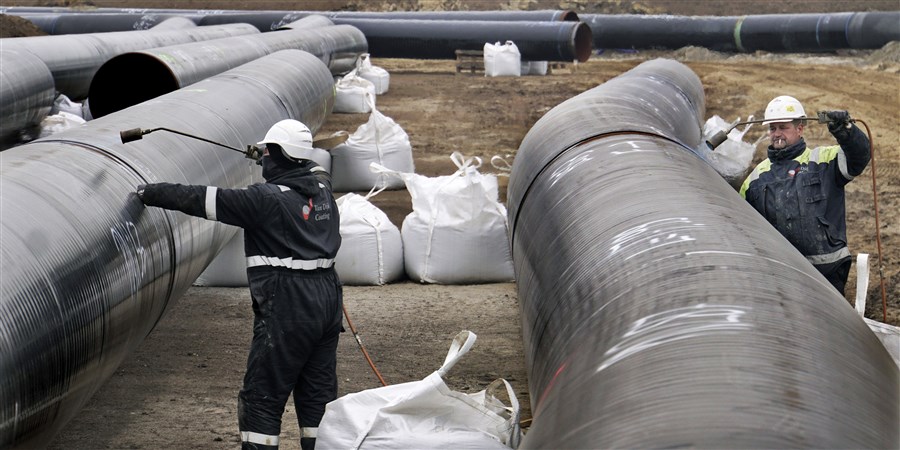
Proposed Southeast Gas Pipelines Face Growing Opposition Ahead of Federal Decision
A pair of proposed natural gas pipelines stretching nearly 500 miles across Alabama, Georgia, and Mississippi is drawing renewed criticism as federal regulators prepare to decide whether the projects can move forward.
The Federal Energy Regulatory Commission (FERC) has completed its final environmental impact statement and is expected to issue a decision before the end of the month.
If approved, the pipelines, proposed by Kinder Morgan, would cross hundreds of waterways throughout the three states. The company says the projects are necessary to meet increasing energy demand across the Southeast.
Environmental groups, however, argue the pipelines would place significant environmental and property burdens on local communities while serving energy needs beyond Alabama’s borders.
Cindy Lowry, executive director of the Alabama Rivers Alliance, said many Alabama residents would shoulder the risks even though much of the anticipated demand comes from neighboring Georgia, where rapidly expanding data centers are driving electricity consumption.
Critics also question whether additional fossil fuel infrastructure is needed, arguing that investments should instead focus on cleaner energy sources.
Concerns extend beyond environmental impacts. Louie Miller, state director of the Sierra Club’s Mississippi Chapter, said property owners along the proposed route could lose land through the use of eminent domain if FERC authorizes the projects. He said the process allows pipeline companies to acquire private property even when landowners object.
Miller also argued that federal oversight of pipeline safety and inspections has been weakened under the Trump administration. Lowry added that Alabama’s lack of statewide water-use regulations could leave communities more vulnerable to the water demands associated with large fossil fuel projects.
The White House has defended its regulatory approach, saying the changes support its broader goal of expanding domestic energy production under its “energy dominance” agenda.


-

ReRon
Daily Rerun of The Ron Show
Ron Roberts is a Georgia-born radio veteran and host of The Ron Show, Atlanta's only progressive audio platform airing weekdays on AmericaOne Radio. With an extensive background as an FM radio program director and broadcaster skilled in audio editing, voice acting, and commercials, Ron brings nearly three decades of radio experience to his show. The show covers Atlanta, metro Atlanta, Georgia, and national politics from a unique perspective—he's a self-described "run-of-the-mill Georgia-born gay progressive cat-dad realtor & talk show host". Ron frequently welcomes guests ranging from local activists to prominent national figures, including Marianne Williamson, Rep. Nikema Williams, actor Michael Kelly, and Sen. Shea Roberts.
close  From CBS News
- Ex-NBA center ejected from WNBA game after being confronted by player August 24, 2026The WNBA has been the subject of recent debates on whether transgender women should be allowed to participate in the league.
- Out-of-control Hawk Fire in Reno, Nevada keeping tens of thousands evacuated August 24, 2026Shifting winds challenged firefighters battling the out-of-control Hawk Fire in Reno, Nevada, that was keeping tens of thousands of people evacuated.
- U.S. destroys alleged drug-smuggling boat in Pacific, killing 2 people August 24, 2026Since then, more than 200 people have been killed in U.S. strikes in the eastern Pacific Ocean and Caribbean Sea.
- Suspect in murders of 5 found dead day after their bodies were discovered August 24, 2026A quintuple murder suspect was found dead inside a vehicle in Enumclaw, Washington, a day after the bodies of five people were discovered outside Portland, Oregon, authorities said.
- 2 Phoenix police officers fired, arrested after violent traffic stop August 24, 2026Two Phoenix police officers were fired and arrested after an unreported traffic stop in which they assaulted a man and woman and shocked them with a Taser, the city's police chief said.
- Moke weakens to tropical depression as Hawaii braces for rain August 24, 2026Hawaii is still cleaning up from Hurricane Lala, which dumped massive amounts of rain on the islands.
- Navy sailor on USS Lincoln says dad was arrested by immigration officials August 24, 2026Historically rare, immigration arrests of military spouses and parents have become more common under the second Trump administration.
- The comeback of sewing: Not just your grandmother's hobby anymore August 24, 2026A new generation isn't just picking up a needle and thread; they're stitching an entirely new way of life. Itay Hod has the story from California.
- Last beagles rescued from Ridglan Farms, a breeding facility in Wisconsin August 24, 2026The last of more than 2,000 beagles from a Wisconsin facility that bred them for medical research have been rescued. Adam Yamaguchi accompanied them on their journey to freedom.
- Canada says it will begin retaliatory tariffs on U.S. goods after Labor Day August 24, 2026The U.S. and Canada have wrangled for decades over trade, and somehow, they still managed to remain friends, allies and trading partners.
- Ex-NBA center ejected from WNBA game after being confronted by player August 24, 2026
Post comments (0)