Tag: veterans

  • Atlanta Farm Plants Seeds of Self-Sufficiency

    Atlanta Farm Plants Seeds of Self-Sufficiency

    Atlanta Farm Plants Seeds of Self-Sufficiency

    A College Park nonprofit is showing that a garden can do more than produce vegetables. At Metro Atlanta Urban Farm, agriculture is being used to improve food access, support veterans, train future farmers and bring communities together.

    Founded nearly two decades ago, the five-acre farm teaches sustainable growing practices that participants can replicate at home. Instead of relying on synthetic chemicals, the nonprofit emphasizes heirloom seeds, compost and natural growing methods, giving families practical tools to reduce grocery costs and grow fresh produce themselves.

    Founder Bobby Wilson said the organization’s vision has always been about people first.

    “We understood the therapeutic value of agriculture, of growing food,” Wilson said, adding that the goal is to improve the quality of life in communities that have historically had fewer resources.

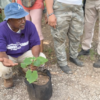
    That mission recently expanded through a partnership with the Wounded Warrior Project. Veterans from multiple military branches now meet at the farm every other week to plant, harvest and learn gardening skills they can continue after returning home. Each participant leaves with vegetables, seeds and planter bags to start growing their own food.

    For combat veteran and Wounded Warrior Project Peer Leader Teak Wilson, the program has provided more than practical gardening experience. She said spending time outdoors and working alongside other veterans has reduced stress, strengthened community ties and offered a sense of belonging. As grocery prices continue to climb, she said the ability to grow food at home has become an added financial benefit.

    The farm is also investing in the next generation of agricultural professionals. Joshua Good, an agricultural business student at Alcorn State University, is spending eight weeks at Metro Atlanta Urban Farm learning hands-on skills such as operating tractors, building garden beds and working with different soil types—experience he said goes beyond what can be learned in a classroom.

  • Women veterans with military sexual trauma face higher pregnancy risks

    Women veterans with military sexual trauma face higher pregnancy risks

    Women veterans with military sexual trauma face higher pregnancy risks

    Data from the U.S. Department of Veterans Affairs show that women who experienced military sexual trauma face higher risks for complications during pregnancy, according to WABE.

    Military sexual trauma, or MST, refers to experiences of sexual assault or harrassment experienced during military service.

    According to VA data, 1 in 50 men and 1 in 3 women nationwide report experiencing MST.

    “Women are substantially more likely to have experienced MST. It can be very long-term pain and human suffering that result from this,” said Kayla Williams, senior policy advisor at the Vet Voice Foundation and former director of the VA Center for Women Veterans. 

    Although the military has implemented policy reforms to address MST, progress is slow.

    “When your workplace is the military and you live and work around the same people all the time and potentially the person who’s harassing you is your boss, it’s an all-consuming environment that is just different than most other workplaces,” she said, “which is one of the reasons that military sexual trauma is so highly predictive of posttraumatic stress disorder. You’re more likely to develop PTSD if you experience MST than combat trauma or civilian sexual trauma.”

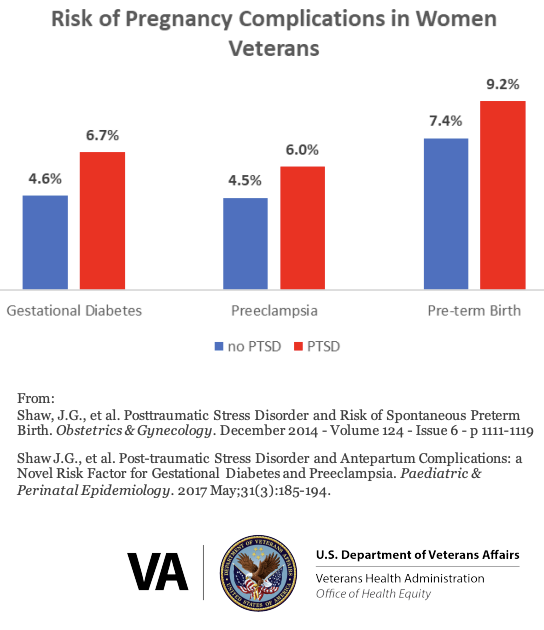
    VA research shows that women who experienced MST had an increased risk of spontaneous preterm birth, preeclampsia and gestational diabetes. 

    Dr. Kelsey Sprang Jones with Emory University School of Medicine told WABE that maternal trauma can also harm babies.

    In Georgia, mental health conditions are among the leading causes of pregnancy complications and maternal deaths. The risks are even higher for women veterans who have post-traumatic stress disorder.

    A chart showing the increase in pregnancy complication risk for women veteran who have experienced military sexual trauma