

Tag: rural

  • Study finds rural community projects can reduce partisan hostility

    Study finds rural community projects can reduce partisan hostility

    Study finds rural community projects can reduce partisan hostility

    A new study finds that working on nonpartisan, local projects together without campaigning can reduce partisan hostility in rural communities.

    Six counties in Virginia and Georgia were examined with Community Works chapters. Community Works is a program by the Rural Urban Bridge initiative that organizes volunteers in rural communities to work on nonpolitical projects, such as food drives and road cleanups.

    Nicholas Jacobs, a professor of government at Colby College, led the study. He said the group takes a different approach to political organizing.

    “What Community Works is trying to do is not necessarily change anybody’s minds on the issues,” said Jacobs. “It’s trying to change how they feel about their neighbors who happen to vote a different way.”

    Communities without Community Works programs saw an increase of negative views of the opposing party while counties with the program saw consistently smaller shifts in opinions.

    Most residents in Community Works counties had heard of the initiative through the local paper or word of mouth.

    Meredith Dean is the national director of Community Works. She said the program focuses on small, practical projects that people can get behind.

    “We’re tired of all the national division and nastiness,” said Dean. “We, we are neighbors who’ve raised our kids together, and we just don’t see each other as the devil. So anything that helps people in our community, we’re ready to do it together.”

    The study found the impacts of the program were largest among Republicans and Independents, but the program did not change partisan attachments rooted in rural identity.

  • Georgia child well-being progress stalls, Kids Count report finds

    Georgia child well-being progress stalls, Kids Count report finds

    Georgia child well-being progress stalls, Kids Count report finds

    After years of steady improvement, Georgia’s progress on child well-being has stalled, according to the 2026 Kids Count Data Book.

    The report examines data related to youth outcomes and ranks Georgia as the 39th state in the nation for overall child and family well-being.

    Jacquan Jordan is the data manager for the Georgia Family Connection Partnership. He said one of the largest warning signs is the rate of babies born at a low birth weight. In the U.S., 8.5% of babies meet that metric. 

    “Very high for a developed nation,” Jordan pointed out. “For us as a state to have 10.3%, it really is one of those indicators for us to pay particular attention to, especially considering that is an indicator that also tells you about food nutrition in the community, access to prenatal care.”

    Several metrics in the report were found to be worse compared to data in 2019. Housing has become much less affordable, and education metrics around reading and math proficiency have seen a downturn. 

    Jordan said Georgia can implement meaningful interventions now or fall further behind.

    Leslie Boissiere is the vice president of external affairs for the Annie E. Casey Foundation, the organization that publishes the report. She said the data reflects the daily realities of children and families in the state.

    “It’s a child who either has enough to eat or doesn’t have enough to eat,” Boissiere explained. “It’s a child who is either in a stable home and has access to quality education to put themselves on the pathway to thrive, or it’s a child who doesn’t have those necessities.”

    Some positive trends that the report highlighted are less children living in poverty, high school students graduating on time and less teen births.

  • Federal funding boosts Georgia hospitals, health programs and rural care

    Federal funding boosts Georgia hospitals, health programs and rural care

    Federal funding boosts Georgia hospitals, health programs and rural care

    The trillion-dollar spending package President Trump signed into law in February included funding for Georgia healthcare organizations to expand their services, according to Georgia Public Broadcasting.

    The funding was secured by U.S. Sens. Jon Ossoff and Raphael Warnock and includes hundreds of millions of dollars that will go towards healthcare systems in Georgia.

    About half a million dollars will go to Emory Decatur Hospital and CommonSpirit Memorial Hospital North Georgia. Emory Decatur Hospital will use the funds to improve its neonatal intensive care unit, and CommonSpirit Memorial Hospital North Georgia will purchase technology upgrades for Virtual Integrated Care, which consists of remote nurses helping with patient loads.

    Other funds coming to Georgia include $1.8 million to Albany Area Health Primary Health Care, $300 million to East Point for emergency response equipment and funds for hospital improvements in South Georgia.

    Nearly $3 million will go towards a new campus for the Cobb and Douglas County public health department.

    Erin Campbell, director and founder of the Athens Area Diaper Bank, said they will use $200,000 to fund more warehouse space and buy supplies for the city’s diaper bank.

    “Just in our community alone, it’s over 10,000 children that are at risk of diaper need,” Campbell said. “When families have to decide between diapers or food, that’s a choice we don’t think any family should have to make.”

    Georgia’s rural hospitals still have time to apply for improvement funds under Phase 3 of the Rural Health Transformation Program. The deadline to apply is June 15.

  • Waycross center helps violence survivors access services in southeast Georgia

    Waycross center helps violence survivors access services in southeast Georgia

    Waycross center helps violence survivors access services in southeast Georgia

    An organization in rural, southeast Georgia is working to bridge the gap between service providers for survivors of domestic violence, sexual assault and child abuse.

    The Waycross Family Justice Center opened in August 2024 and has helped 260 victims so far. The center works with partners, such as the Department of Family and Children Services and Georgia Legal Services, to provide those in need with help. It also has a 15-passenger van to provide transportation in a region without public transportation.

    Heather Flowers works as a navigator at the center and is a survivor herself. She said there are several misconceptions about those who experience violence.

    “People feel like it may be marginalized families, it may be the lower-income family, it may be different areas, but it’s not,” Flowers said. “Violence is not prejudiced. And so what we want people to know is that this center, there’s no judgment at this center. This center is for everyone.”

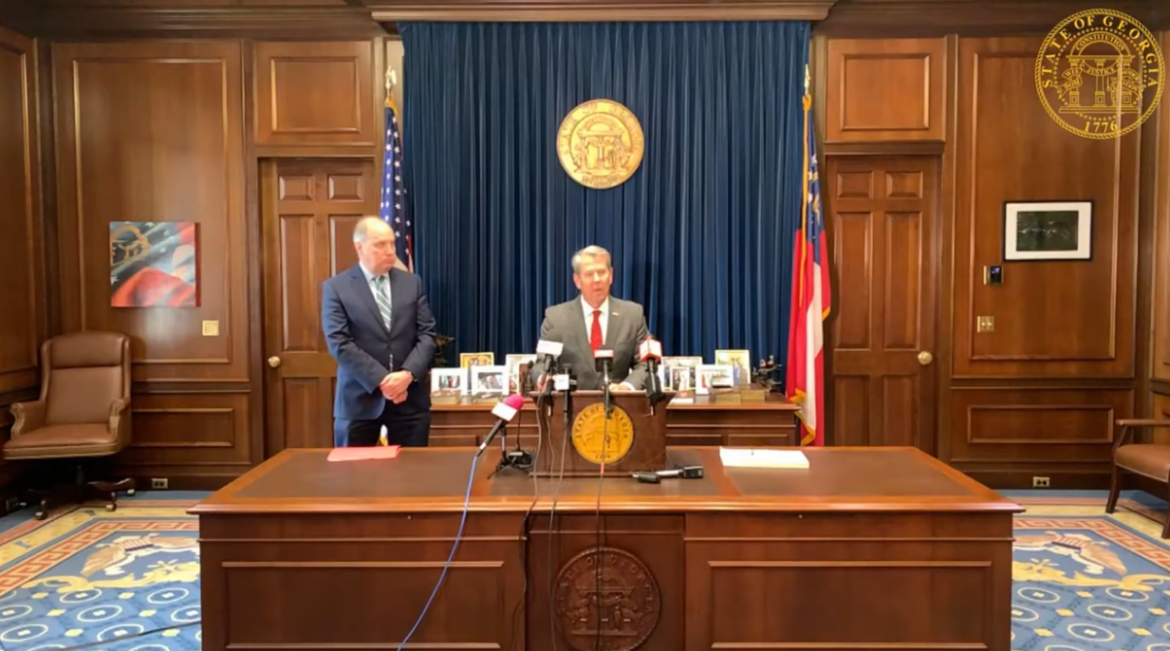
    Gov. Brian Kemp recently signed the Family Justice Center Act, which creates statewide standards for centers like the Waycross Family Justice Center. The law will also open up resources and funding for the centers.

    Flowers said this type of support was unavailable when she was experiencing violence.

    “When I was going through my own time of challenges, the resources was not there. The opportunities were not there,” she said. “What we have seen in putting all of these resources in one location is that you have more people that will come forward and seek out the help.”

    Flowers said the goal of the center is to show people that there is a safe place they can go for help, and the new law is expected to encourage more centers to open across the state.

  • Georgia group works to address growing mental health crisis among farmers

    Georgia group works to address growing mental health crisis among farmers

    Georgia group works to address growing mental health crisis among farmers

    A Georgia organization is looking for ways to address mental health concerns among the state’s farmers.

    John P. McElveen is the director of the Georgia Agricultural Wellness Alliance, which was founded in 2022. He told WABE that the general population might not realize the types of stressors farmers are under today.

    “I do think those outside of agriculture sometimes have this very rosy picture of the pastoral settings in which farmers work and that they get to be outside and enjoy that. And that’s true to a certain extent,” McElveen said. “But it is a double-edged sword, if you will. And so, they really need to understand — those consumers and others — and we’re all impacted and depend upon agriculture. We need to know about that stress and those challenges.”

    From natural disasters like hurricanes to economic challenges, such as tariffs and rising fuel costs, farmers face several obstacles to keep their businesses going, which contribute to worsening mental health.

    The National Rural Health Association reports that farmers are three to five times more likely to die by suicide than the average population.

    McElveen was introduced to a program called COMET, the Changing Our Mental and Emotional Trajectory, based out of Colorado. The program works to train rural communities how to help people who are struggling.

    McElveen hopes to bring the program to Georgia to help rural communities deal with mental health challenges.

  • Poll finds rising economic anxiety among rural Georgia voters

    Poll finds rising economic anxiety among rural Georgia voters

    Poll finds rising economic anxiety among rural Georgia voters

    Voters in rural Georgia might be feeling some anxiety around economic issues and a willingness to rethink the role of government.

    A new poll found that a somewhat surprising number of rural voters in Senate battleground states were feeling deep economic anxiety.

    The Center for Rural Strategies commissioned the survey, and Dee Davis, president of the organization, said the results caught researchers off guard.

    “They were full of doubt, uncertainty; not happy with the way things were going,” Davis said. “That was a little surprising. We’re not used to seeing this much pessimism in rural America.”

    The rising cost of living, especially food prices, was the most important issue for 55% of rural voters. While 46% of respondents said the rural economy had gotten worse over the past year, those who said they wanted the government to “get out of their way” dropped from 42% in 2023 to 32%.

    Davis said the shift is possibly due to prolonged economic pressure. Only a slim majority of respondents said the economy was not working well for them personally, and Trump’s favorability was at 52% favorable and 46% unfavorable.

    “Right now, people are admitting that they need government support,” Davis observed. “There’s weakness in the private sector and the high costs of living are really influencing rural voters.”

    The online survey was conducted with 600 rural voters from March 18-25 by Lake Research Partners with a margin of error of plus or minus four percentage points.

  • Georgia sees major drop in ACA enrollment after subsidy cuts

    Georgia sees major drop in ACA enrollment after subsidy cuts

    Georgia sees major drop in ACA enrollment after subsidy cuts

    More than half a million Georgians have dropped health insurance coverage after Affordable Care Act plans faced substantial price hikes with recent changes.

    An investigation by The Current and The Georgia Recorder shows that 550,000 Georgians have not signed up for Georgia’s healthcare plan. That is a 37% drop in enrollment compared to January 2025.

    Health insurance policies on Georgia’s healthcare marketplace saw an increase in premiums after the U.S. Congress and President Donald Trump decided not to extend health insurance subsidies from the coronavirus pandemic. The subsidies ended on Dec. 31, 2025, causing the increase in prices.

    “I don’t know what we’re going to do, honestly” Monty Veazey, president of the Georgia Alliance of Community Hospitals, told The Current. “It’s a larger number than I anticipated.”

    The decline in enrollment could cause major issues for Georgia’s rural hospitals that already face challenging financial circumstances and may face more uncertainty as Georgia’s uninsured rate increases after years of progress.

    Emma Wager, a senior policy analyst on the ACA at the health research nonprofit KFF, said a large amount of disenrollment could impact hospitals across the state.

    “A larger uninsured population means that hospitals have to provide more uncompensated care. And we also know that people who are uninsured are more likely to delay or forgo medicare care…they may have severe needs by the time they actually see a doctor.”

  • Kemp weighs bill to bring more international doctors to rural Georgia

    Kemp weighs bill to bring more international doctors to rural Georgia

    Kemp weighs bill to bring more international doctors to rural Georgia

    A bill is now on Gov. Brian Kemp’s desk that could increase the number of medical professionals in Georgia, specifically in rural counties.

    Senate Bill 427 passed with bipartisan support and would help bring doctors from outside the country to work in rural counties, hospitals and medical schools.

    Natalie Crawford is the executive director of Georgia First, a nonprofit that advocates for healthcare access. She told GPB News that the bill allows internationally trained physicians to acquire a limited provisional license to be able to practice medicine under supervision.

    “We feel like that’s an important step in attracting more talent, more medical professionals to Georgia, especially in rural areas where oftentimes we don’t have adequate access to care for patients,” she said.

    Crawford highlighted that around 500,000 Georgians are set to lose their healthcare coverage over the next 10 years due to the One Big Beautiful Bill Act, and her organization is advocating for expanding Medicaid in Georgia.

    “We think the best next step for Georgia is to expand Medicaid, and that would unlock a new option for hundreds of thousands of Georgians, getting us extra federal funding to help cover them,” Crawford said. “Expanding Medicaid in Georgia would help to keep more people in the workforce, boost our economy, and protect our rural hospitals.”

    Kemp has until May 12 to sign or veto the legislation before it automatically becomes a law.

  • Georgia nonprofit trains young leaders to tackle health equity gaps

    Georgia nonprofit trains young leaders to tackle health equity gaps

    Georgia nonprofit trains young leaders to tackle health equity gaps

    A Georgia-based nonprofit is helping young adults step into leadership roles as health advocates within their own communities.

    While traditional public health programs emphasize research and data, they don’t always prepare students for the realities of policymaking or grassroots advocacy. That’s where organizations like BLKHLTH aim to fill the gap.

    Johnathan Carey, a Master of Public Health student at the Morehouse School of Medicine, says his experience as a fellow in the group’s CARES program gave him hands-on exposure to the policy process. During his fellowship, Carey addressed South Fulton County commissioners in support of building a new hospital in Union City.

    “Being someone who is more so in the policy space, I was actually able to learn, real time, what it’s like to pass bills and what advocacy actually looks like on the ground when we’re advocating for equality across all care, whether it’s health care or public health,” Carey said.

    Carey also credits the program with expanding his professional network and strengthening his ability to advocate effectively.

    BLKHLTH is part of a broader movement of culturally focused health initiatives across Georgia, working to make care more accessible and relevant to the communities they serve.

    Matthew McCurdy, the organization’s executive director, says BLKHLTH focuses on meeting people where they are.

    “The organization BLKHLTH really provides health resources, information and access to health care in ways that feel culturally relevant, culturally resonant – that are in community and community-based rather than folks having to travel far – and in ways that feel really affirming,” McCurdy said.

    The need for that work is especially clear in rural parts of the state. A recent study found that rural coalitions often struggle to address the underlying causes of health disparities. BLKHLTH has been working to bridge those gaps through free health screenings and open community discussions.

    For current fellows like Lauren Wall, a sophomore at Spelman College, the program offers a chance to connect academic interests with real-world action. She says she joined to better understand how policy and community organizing can improve access to mental health care.

    “How policy and community organizing can improve mental health access,” Wall pointed out. “I’m really interested in gaining tools to build stronger partnerships and create impactful initiatives to help other people as well.”

    This year, BLKHLTH is marking a decade of that work, celebrating its 10th anniversary.

  • Georgia hospitals plan for $218.8M in new rural health funds

    Georgia hospitals plan for $218.8M in new rural health funds

    Georgia hospitals plan for $218.8M in new rural health funds

    Healthcare professionals recently gathered at the Capitol to discuss how to use $218.8 million awarded to the state.

    Gov. Brian Kemp announced at the end of 2025 that Georgia had been awarded funds through the federal government’s Rural Health Transformation Program (RHTP).

    Now, hospitals will be able to apply for grant funds through the Georgia Department of Community Health to comply with the department’s vision for health care in Georgia, which is called Georgia’s Rural Enhancement and Transformation of Health (GREAT Health).

    Van Loskoski, CEO of Stephens County Hospital, told Georgia Public Broadcasting (GPB) that hospitals need funds for basic tasks.

    “We just, in the last two weeks, have had two events where we’ve had the shelter staff in place for an extended period of time with snowy and icy weather,” he said. “There’s funding built into this package that helps hospitals in emergency situations to shelter in place and to beef up their infrastructure so that they’re better prepared for these types of events.” 

    Hospital advocates listed several concerns that they would like to see the funds and lawmakers address, including an increasingly older population that relies heavily on Medicare, delays in getting payments from insurers, streamlining electronic medical records and improved technology to collect data on patient spending and needs, according to GPB.

    Critics of RHTP say the program fails to make up for the loss in federal funding to programs like Medicaid and the Affordable Care Act, and the funds may not get to the hospitals that need it the most.

    Caylee Noggle, president and CEO of the Georgia Hospital Association, told GPB she is confident the program will help target root challenges rural hospitals face.

    “We’re very, very appreciative and grateful for the increased focus on rural health care and some of the challenges,” she said. “And we’re hopeful that there are some real pieces in here that can prove to lead to longer-term innovation and support.”