


Tag: Georgia

  • Georgia borrowers carry second-highest student loan debt in the nation

    Georgia borrowers carry second-highest student loan debt in the nation

    Georgia borrowers carry some of the nation’s highest student loan debt

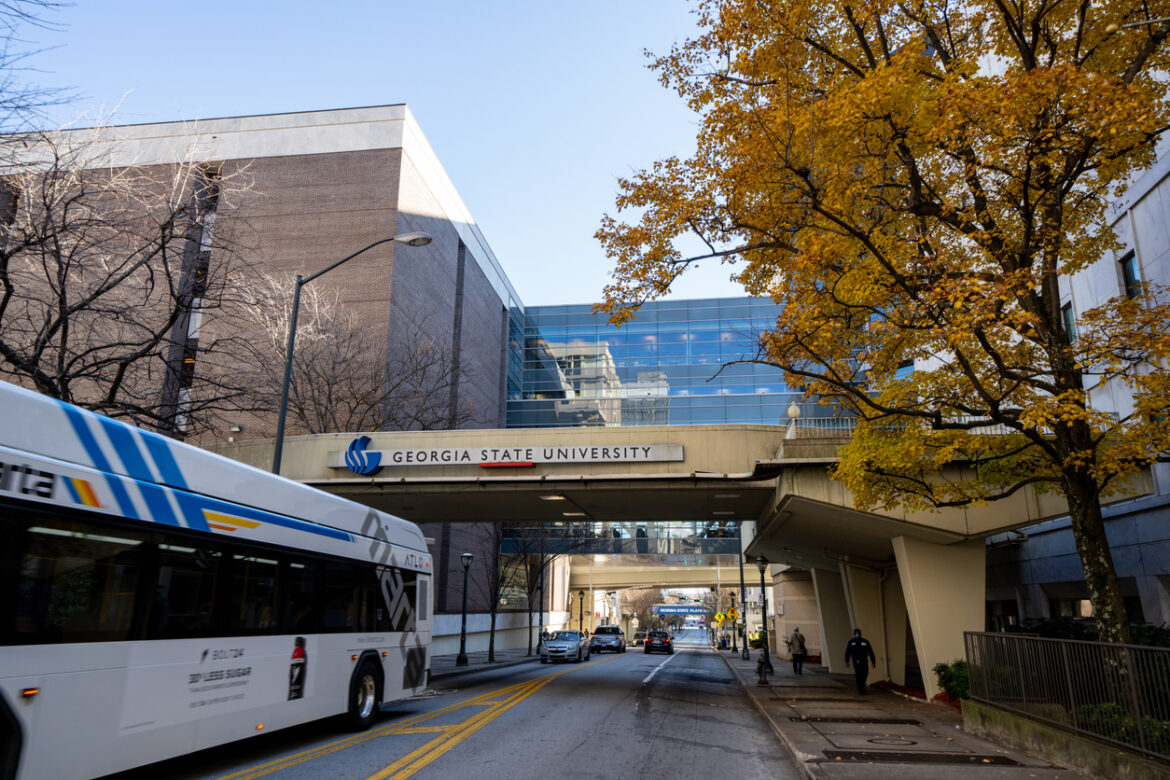
    Georgia’s college students continue to shoulder some of the heaviest loan burdens in the country, according to a new national review of student financial stress. The report details the results of a survey from the Education Data Initiative, it included more than 1,000 undergraduate and graduate students.

    The findings show that the average Georgia borrower owes $42,226, the second-highest average balance in the country. Georgia borrowers owe more than borrowers in Virginia, Florida, North Carolina and New York. Only Maryland has a higher average. 

    Georgia also has the second-largest concentration of borrowers, with 15,384 student loan holders per 100,000 residents. Nationally, the questionnaire found that more than half of college students carry student loan debt. 

    The average balance among respondents was $41,577, and students rated their overall financial stress at 3.4 out of 5. Many said the pressure is affecting their time on campus and their mental health. 

    The report found that money issues make it harder for students to concentrate in class, keep up with assignments and imagine a clear path after graduation. Students also report that financial strain has led them to consider stepping away from school at some point.

    National patterns echo stories that have surfaced on Georgia campuses in recent years, where students often balance long work schedules with rising living costs. 

    For students in Atlanta and other metro areas who graduate with balances close to the state average, loan payments can resemble another major monthly bill stacked on top of rent, food and transportation.

  • Who will replace Marjorie Taylor Greene for GA District 14? Here are the potential candidates.

    Who will replace Marjorie Taylor Greene for GA District 14? Here are the potential candidates.

    Who will replace Marjorie Taylor Greene for GA District 14? Here are the potential candidates.

    Although it’s been less than a week since U.S. Rep. Marjorie Taylor Greene announced her resignation, candidates are already lining up to take her place.

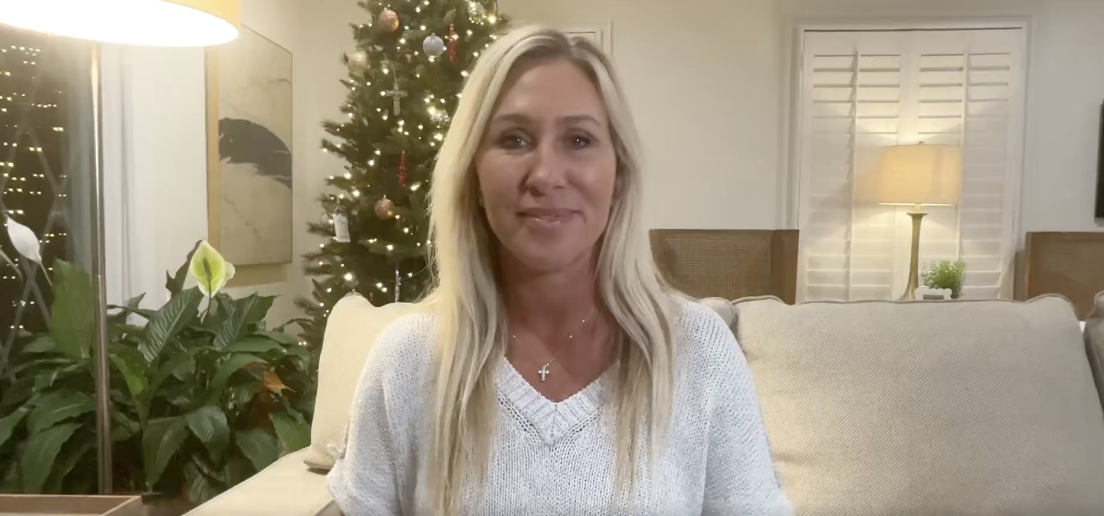
    Greene announced her resignation in a video post on X, citing recent conflicts with President Donald Trump and frustrations with politics in Washington. She will be stepping down Jan. 5, 2026.

    “No matter which way the political pendulum swings, Republican or Democrat, nothing ever gets better for the common American man or woman,” Greene said in her post.

    Gov. Brian Kemp has 10 days from Greene’s  last day to set a date for the special election to replace her. The election must be held at least 30 days out from the day it is announced. Whoever wins will serve the remainder of Greene’s two-year term in the 14th Congressional District. 

    Special elections do not require a primary, so all candidates, Democrat and Republican, will be on the same ballot. If no one receives more than 50% of the vote, a runoff election will be held.

    Who are the (potential) candidates?

    Candidates were already lining up to face Greene in the 2026 election, even though the qualifying period does not start until March 2, 2026. All of these candidates, except for Star Black, have officially announced that they will be running in the special election.

    Christian Hurd, a U.S. Marine Corps veteran, also announced he would run in the special election, according to the Atlanta Journal-Constitution. 

    These candidates filed paperwork with the Federal Election Commission for the 2026 race and launched campaign websites, but they have not officially announced bids for the special election.

    Here are the Democratic candidates who have run for the seat in the past five years, according to the Georgia Secretary of State’s website. Greene won the 2020 general election with 75% of the vote, 66% in 2022, and 64% in 2024.

    • Kevin Van Ausdal was the only Democratic candidate in the race in 2020 and lost to Greene in the general election with 25% of the vote.
    • Wendy Davis, 2022
    • Marcus Flowers won the primary in 2022 with 75% of the vote and lost to Greene in the general election at 34%.
    • Holly McCormack, 2022
    • Clarence Blalock, 2024
    • Shawn Harris won the primary in 2024 with 67% of the vote and lost to Greene in the general election at 36%.

    Here are the Republican candidates who have faced off with Greene in the primaries over the past five years, according to the Georgia Secretary of State’s website. Greene received 40% of the vote in the 2020 primary and 70% in 2022. She was the only qualified Republican candidate in 2024.

    • John D. Barge, 2020
    • Ben Bullock, 2020
    • Kevin Cooke, 2020
    • John Cowan received the second most votes in the 2020 primary at 21%.
    • Clayton Fuller, 2020
    • Andy Gunther, 2020
    • Bill Hembree, 2020
    • Matt Laughridge, 2020
    • Eric Cunningham, 2022
    • James Haygood, 2022
    • Charles Lutin, 2022
    • Jennifer Strahan, 2022
    • Seth Synstelien, 2022
  • ‘I couldn’t separate them’: GA adoption story underscores need for support

    ‘I couldn’t separate them’: GA adoption story underscores need for support

    ‘I couldn’t separate them’: GA adoption story underscores need for support

    A Georgia man decided to adopt two brothers in 2022. He first adopted the little brother, Brody. After inviting the older brother, Christian, to Christmas, Sean Lee knew the boys needed each other.

    “When I saw the kids together on Christmas morning, I made sure Christian had a lot of presents as well,” Lee said. “The boys were just playing in the living room with their toys and laughing, and I knew that I couldn’t separate them.”

    November is National Adoption Month, and this year it comes as Georgia Department of Human Services Division of Family and Children Services faces strenuous circumstances.

    The federal government shutdown caused the agency to cut programs, including programs that assess children’s needs prior to foster care, help keep children in their homes, and provide parent education and training programs, according to the Atlanta Journal-Constitution.

    DHS announced Nov. 10 it would also eliminate educational support programs aimed at improving graduation rates, contracts that helped children who need extra medical and physical care, and services that help prevent developmentally disabled youth from entering foster care, according to the AJC.

    Candice Broce, director of DFCS, disclosed in January that the agency faced a $44 million deficit. Yet by November, the Imprint reported that the agency had a roughly $80 million deficit.

    As a single father, Lee said he depends on the support he received from Bethany Christian Services and the Dave Thomas Foundation for Adoption, which helped connect him with therapists, resources, and services to guide him through the process.

    “I’ve learned tons. But again, I go back to that saying, ‘it takes a village.’ It really does,” Lee emphasized. “I have a behavioral therapist, that works with Christian Monday through Friday. He’s there for a couple of hours, just working with him on basic life skills.”

    Cyndi Todd, Wendy’s Wonderful Kids recruiter at the foundation, worked with Lee and his kids, and she said there are more than 440 children in Georgia who are legally free for adoption.

    “As a recruiter, it’s not about just finding that family and that resource but I’ve always said that’s when the work really begins,” Todd explained. “Because you’ve got to support that family through this and make sure that they are getting all the support that they need.”

    If you are interested in fostering or adopting in Georgia, go to dfcs.georgia.gov to learn more.

  • Georgia Senate Committee offers recommendations to support youth aging out of foster care

    Georgia Senate Committee offers recommendations to support youth aging out of foster care

    Georgia Senate Committee offers recommendations to support youth aging out of foster care

    The Senate Study Committee on Additional Services and Resources for Transition Age Youth in Foster Care held its final meeting on Friday and presented recommendations to improve how children transition out of the foster care system into adulthood.

    Around 700 young people age out of Georgia’s foster care system every year, and they lose access to resources, which can make the transition difficult.

    The committee was designed to examine the transition process and make recommendations based on their findings.

    The committee’s findings come at a time when Georgia’s foster care system is particularly strained. The Georgia Department of Human Services reported it has suspended or permanently eliminated programs, including those aimed at preventing children from living outside their homes and parent education and training programs, according to the Atlanta Journal-Constitution.

    Sen. Kay Kirkpatrick, who chairs the committee and represents District 32, convened the meeting and presented their recommendations.

    “Most of it is not legislation. We need to work with our agencies and our other partners on making progress for these kids,” she said.

    Education and complex-needs population

    The recommendations for education and complex-needs population were the only categories that had recommendations that could result in legislation. 

    The committee included three recommendations for education-related issues. 

    1. Ensure school districts are in compliance with enrollment requirements and consider legislation to address noncompliance.
    2. Appropriate necessary funding for Senate Bill 85, the Georgia Foster Care Scholarship. The bill has passed, but it has not been funded. Kirkpatrick said the committee will work with appropriators to ensure the program is funded.
    3. Encourage statewide involvement in transitioning youth from foster care into higher education, including technical schools and college.

    When addressing complex-needs populations, Kirkpatrick said issues are not always directly related to youth aging out of the foster care system, but it relates to children who are not diagnosed or treated in a timely manner. The recommendations the committee gave specifically related to autism.

    1. Review reimbursement rates, delivery options, and supervision requirements for Advanced Behavioral Analysis (ABA) treatment for autism spectrum disorder.
    2. Continue and extend the current pilot programs to screen foster youth for autism spectrum disorder.
    3. Prepare for broad implementation for autism screening to all youth in foster care.

    “We think there are some issues with the way the rate structure is set up, and we want to be sure that those incentives are aligned and that the people that have these medical diagnoses are handled in a quality way,” Kirkpatrick said.

    Housing and the workforce

    When discussing housing and workforce improvements, Kirkpatrick said they need to convene a meeting with interested parties to further explore solutions for these areas. For housing, Kirkpatrick said the federal government shutdown impeded scheduling meetings with some of the interested parties, and they hope to reschedule it for early January. 

    For the workforce, Kirkpatrick said the committee suggests having a meeting with technical schools and employers to find ways to get foster youth skills for employment. They hope to have the meeting during the next legislative session.

    “We think we can do more with that with our workforce needs and our status as the number one state to do business,” she said.

    The committee also recommended future initiatives, including increasing the use and awareness of tax credits, streamlining online resources for exit planning and taking advantage of President Donald Trump’s “Fostering the Future for American Children and Families” and executive order.

    “There are more recommendations that we could have made, but we’ve always worked towards trying to make this actionable,” Kirkpatrick said. “There are several things on here that we can definitely make progress on, and again a lot of it is not necessarily legislative, but we’ve got enough time between now and the beginning of the legislative session to nail down any bills that we need to do.”

    The Georgia Department of Human Services serves more than 11,000 children in foster care. To learn more about foster care in Georgia, visit fostergeorgia.com.

  • GA Rep. Marjorie Taylor Greene resigns from Congress after break with Donald Trump

    GA Rep. Marjorie Taylor Greene resigns from Congress after break with Donald Trump

    GA Rep. Marjorie Taylor Greene resigns from Congress after break with Donald Trump

    The once-fierce supporter of President Donald Trump announced her impending resignation after a brutal split.

    Less than a week after Trump denounced her, Rep. Marjorie Taylor Greene announced on X Friday evening that she will be resigning from her post as the representative of Georgia’s 14th Congressional District. Greene said her last day in office will be Jan. 5. 

    “No matter which way the political pendulum swings, Republican or Democrat, nothing ever gets better for the common American man or woman,” Greene said in her post.

    Greene criticized her party in the House of Representatives for failing to find a solution during the federal government shutdown.

    Greene listed the moments she disagreed with President Trump, including the release of the Jeffrey Epstein files, U.S. involvement in foreign wars, and 50-year mortgages.

    “Loyalty should be a two-way street, and we should be able to vote our conscience and represent our district’s interests because our job title is literally representative,” she said in her post.

    Her resignation raised speculation that Greene might reconsider a run for governor or U.S. Senate although she has previously dismissed the idea. Greene won reelection in the 14th District in 2024 with more than 64% of the vote.

    Despite their recent split, Trump told NBC News on Saturday that he would like to see Greene resume a political career after she takes a break.

    “Once I left her, she resigned because she wouldn’t have, she would never have survived a primary,” Trump said in the interview with NBC News.

    In recent weeks, Greene has distanced herself from the president and faced political blowback for her staunch support of releasing the files related to Jeffrey Epstein. Greene apologized for her participation in “toxic politics” after Trump called her a traitor.

    “Those are the types of words used that can radicalize people against me and put my life in danger,” she said in her interview with CNN. “His remarks, of course, have been hurtful. However, I have something in my heart that I think is incredibly important for our country, and that is to end the toxic fighting in politics.”

    Greene has already dismissed claims that she would be running for president in 2028, saying on X that she has only laughed when people mentioned the idea.


  • Atlanta under pressure: Federal immigration enforcement called to ramp up

    Atlanta under pressure: Federal immigration enforcement called to ramp up

    Atlanta under pressure: Federal immigration enforcement called to ramp up

    U.S. Rep. Earl “Buddy” Carter (R-GA) sent a letter to the Department of Homeland Security and U.S. Immigration and Customs Enforcement to request an increased presence in Atlanta. 

    Carter cited the state’s ranking in the number of undocumented immigrants as a reason for increased enforcement. 

    The Migration Policy Institute released a report in October that found Georgia to be the sixth in the nation for its number of undocumented immigrants, with approximately 479,000 unauthorized immigrants calling the state home in 2023.

    “Rising levels of illegal immigrants and increasing threats to public safety in Georgia highlight the urgent need for an enhanced ICE presence in Atlanta,” Carter wrote in the letter. “Every single person who is here illegally has broken the law and must be treated accordingly; anything less invites a culture of not just mass illegal immigration, but mass crime.”

    Carter is running for Senate in 2026, a seat that is currently held by Sen. Jon Ossoff.

    In response to Carter’s comments, Eduardo Delgado, civic and advocacy coordinator for Migrant Equity Southeast, spoke with WSAV-TV and said the state depends on immigrant workers.

    “Georgia is an agricultural state. The agriculture sector would not be operating, to be honest with you, without the hardworking immigrants of Georgia,” Delgado told WSAV-TV. “Every crop that’s grown in this state is tended to by immigrants.”

    Before sending the letter to DHS and ICE, Carter spoke with WSAV-TV following the release of the Migration Policy Institute Report.

    “Look, if they’re here undocumented or illegally, they’ve already broken the law and they need to follow the law,” Carter said. “We all know that we need some of these workers… but the most important thing here is to make sure that Georgians are safe.”

    Although Atlanta Mayor Andre Dickens has not released a response to Carter’s letter, he told the Atlanta Journal-Constitution in September that he was actively working to avoid a federal law enforcement takeover in Atlanta.

    “I make phone calls to the state, I make phone calls to the feds and I let them know that Atlanta is safe,” he said.

  • Hemp vs. marijuana. What’s the difference, and why do we care?

    Hemp vs. marijuana. What’s the difference, and why do we care?

    Hemp vs. marijuana. What’s the difference, and why do we care?

    Although they look exactly the same, hemp and marijuana are two different plants.

    Lacey White with Frogtown Hemp said they test their plants regularly to ensure they are not going over the limit of THC, or delta-9-tetrahydrocannabinol.

    “With a hemp plant, you’re looking at the genetics of the seed,” she said. “You’re wanting a high CBD content and a low THC content because you don’t want to get a high as if you would from a marijuana plant,” she said. CBD stands for cannabidiol, which hemp plants naturally produce.

    If you are over the legal amount of THC in Georgia, the state requires the farmers to destroy their yield, she said.

    “So we want to make sure when we see our flowers start budding, that we keep a really good, accurate eye on that,” she said.

    Although they are not certified organic, they do practice organic farming, and White said growing hemp is much like growing tomatoes.

    All of their products are natural, meaning they do not produce anything synthetic, such as delta-8. Although hemp plants naturally produce delta-8, it is only in trace amounts, so most delta-8 is manufactured from hemp-derived CBD.

    Frogtown Hemp is a family farm, and White, her dad Bruce, and her sister Kelly work together to make their natural products.

    “It’s not that hard to grow. It’s just real time consuming, a lot of hard work,” Bruce said.

    Why is everyone talking about hemp?

    President Donald Trump signed legislation Nov. 12 that bans most consumable hemp-derived THC products nationwide. The provision that caps hemp products at 0.4 milligrams of THC per package was passed as part of the bill that ended the government shutdown.

    Medical cannabis has only been legal to possess in Georgia for the past decade, and hemp products did not become widely available until 2018.

    In 2015, the Georgia General Assembly passed the Haleigh’s Hope Act to allow people to legally possess up to 20 fluid ounces of low-THC oil with their doctors’ recommendations, according to the Marijuana Policy Project.

    However, the state did not allow for the production of medical cannabis until 2019 with the Georgia’s Hope Act. 

    The 2018 Farm Bill passed through the U.S. Congress and allowed for the cultivation and sale of hemp products across the country as long as they were under the 0.3% THC concentration limit by dry weight. 

    Joe Salome, the co-founder of The Georgia Hemp Company, said this change allowed them to produce gummies, oils and other products to meet consumers’ needs before medical cannabis was produced in the state.

    The General Assembly passed legislation in 2024 to allow beverage companies to produce and sell THC- and CBD-infused beverages. However, earlier this year lawmakers passed a measure through the Senate to limit products to 0.3% total THC content and ban all beverages containing THC. The bill awaits action in the House, according to the AJC.

    White said recent changes to Georgia law already put a strain on their business. It required changes to their product packaging, labels, and testing.

    “We had to go through a lot to be compliant in Georgia, and that’s one thing that we’re very proud of,” she said. “We made those changes immediately. As a small mom and pop per se company, that was a lot of financial burden on us.”

    The Georgia General Assembly will convene in January for its 2026 session, and the federal bill has a one-year implementation period. Hemp businesses have until then to figure out next steps and try to advocate for their businesses.

    “I think we want sensible regulated cannabis, but we don’t want to keep out the success stories… What’s going to happen is a huge vacuum, and if we thought the black market was bad before, it’s going to be even worse moving forward,” he said.

  • Elementary Schools in Savannah-Chatham Will Begin Random Contraband Screenings

    Elementary Schools in Savannah-Chatham Will Begin Random Contraband Screenings

    Elementary Schools in Savannah-Chatham Will Begin Random Contraband Screenings

    The Savannah-Chatham County Public School District has expanded its random contraband inspections to include all elementary schools, a policy shift officials say is intended to address safety concerns among younger students.

    According to reporting from the Savannah Morning News, the district has long required random searches in middle and high schools under its student code of conduct. This school year, the practice was extended to all 20 elementary campuses.

    “We’ve seen a lot more younger students, over the years, start to bring things into school,” said Justin Pratt, the district’s Emergency Management and School Safety lieutenant, speaking to the Savannah Morning News. “Instead of it becoming an issue, we’re trying to find those objects on the front end and address it.”

    Pratt said the searches focus on contraband that would not be flagged during standard security screenings, including vapes, lighters, cigarettes and small pocket knives. School administrators — such as principals, assistant principals, deans or designated teachers — conduct the searches. School resource officers are not involved because they would legally require probable cause.

    Administrators can search bookbags and use handheld or walk-through metal detectors. Two or three searches occur each week for a short portion of the school day. Any contraband found is logged so district analysts can track trends and direct education or prevention efforts.

    The process uses a randomized system to determine which students or groups are screened. Each week, a civilian analyst with the Board of Education Police Department sends every principal a number between one and 10. If a principal receives the number four they then decide how to apply it. That could lead to checking every fourth student in a lunch line or checking the fourth bus to arrive on campus.

    Parents were notified by email in October when the inspections became mandatory. The district told families the shift was “not due to any specific threat or concern” but part of a broader effort to maintain safe learning environments.


  • Georgia Fails Another Preterm Birth Rate Report

    Georgia Fails Another Preterm Birth Rate Report

    Georgia Fails Another Preterm Birth Rate Report

    Georgia received an F grade for its preterm birth rate in the March of Dimes’ 2025 Report Card, placing the state among the lowest-ranked in the country for maternal and infant health.

    The report, released on World Prematurity Day, shows Georgia’s preterm birth rate held at 11.8% in 2024, the same as the previous year. Preterm birth — delivery before 37 weeks of pregnancy — remains one of the most common causes of infant death. The United States as a whole earned a D+, with a national rate of 10.4%.

    Dr. Michael Warren, chief medical and health officer for March of Dimes, told Axios the lack of progress nationwide should sound alarms. “It’s deeply frustrating,” he said, adding that the country has long known the major risk factors for preterm birth, including hypertension, chronic stress and inadequate prenatal care.

    Racial disparities remain among Georgia’s most persistent challenges. From 2021 to 2023, the preterm birth rate for Black infants in Georgia reached 15%, far higher than the state average. American Indian and Alaska Native infants had a rate of 14.6%, while white infants were at 10.3%.

    Warren said the gaps are driven by social and economic conditions rather than biological factors.

    March of Dimes estimates that 14,907 babies in Georgia were born preterm in 2024. Between 2020 and 2023, 94 Georgia counties recorded preterm birth rates higher than the statewide average.

    State lawmakers have expanded Medicaid postpartum coverage and invested in maternal home-visiting programs, but advocates say more work is needed to improve access to care and reduce risks before pregnancy begins.

    “Behind every data point is a family,” said Tamara Mason, maternal and child health director for March of Dimes Georgia. She said the organization is working to expand research, mobile health centers and policy advocacy aimed at strengthening care for families across the state.

  • South and Southwest Georgia Experience Highest Infant Mortality Rates, Report Finds

    South and Southwest Georgia Experience Highest Infant Mortality Rates, Report Finds

    South and Southwest Georgia Experience Highest Infant Mortality Rates, Report Finds

    Infant mortality rates vary sharply across Georgia, with the highest death rates concentrated in rural and southern regions, according to the 2025 State of the State Report from the Healthy Mothers, Healthy Babies Coalition of Georgia (HMHBGA).

    HMHBGA mapping shows that Georgia’s Southwest (Albany), West Central (Columbus) and South Central (Dublin) public health districts recorded the highest infant mortality rates last year, reaching 10 to 11 deaths per 1,000 live births. In contrast, lower rates — between 5 and 6 — were found in North Georgia (Dalton) and the North district (Gainesville).

    The report also highlights major racial disparities between public health districts. Regions such as Southeast (Waycross), North Central (Macon) and West Central (Columbus) reported Black–white infant mortality gaps ranging from 9 to 16 deaths per 1,000 live births, some of the widest disparities in the state. Meanwhile, districts like Northeast (Athens) and Southwest (Albany) showed smaller gaps of up to four deaths per 1,000.

    These geographic differences mirror patterns in provider access. Georgia Public Broadcasting reports that maternal mortality and infant health outcomes are often worse in communities with fewer obstetric clinicians or where prenatal care is limited. March of Dimes has identified more than a third of U.S. counties as maternity care deserts, where residents lack access to birthing hospitals, OB-GYNs or midwives.

    Advocates say the uneven distribution of healthcare resources leaves families in many parts of Georgia without timely prenatal support. State lawmakers have expanded postpartum Medicaid coverage and invested in maternal home-visiting programs, but experts warn that improving outcomes requires earlier and more consistent access to care.

    HMHBGA said the geographic trends reflect “pronounced disparities in infant health outcomes,” particularly in rural and economically distressed regions of the state. The organization’s findings show that where a family lives remains a major predictor of infant health and survival.