
Tag: equity

  • South Georgia food banks strained as demand rises and supplies shrink

    South Georgia food banks strained as demand rises and supplies shrink

    South Georgia food banks strained as demand rises and supplies shrink

    Georgia counties below the gnat line face higher levels of food insecurity than the national average, and food banks that serve the area have seen an increase in demand and a decrease in supply streams.

    Frank Sheppard, president of Feeding the Valley food bank in West Georgia, told GPB News that most food pantries in his service area have had to reduce the amount of food they give out.

    “This food shortage is no surprise to anyone,” he said. “But this crisis has really surged in the first quarter of the calendar year, making it just that much more difficult.”

    He said they have seen less donations from retailers, manufacturers and farmers as well as a decrease in federal commodities.

    Eliza McCall,with Second Harvest of South Georgia, told GPB that they had a food pantry in Turner County that no longer could afford weekly meal distributions. The food pantry is seeking donations for $15,000 to keep their weekly distribution, but they have only raised $875 so far.

    “We are seeing people who have never needed help before in the last few years have needed that,” McCall said. “We are hearing them talk about food prices, we are hearing the talk about gas prices, it’s a lot of different factors.”

  • Georgia clean energy jobs surge, but policy shifts slow growth

    Georgia clean energy jobs surge, but policy shifts slow growth

    Georgia clean energy jobs surge, but policy shifts slow growth

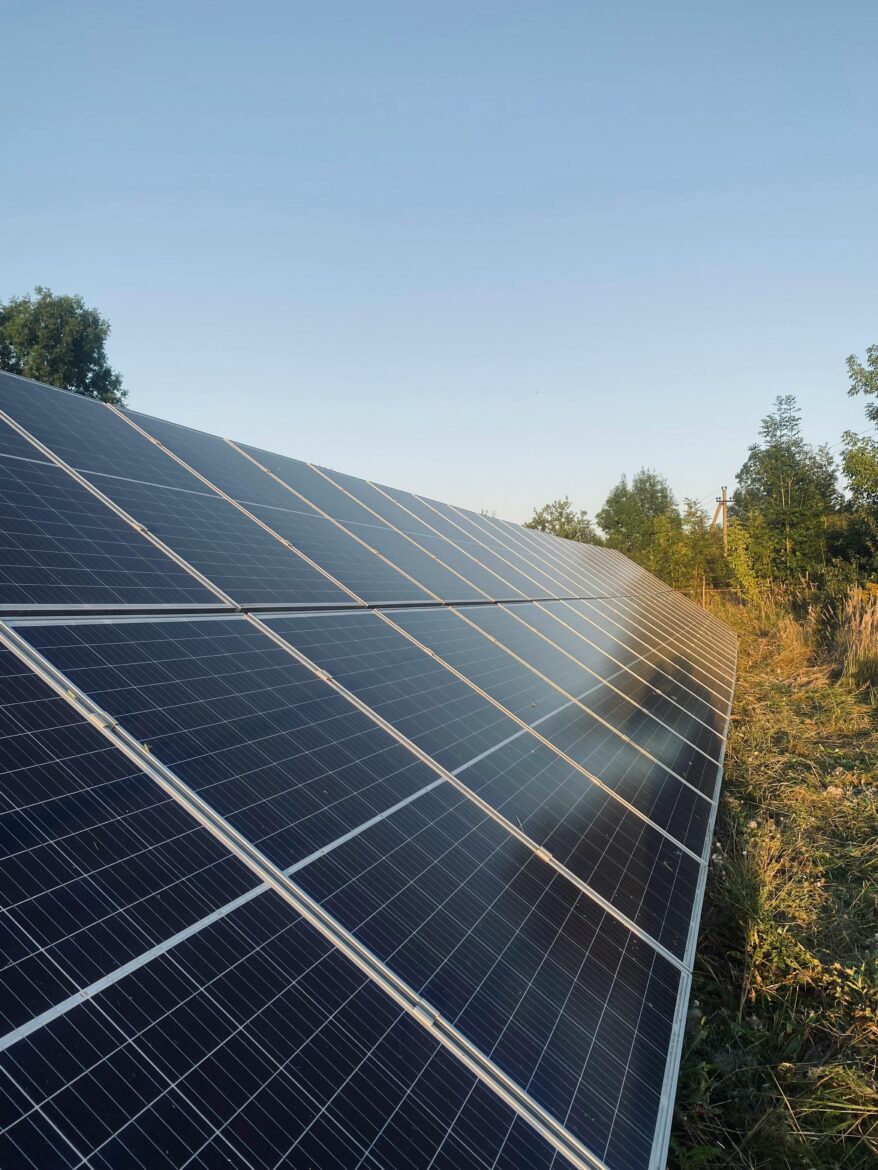
    Despite national and state policy, the clean energy sector in Georgia still shows some promise.

    Zach Amittay, the Southeast advocate for E2, said their latest data from 2024 shows that Georgia has more than 83,000 clean energy jobs across the state and ranks 15th nationwide.

    “So Georgia is by most accounts a leader in clean energy jobs nationally, and in 2024, the number of clean jobs in Georgia grew five times faster than jobs in Georgia’s overall economy,” he said. “So not only are these a meaningful amount of jobs, but they’re growing at a rate much higher than the overall economy, which means that clean energy jobs are sort of a workhorse for the workforce for Georgia.”

    E2 is a national network of business voices, executives, investors and other members of the business community that advocate for policies to accelerate the transition to clean energy, and the group conducts research on the clean energy economy across the country.

    Amittay said it’s important that the public and policymakers understand that clean energy contributes to a lot of economic and job growth in the state. Clean energy jobs represent seven times more jobs than fossil energy jobs in the state.

    E2 also tracks major clean energy projects, such as a solar manufacturing facility or an electric vehicle manufacturing facility. Georgia has had 38 major clean energy projects announced from 2022 to 2024 making it the number one state for clean energy projects nationwide for those years. That’s more than $13.3 billion in private sector investment with more than 18,000 new clean energy jobs.

    “That paints overall an incredibly rosy and optimistic picture as well,” he said.

    However, over the past year, four projects have announced cancellations while only six new projects have been announced, Amittay said.

    “So it’s almost 50-50 between cancellations and projects over the past roughly year, year and a half now, and that’s just an indication of the way that the market is turning,” he said.

    Amittay said they attribute the shift to the policy environment at the federal level with many clean energy incentives being rolled back by the Trump administration.

    “We are seeing the brakes are being pumped in a serious way by the private sector when it comes to investment in clean energy projects, and we’re, of course, going to start seeing impacts on the workforce in the clean energy space as a result of that,” he said. “We believe very strongly in clean energy as a driver of economic growth and job growth in Georgia for the long-term, but we’re certainly going through a choppy period right now and a downturn in the market driven by a lot of market uncertainty and policy backsliding.”

  • ‘Money in politics.’ Why is clean energy in Georgia so hard to come by?

    ‘Money in politics.’ Why is clean energy in Georgia so hard to come by?

    ‘Money in politics.’ Why is clean energy in Georgia so hard to come by?

    The clean energy space has changed greatly over the past year, and with the onslaught of data centers coming to Georgia, many concerns have been raised about utility costs and pollution.

    During the Biden administration, the Inflation Reduction Act provided the largest investment in clean energy solutions in American history, but when President Donald Trump took office, many incentives for clean energy were rolled back.

    Zach Amittay is the Southeast advocate for E2, a national network of business voices, executives, investors and other members of the business community that advocate for policies to accelerate the transition to clean energy.

    “We are seeing the effects of that curtailment now, and we’ll continue to see it, we’d say, in the coming years, unless Congress comes back to its senses and reinstates some of those incentives and federal support for clean energy deployment,” he said.

    On the state level, Georgia does not have many, if any, incentives for clean energy, and no meaningful policy was passed this legislative session to support the clean energy industry. This is amid the ongoing wars in Ukraine and Iran impacting global energy markets and local engagement on issues surrounding affordability, which was considered the buzzword at the state Capitol this session.

    Adrien Webber, the director of the Georgia Sierra Club, said Georgia has a cap on rooftop solar so only a certain number of customers in the Georgia Power service territory can join the program.

    “What we see time and time again, specifically with Georgia Power is they don’t want to see distributed energy like solar because it affects their bottom line. They make money by building out fossil fuel projects, by keeping coal online, by building out gas.

    The Georgia Public Service Commission approved a monumental expansion of Georgia Power’s capacity in December, and although environmental groups have strongly fought against the decision, no efforts have been successful to change the ruling.

    Data centers and utilities

    A large push at the state Capitol this session was to limit data centers and protect consumers from the costs to build and run them, but not one data center bill made it to the governor’s desk.

    Webber estimated that more than a dozen data center bills were introduced in the legislature

    “March was crazy for us, and it’s frustrating because again, on the ground, not only is Sierra Club down at the state legislature talking to our elected officials, but we’re also in the community educating people about these issue,” he said. “We are hearing the real life impacts of these decisions.”

    Ammitay said his group lobbied for bills this session to protect Georgia Power customers from paying for the costs associated with data centers as well as end tax credits for the multibillion dollar companies.

    “To be blunt, it’s really around Georgia Power, and the utility wanted to have a little bit more control over that portion of the process,” Ammitay said. “If these kind of rate payer protections were put in place, that would mean that they wouldn’t be able to fall back on passing on the cost to Georgia households and small businesses.”

    Georgia doesn’t have a strong regulatory landscape for consumer protections, Webber said. Plus, some lawmakers have a vested interest in the success of data centers in the state.

    A development owned by Lt. Gov. Burt Jones’ father will include 11 million square feet of data centers along Interstate 75.

    Georgia Power and big technology companies have a team of lobbyists that work throughout the year to protect their interests, and they also have one other very important factor: money.

    Money in politics

    “None of our bills made it because essentially the leadership didn’t want to see any of those bills pass because as soon as session ends, they can start fundraising again,” Webber said. “We’ll be seeing big tech heavily influencing, we’ll see Southern Company and Georgia Power are heavily influencing our elections this year.”

    Webber said if you look at campaign finance reports, Georgia Power and big technology companies, like Amazon, Google and Meta, are contributing to candidates, and fighting against those companies is a tough feat.

    “We have to, like I said, be nimble on how we can out message the biggest, most rich companies in the world, who are continuing to get richer and richer while our bills go up,” Webber said.

    However, there is hope. Webber said the outrage over data centers and high utility prices paired with an interest in clean, self-generated energy may be enough to make a difference.

    “We were feeling good about it because of the amount of outrage we have been seeing from consumers in Georgia,” he said. “But money in politics is a real problem.

    ‘Go vote.’

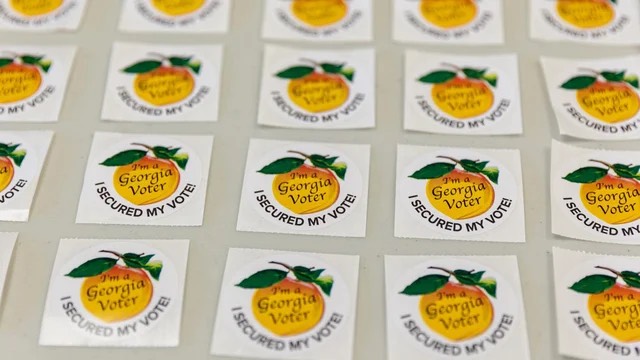
    If people want to get involved, Webber said people should do two things: engage on the local level and go vote.

    Ammitay said the election for the Public Service Commission in November saw a dramatic outcome in which two Republicans were ousted from their seats, but work still needs to be done to make meaningful change.

    “So whether it’s through the legislature, which we certainly have not lost hope that we can make progress there, or through the Public Service Commission, we do think this is an issue that’s not going to go away,” he said. “We of course will be continuing to work hard on ensuring the necessary ratepayer protections.”

    Despite political parties, Webber said we all share concerns about affordability and ensuring the safety of our communities.

    “If people can plug in at the local level with their neighbors, I think again, it kind of empowers people,” he said. “It can be effective.”

  • Georgia nonprofit trains young leaders to tackle health equity gaps

    Georgia nonprofit trains young leaders to tackle health equity gaps

    Georgia nonprofit trains young leaders to tackle health equity gaps

    A Georgia-based nonprofit is helping young adults step into leadership roles as health advocates within their own communities.

    While traditional public health programs emphasize research and data, they don’t always prepare students for the realities of policymaking or grassroots advocacy. That’s where organizations like BLKHLTH aim to fill the gap.

    Johnathan Carey, a Master of Public Health student at the Morehouse School of Medicine, says his experience as a fellow in the group’s CARES program gave him hands-on exposure to the policy process. During his fellowship, Carey addressed South Fulton County commissioners in support of building a new hospital in Union City.

    “Being someone who is more so in the policy space, I was actually able to learn, real time, what it’s like to pass bills and what advocacy actually looks like on the ground when we’re advocating for equality across all care, whether it’s health care or public health,” Carey said.

    Carey also credits the program with expanding his professional network and strengthening his ability to advocate effectively.

    BLKHLTH is part of a broader movement of culturally focused health initiatives across Georgia, working to make care more accessible and relevant to the communities they serve.

    Matthew McCurdy, the organization’s executive director, says BLKHLTH focuses on meeting people where they are.

    “The organization BLKHLTH really provides health resources, information and access to health care in ways that feel culturally relevant, culturally resonant – that are in community and community-based rather than folks having to travel far – and in ways that feel really affirming,” McCurdy said.

    The need for that work is especially clear in rural parts of the state. A recent study found that rural coalitions often struggle to address the underlying causes of health disparities. BLKHLTH has been working to bridge those gaps through free health screenings and open community discussions.

    For current fellows like Lauren Wall, a sophomore at Spelman College, the program offers a chance to connect academic interests with real-world action. She says she joined to better understand how policy and community organizing can improve access to mental health care.

    “How policy and community organizing can improve mental health access,” Wall pointed out. “I’m really interested in gaining tools to build stronger partnerships and create impactful initiatives to help other people as well.”

    This year, BLKHLTH is marking a decade of that work, celebrating its 10th anniversary.

  • Georgia bill could dissolve City of Hiram amid financial, political tensions

    Georgia bill could dissolve City of Hiram amid financial, political tensions

    Georgia bill could dissolve City of Hiram amid financial, political tensions

    The City of Hiram faces dissolution as a state Senator pushes a bill before the close of session.

    When the Georgia legislative session started, state Sen. Jason Anavitarte, R-Dallas, made posts on Facebook regarding the financial challenges of the city that Councilman Garnet Morris said were ill-informed.

    “I thought that his approach in terms of calling out some of the financial challenges of the city was a little, how shall I say, pointed at Hiram while ignoring some of the other jurisdictions in the surrounding area who have similar financial positions to us, and so why Hiram, you know, and why now?” he said.

    Two reasons have been floated as to why the attention is on Hiram, Morris said. The first is that the previous council passed two residential developments without the approval of Anavitarte or the community. The second is that the election in 2025 changed the dynamics of the city council.

    “And so now, me taking that seat has now made the council a majority-minority council, right, which is the first time that that’s happened in the history of the city of Hiram,” Morris said. “And so some are thinking that because of that, that now has triggered the powers that be to want to dissolve the city.”

    If Senate Bill 630 passes, the city of Hiram will essentially be dissolved.

    Isabel Otero, the Georgia policy director for the Southern Poverty Law Center, said that the local government would be dissolved and all of its assets and responsibilities would be transferred to Paulding County.

    “There’s new tax exposure. They don’t get a vote on any of this, and it sort of just dissolves their local government and it reduces their political power,” she said.

    The SPLC is advocating for the city and Paulding County to have a chance to vote on whether the city should be dissolved.

    Like many other cities in the state, Hiram does have a deficit, Otero said. The city does not charge property taxes, and they spend more on public safety and services to accommodate new businesses coming to the city. 

    “It is difficult not to sort of look at this through the lens of racial justice and wonder why are we sort of targeting these kinds of cities when there are so many cities across the state that have also failed to submit audits that are also having financial trouble,” she said.

    The bill is on the local consent agenda, meaning it doesn’t have to go through the same processes as a normal bill. The assumption is that the bill has been agreed upon by the local governments and their representatives in the legislature, Otero said.

    “We know that some of what state legislators are concerned about are just things that happen in local government that the people of that local government should decide how to fix. It shouldn’t sort of be imposed on them.,” Otero said.

  • Lawmakers rally for Gwinnett barber facing deportation after ICE detention

    Lawmakers rally for Gwinnett barber facing deportation after ICE detention

    Lawmakers rally for Gwinnett barber facing deportation after ICE detention

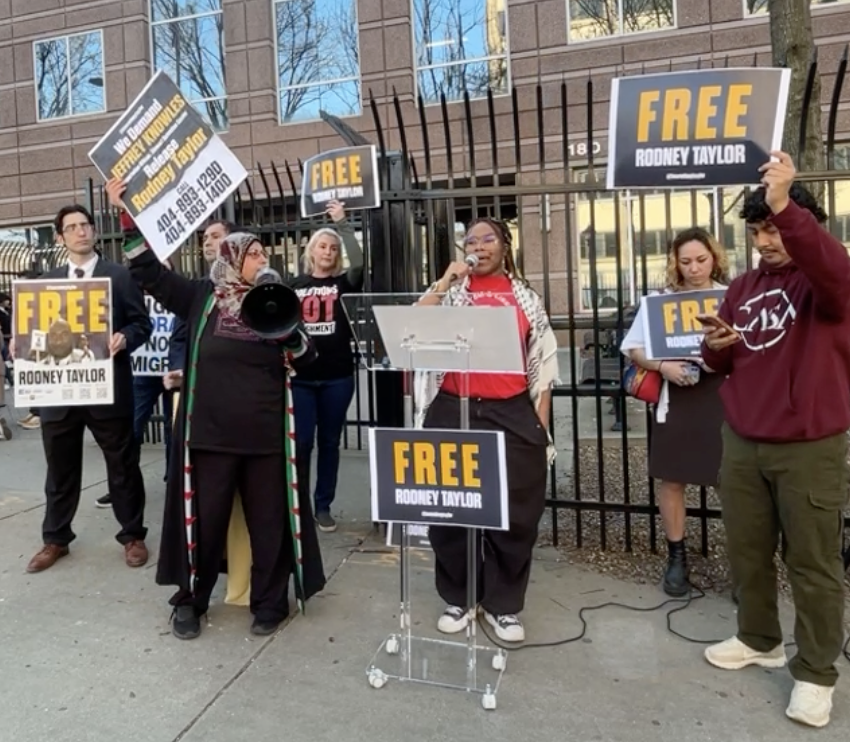
    Georgia lawmakers, advocates and family members of Rodney Taylor gathered Thursday morning to protest his detention and demand his immediate release.

    The group gathered outside of the Atlanta U.S. Immigration and Customs Enforcement office to hand-deliver a new letter signed by state lawmakers and a petition with more than 7,500 signatures to stop Taylor’s deportation, according to a news release.

    Alberto Feregrino, the Georgia organizing director for We Are CASA, called shame on the ICE agents and officials keeping Taylor in detention

    “Rodney should be at home with his wife, with his seven children, with his beloved community,” Feregrino said at the event.

    Taylor, a Gwinnett County barber, has been detained for over a year and reportedly has serious medical concerns that have not been addressed in the facility.

    Taylor was brought to the U.S. from Liberia as a two year old to receive medical care, which resulted in the amputation of both his legs. He never left the U.S.

    Samantha Hamilton, a senior litigation staff attorney with Asian Americans Advancing Justice Atlanta, said that people being detained in ICE facilities regularly report being denied medical care.

    “ICE needs to release Rodney from Stewart Detention Center so that he can return to his family, to his community, and so that he can get the necessary medical care that he so desperately requires,” she said.

    State Rep. Gabriel Sanchez spoke at the event and said Taylor has faced unbelievable conditions at the ICE Stewart Detention Center.

    “I’ve seen the conditions that him and others have had to deal with, the heartbreaking stories directly from people in the facility, including Rodney. It is unimaginable the pain they have to go through, and no human being should be ever treated like that,” he said.

    Sanchez cited the firing of former Secretary of Homeland Security Kristi Noem as a sign that Taylor’s case has gained national attention.

    “This shows that the pressure is working, and we have to keep it up. Our movement has power, and we must not let up now,” he said.

  • ‘The timing is now.’ Voting rights advocates fight for fair Cobb school board maps

    ‘The timing is now.’ Voting rights advocates fight for fair Cobb school board maps

    ‘The timing is now.’ Voting rights advocates fight for fair Cobb school board maps

    Parents and families of Cobb County schools have been raising concerns for years about the school district.

    Poy Winichakul, senior attorney at the Southern Poverty Law Center, said they heard from several families concerned about their children.

    “Over the last several years, we had been connecting with parents and families and students in Cobb County who are raising all kinds of concerns on a range of issues, whether it’s the unfair treatment of Black and Brown students to get special services for disability needs, to health concerns,” she said. “All of this tells me as a voting rights advocate that there might be something further to look into in how Black and Brown communities are being represented in that particular district.”

    The SPLC conducted an investigation, and it turned out that Black and Brown communities were unfairly represented in school districts. 

    “If there is a mismatch between what certain racial groups are experiencing in their representation and the accountability of their representatives as compared to white voters, that is a sign that something is not right with the democracy and the electoral system in that jurisdiction,” she said.

    So, they filed a lawsuit.

    What is Finn v. Cobb BOE?

    The case, Finn v. Cobb Board of Elections and Registration, was filed in 2022 on behalf of voting rights organizations, such as the League of Women Voters (LWV) of Marietta-Cobb County, and individual parents in Cobb County.

    The case alleges that the school board districts were racially gerrymandered to reduce the political power of Black and Brown voters and ensure a white majority school board, which violates the 14th Amendment to the U.S. Constitution.

    “We brought this suit, and it wound its way through the courts up and down the appellate courts over the last several years,” Winichakul said. “We were able to win and were successful at a district level where the federal court said there is a high likelihood that these districts are in fact really racially gerrymandered.”

    The case was filed in June 2022 and dismissed in September 2025. The district court ruled that because the state legislature had instituted new district maps in January 2024, the lawsuit was no longer necessary.

    “So the map in 2024 in response to our litigation is now the map that is in place. It’s now incumbent upon voters to vote under this new map and really consider all of the issues that led up to this redistricting case,” she said.

    What happens now?

    Sharon Hill, first vice president of voter services for the LWV of Marietta-Cobb County, said that by blocking the map, voters now have a chance to ensure the people making decisions about their children’s education reflect the community they serve.

    “We remain vigilant to ensure future redistricting remains transparent and fair,” she said. “The timing is now. The timing is now.”

    Monica Granderson, president of the LWV of Marietta-Cobb County, said that voters need to understand what’s at stake with this election.

    “We have to be accountable for everyone that’s in our community. We are a village. They need to be informed and understand what redistricting is really about,” she said. “The decisions of the school board… impacts how we discipline… It affects the curriculum and it affects the funding. It affects any type of equity programs that we have, and then when we have reduced representation, it also can mean less advocacy for our minority students as well.”

    To check your voter status, go to mvp.sos.ga.gov, and learn more about voter rights and events at lwv.org.

  • More than 7,000 Georgians wait years for Medicaid disability waivers, families plead

    More than 7,000 Georgians wait years for Medicaid disability waivers, families plead

    More than 7,000 Georgians wait years for Medicaid disability waivers, families plead

    More than 7,000 Georgians are on the waitlist for Medicaid-funded New Options Waiver (NOW) and Comprehensive Supports Waiver Program (COMP), which provide funds to help those living with disabilities.

    The funds help cover services, such as nutrition services, the cost of therapy and employment support.

    Earlice Acey told GPB News that a COMP waiver could allow her 23-year-old daughter Trinity to live a full life.

    “Her having a COMP waiver would allow her to go to school, to be able to have transportation,” she said. “She deserves to have these opportunities.”

    Acey said they have been on the waitlist for 11 years. The waivers are administered through the Georgia Department of Behavioral Health and Developmental Disabilities and increasing funding for the program has not been a priority.

    Funds were included in the 2025 fiscal year budget to make permanent 500 waiver slots, and the current 2027 state budget includes funding for 150 new NOW/COMP slots and 100 annual waiver slots.

    D’Arcy Robb, the executive director of the Georgia Council on Developmental Disabilities, told GPB that people living with disabilities and seniors are in urgent need of these services. Around 1,200 Georgians are in urgent need of this care.

    “It is very common for us to hear from parents that they’ve had to leave their jobs, and it put the family in economic peril,” Robb said. “We have Georgians who are dropped off in emergency rooms. We have Georgians who are homeless.”

  • Hateful symbols found spray-painted along Vickery Creek Trail in Chattahoochee park

    Hateful symbols found spray-painted along Vickery Creek Trail in Chattahoochee park

    Hateful symbols found spray-painted along Vickery Creek Trail in Chattahoochee park

    A man came across hateful images as he hiked an area belonging to the National Park Service.

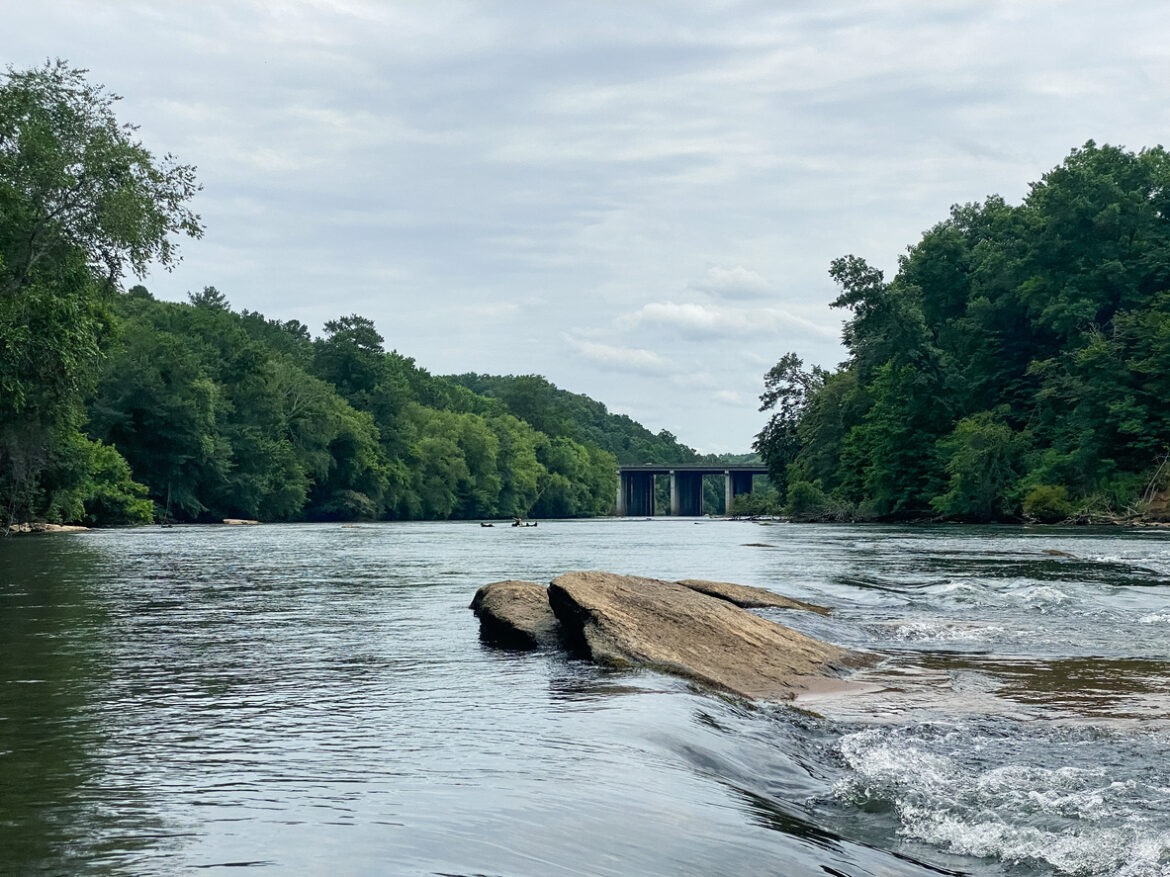
    Pastor Brian Webb told Atlanta News First that he spotted multiple swastikas spray painted on trees on the Vickery Creek Trail in the Chattahoochee River National Recreation Area.

    “Today, I was met with a disgusting scene,” said in a video on social media. “To see that symbol and the history of that symbol, and what it really represents and means, my stomach began to turn, and I was fully disgusted.”

    Concerned that the individuals who painted the images might still be on the trail, Webb said he FaceTimed his wife, so she would know where he was. After finishing the hike, Webb said he decided to go back to document the markings and report them.

    “Give more people courage to see something and say something, that we can shine light on these pockets of evil that exist,” said Webb.

    The symbol, which the German Nazi Party appropriated from other religions and cultures, represents hate and white supremacy to many targeting the Jewish community and others.

    Webb posted on Facebook Tuesday saying that several people messaged him saying the symbol is positive. 

    “Even if some claim to reclaim it, public endorsement or display normalizes or sanitizes the immense harm it caused to millions. Symbols carry power beyond intent: they signal safety to some and fear to others,” he wrote.

    The National Park Service has not released a statement or information about the incident on their website or social media pages.

    Georgia law prohibits defacing any real or personal property in any park, and in 2024, Gov. Brian Kemp signed a bill that allows prosecutors to add anti-Semitism charges to crimes committed against Jewish individuals or property, according to WALB.

    “We need to be all united, no matter what color, creed or religion,” said Webb. “We need to stand together in situations like this, shine a light on it, and not be afraid to do it.”

  • Ossoff urges USDA to restore funding for South Georgia food program

    Ossoff urges USDA to restore funding for South Georgia food program

    Ossoff urges USDA to restore funding for South Georgia food program

    The U.S. Department of Agriculture cut funding earlier this year for a program in South Georgia that helps provide food and childcare to the community.

    Southeast Crescent Regional Commission’s Childcare Access and Nutrition Systems (CANS) Program lost funding earlier this year when the USDA/CANS cooperative agreement was canceled, according to WALB.

    U.S. Sen. Jon Ossoff wrote a letter to the department head, Brooke Rollins, to reinstate the grant funding.

    “The Department’s decision not only hurts Georgians; it directly contradicts the Department’s stated goals of helping rural America thrive, and promoting agricultural production that better nourishes Americans,” Ossoff wrote in the letter.

    The program aims to reduce food insecurity, expand food-assistance programs and improve health outcomes in Dougherty and Upson counties. It also helps expand affordable childcare options and reduce monthly childcare costs, according to WALB. 

    “These projects would have demonstrably improved the quality of life for children, seniors, and families in south Georgia,” Ossoff wrote. “However, the Department terminated these critical projects in May after several of the projects had already begun, denying Georgians access to essential services.”