-
 play_arrow
Georgia NOW Live Streaming Now
-
 play_arrow
Everton Blair: a "leader we deserve?" | The 'peace Prez' goes to war



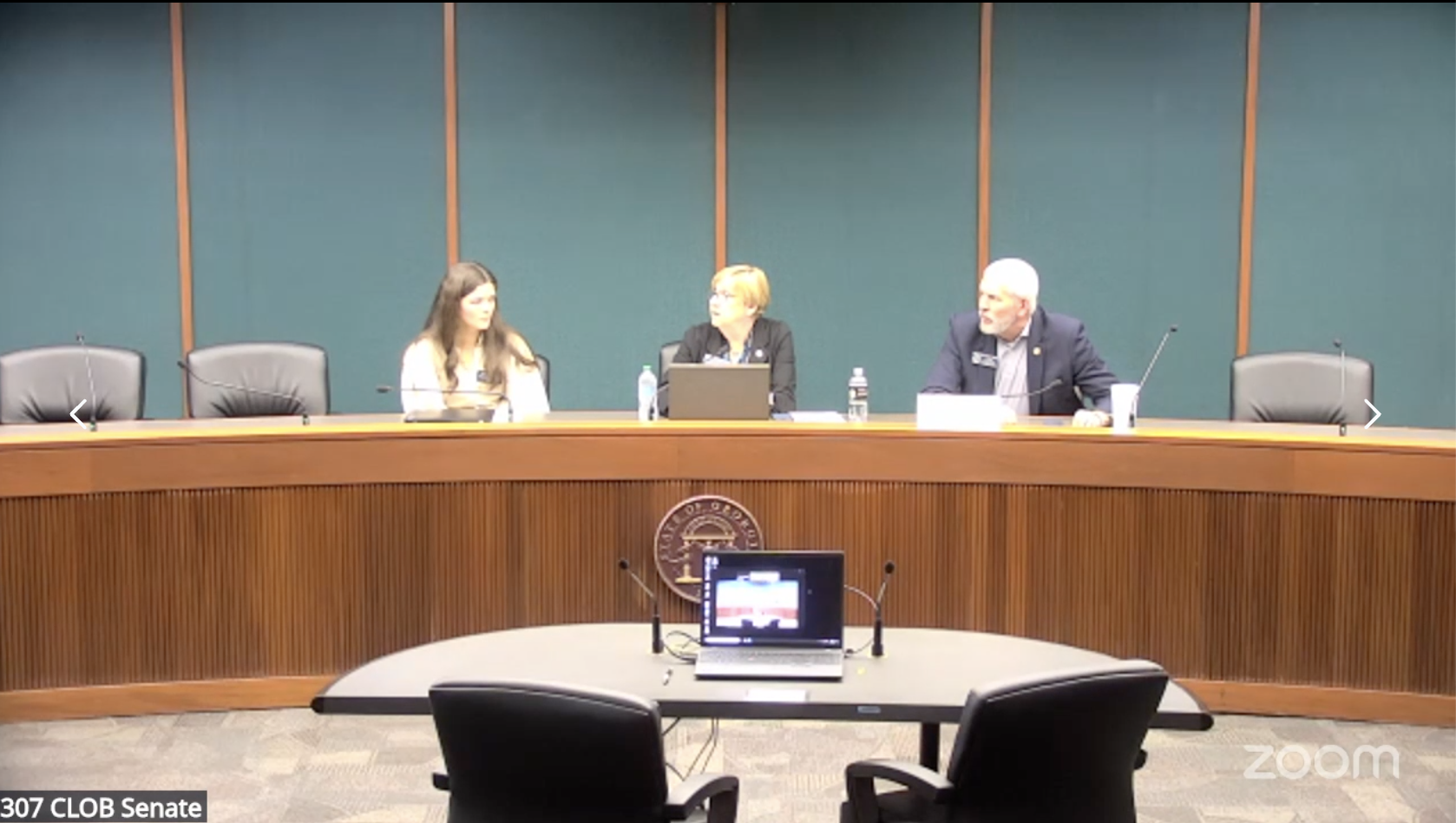
Sen. Kay Kirkpatrick, District 32, leads the Senate Study Committee on Additional Services and Resources for Transition Age Youth in Foster Care on Nov. 21. Credit: Georgia Senate Press Office livestream
Georgia Senate Committee offers recommendations to support youth aging out of foster care
The Senate Study Committee on Additional Services and Resources for Transition Age Youth in Foster Care held its final meeting on Friday and presented recommendations to improve how children transition out of the foster care system into adulthood.
Around 700 young people age out of Georgia’s foster care system every year, and they lose access to resources, which can make the transition difficult.
The committee was designed to examine the transition process and make recommendations based on their findings.
The committee’s findings come at a time when Georgia’s foster care system is particularly strained. The Georgia Department of Human Services reported it has suspended or permanently eliminated programs, including those aimed at preventing children from living outside their homes and parent education and training programs, according to the Atlanta Journal-Constitution.
Sen. Kay Kirkpatrick, who chairs the committee and represents District 32, convened the meeting and presented their recommendations.
“Most of it is not legislation. We need to work with our agencies and our other partners on making progress for these kids,” she said.
Education and complex-needs population
The recommendations for education and complex-needs population were the only categories that had recommendations that could result in legislation.
The committee included three recommendations for education-related issues.
- Ensure school districts are in compliance with enrollment requirements and consider legislation to address noncompliance.
- Appropriate necessary funding for Senate Bill 85, the Georgia Foster Care Scholarship. The bill has passed, but it has not been funded. Kirkpatrick said the committee will work with appropriators to ensure the program is funded.
- Encourage statewide involvement in transitioning youth from foster care into higher education, including technical schools and college.
When addressing complex-needs populations, Kirkpatrick said issues are not always directly related to youth aging out of the foster care system, but it relates to children who are not diagnosed or treated in a timely manner. The recommendations the committee gave specifically related to autism.
- Review reimbursement rates, delivery options, and supervision requirements for Advanced Behavioral Analysis (ABA) treatment for autism spectrum disorder.
- Continue and extend the current pilot programs to screen foster youth for autism spectrum disorder.
- Prepare for broad implementation for autism screening to all youth in foster care.
“We think there are some issues with the way the rate structure is set up, and we want to be sure that those incentives are aligned and that the people that have these medical diagnoses are handled in a quality way,” Kirkpatrick said.
Housing and the workforce
When discussing housing and workforce improvements, Kirkpatrick said they need to convene a meeting with interested parties to further explore solutions for these areas. For housing, Kirkpatrick said the federal government shutdown impeded scheduling meetings with some of the interested parties, and they hope to reschedule it for early January.
For the workforce, Kirkpatrick said the committee suggests having a meeting with technical schools and employers to find ways to get foster youth skills for employment. They hope to have the meeting during the next legislative session.
“We think we can do more with that with our workforce needs and our status as the number one state to do business,” she said.
The committee also recommended future initiatives, including increasing the use and awareness of tax credits, streamlining online resources for exit planning and taking advantage of President Donald Trump’s “Fostering the Future for American Children and Families” and executive order.
“There are more recommendations that we could have made, but we’ve always worked towards trying to make this actionable,” Kirkpatrick said. “There are several things on here that we can definitely make progress on, and again a lot of it is not necessarily legislative, but we’ve got enough time between now and the beginning of the legislative session to nail down any bills that we need to do.”
The Georgia Department of Human Services serves more than 11,000 children in foster care. To learn more about foster care in Georgia, visit fostergeorgia.com.


-

ReRon
Daily Rerun of The Ron Show
Ron Roberts is a Georgia-born radio veteran and host of The Ron Show, Atlanta's only progressive audio platform airing weekdays on AmericaOne Radio. With an extensive background as an FM radio program director and broadcaster skilled in audio editing, voice acting, and commercials, Ron brings nearly three decades of radio experience to his show. The show covers Atlanta, metro Atlanta, Georgia, and national politics from a unique perspective—he's a self-described "run-of-the-mill Georgia-born gay progressive cat-dad realtor & talk show host". Ron frequently welcomes guests ranging from local activists to prominent national figures, including Marianne Williamson, Rep. Nikema Williams, actor Michael Kelly, and Sen. Shea Roberts.
close  From CBS News
- Watch Live: Hegseth, Caine brief on Iran war operations March 4, 2026Defense Secretary Pete Hegseth and Joint Chiefs Chairman Gen. Dan Caine are holding their second briefing on Iran war operations, as the conflict enters its fifth day.
- Trump defends war with Iran as conflict widens March 4, 2026Israel sent troops into Lebanon as the U.S.-Israeli war with Iran widened, and some of Iran's Gulf neighbors warned that Iran's retaliatory fire could draw them into the spreading conflict.
- Noem to face House committee after grilling from senators on immigration crackdown March 4, 2026Kristi Noem's testimony comes after she faced criticism for her record on immigration from Democrats and a pair of Republicans at a Senate hearing.
- GOP Rep. Dan Crenshaw loses primary to Texas state Rep. Steve Toth, CBS News projects March 4, 2026Republican Rep. Dan Crenshaw of Texas lost his primary race to Republican state Rep. Steve Toth.
- Pentagon releases names of first U.S. service members killed in Iran war March 4, 2026Six American service members have been killed in the U.S.-Iran conflict, U.S. Central Command said.
- Gates among 7 asked to testify before House committee on possible Epstein ties March 4, 2026Last week, Bill Gates apologized to the staff of his philanthropic Gates Foundation for his ties to Jeffrey Epstein, which he said began in 2011 and continued through 2014.
- Stocks pare losses as Trump says U.S. will insure ships in the Persian Gulf March 4, 2026U.S. financial markets rebounded after shedding more than 1,200 points in earlier trading on Tuesday.
- Mini miracle on the Hudson as pilot and passenger survive plane crash in icy river March 4, 2026A small plane pulled off an emergency landing on the Hudson River north of New York City, with both people on board suffering only minor injuries. Tony Dokoupil has the story.
- Father of alleged school shooter found guilty of murder March 4, 2026A Georgia jury has found Colin Gray, the man whose teenage son is accused of killing two students and two teachers in a shooting at Apalachee High School, guilty of second-degree murder and all other charges. Skyler Henry has details.
- Americans urged to leave 14 Middle East countries amid Iran war March 4, 2026The State Department urged Americans to "depart now" from countries including Bahrain, Egypt, Israel, Lebanon, Oman, Qatar, Saudi Arabia and the United Arab Emirates.
- Watch Live: Hegseth, Caine brief on Iran war operations March 4, 2026
Post comments (0)