-
 play_arrow
Georgia NOW Live Streaming Now
-
 play_arrow
The Politics Bar After Hours - Hide Your Couches!



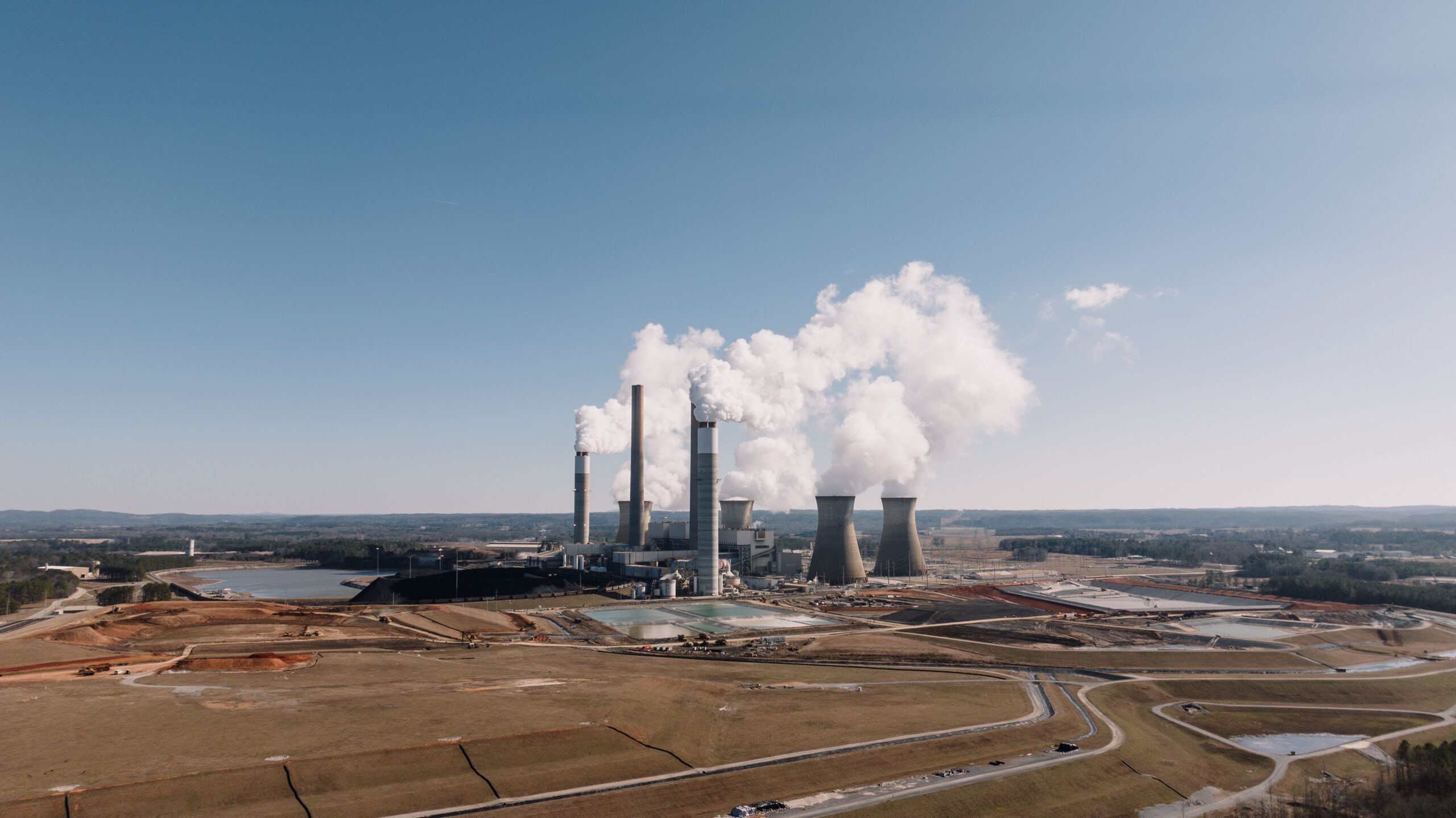
EPA moves to eliminate power plant carbon standards, drawing concern in Georgia
The Environmental Protection Agency has proposed rescinding every remaining federal carbon standard for the power sector after finalizing its repeal of most greenhouse gas limits on power plants.
The agency says the move will save the industry more than $300 billion, but environmental advocates and public health groups have sued, calling the repeal dangerous and illegal.
Adrien Webber is the director of the Georgia chapter of the Sierra Club, the nation’s largest grassroots environmental movement. He said the largest utilities in Georgia stand to benefit from the decision.
“It’s a big giveaway to polluters in the Southeast and here in Georgia,” Webber said. “This is really more of the Trump administration handing a lifeline to the fossil fuel industry and giving them a license to basically do whatever they want.”
According to S&P Global data, Georgia’s coal and gas plants emitted more than 42 million metric tons of carbon dioxide in 2025. Plant Bowen released more than 11.6 million metric tons making it one of the worst emitters in the nation.
Supporters of the deregulation say the move will lead to lower electricity prices.
Webber said the repeal will increase the lifespan of some of the nation’s largest and dirtiest coal plants.
“It definitely benefits our power utilities in the Southeast, specifically Southern Company and then Georgia Power, who are operating some of the largest coal plants in the country, including Plant Bowen and Plant Scherer,” Webber said.
Southern utilities are planning a massive gas buildout in order to meet the demand of new data centers. Georgia Power received a $26 billion federal loan to fund their expansion.
The Environmental Defense Fund estimates that the EPA’s repeal will cause more than 80,000 premature deaths and $1 trillion in healthcare costs through 2047.


-

The Thom Hartmann Program
Weekdays at 1pm
Thom Hartmann is a New York Times bestselling, four-times Project Censored Award-winning author and host of The Thom Hartmann Program, which broadcasts live nationwide each weekday from noon to 3pm Eastern. For 20 years, the show has reached audiences across AM/FM stations throughout the US, on SiriusXM satellite radio, and as video on Free Speech TV, YouTube, Facebook, and X/Twitter.
close  From CBS News
- Trump faces pressure as midterms inch closer September 20, 2026President Trump triggered a showdown over the First Amendment after several journalists had their White House access revoked this weekend. The ban followed a week of bad economic news for the president. Aaron Navarro reports.
- ICE agent shoots and wounds man in Austin, Texas September 20, 2026The lawyer for the man identified him as a 28-year-old Venezuelan national, Wilber Rafael Garces Perez. Officials said he was shot at least once in the torso and was in serious but stable condition.
- Trump to meet Mamdani tomorrow in New York City September 20, 2026New York City Mayor Zohran Mamdani and President Trump have met at least twice since Mamdani was elected last year.
- Cassidy: Trump needs to be "radically honest" on vaccines amid measles outbreak September 20, 2026GOP Sen. Bill Cassidy of Louisiana urged the president to be "radically honest" when he's speaking about vaccines, as the U.S. this year has recorded the most measles cases in more than three decades.
- 18 suspects in killing of Haiti's president being extradited to Florida for trial September 20, 2026Eighteen suspects who were arrested in the July 2021 killing of Haitian President Jovenel Moïse were awaiting extradition to the U.S. on Sunday.
- Full transcript of "Face the Nation with Margaret Brennan," Sept. 20, 2026 September 20, 2026On this "Face the Nation with Margaret Brennan" broadcast, Reps. Ro Khanna and Maria Elvira Salazar join Margaret Brennan.
- Bessent meets with Chinese counterpart ahead of Trump-Xi summit September 20, 2026Treasury Secretary Scott Bessent is meeting with Chinese Vice Premier He Lifeng, ahead of the planned summit between President Trump and Chinese President Xi Jinping this week.
- Salazar tells Trump on Hispanic voters: "Preserve that fortune" September 20, 2026GOP Rep. Maria Elvira Salazar of Florida warned in a campaign ad last week that President Trump's immigration enforcement policy has "gone too far."
- Trump says proposed arch will also be a "top grade Military Complex" September 20, 2026President Trump said that he has agreed to convert plans for a massive triumphal arch into a "top grade Military Complex," equipped with snipers and drone storage.
- Trump says proposed 250-foot arch will be used as military complex September 20, 2026President Trump posted on social media early Sunday that his proposed 250-foot arch near Arlington National Cemetery will be used as a military complex, saying there will "large numbers of drones, plus Snipers, on both the roof and plaza areas, and additionally have and hold large quantities of sniper ammunition in storage."
- Trump faces pressure as midterms inch closer September 20, 2026
Post comments (0)