-
 play_arrow
Georgia NOW Live Streaming Now
-
 play_arrow
Friends & Operatives



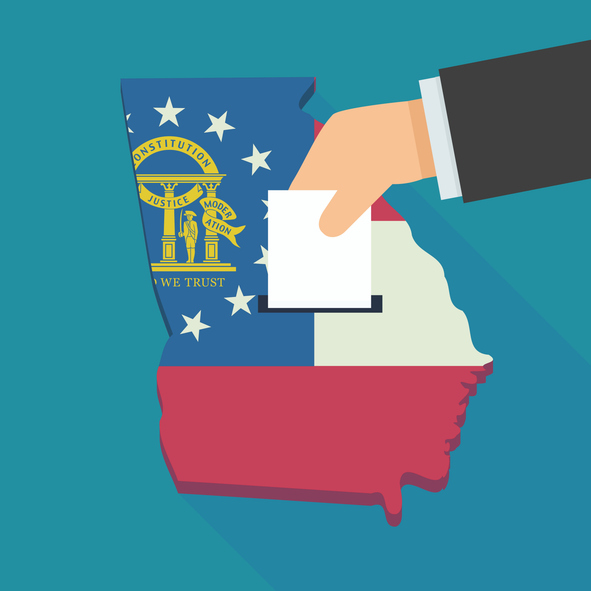
Georgia voting equipment flaw raises concerns over ballot secrecy as AI advances
A flaw in Georgia’s voting equipment could allow voters to be matched to their ballots after they have been cast, and security researchers say it needs to be fixed as artificial intelligence advances.
The flaw does not allow votes to be changed or cast doubt on election results. However, it could allow someone to see how others voted, which violates the state constitution and could create an opening for legal challenges.
The vulnerability has been known for years, but the widespread adoption of AI tools and their increased sophistication has caused election security experts to raise concerns.
Other jurisdictions across the country use the same equipment as Georgia and have applied a software update to fix the flaw. The voting equipment is made by Liberty Vote, which was previously known as Dominion Voting Systems under different ownership.
Georgia is the only state where the system is used statewide. Plus, Georgia’s open records law allows access to information that could be used to match voters to their ballots.
Georgia voters make their selections on the voting machines and receive a printed out version of their ballot with a QR code that is then put into a scanner to count the votes. Those records are randomized, but according to a report by researchers in 2022, the flaw allows for the ballots to be put back in the order they were cast. Combined with other publicly available data, researchers wrote that it could be possible to match voters to their ballots.
Another researcher from Princeton University said he was able to use AI to match most ballots from the May primary election to specific voters.
However, Georgia election officials remain gridlocked on how to move forward with the update or to restrict public access to information.


-

The Thom Hartmann Program
Weekdays at 1pm
Thom Hartmann is a New York Times bestselling, four-times Project Censored Award-winning author and host of The Thom Hartmann Program, which broadcasts live nationwide each weekday from noon to 3pm Eastern. For 20 years, the show has reached audiences across AM/FM stations throughout the US, on SiriusXM satellite radio, and as video on Free Speech TV, YouTube, Facebook, and X/Twitter.
close  From CBS News
- FBI says it foiled an ISIS-inspired plot in Pennsylvania September 15, 2026The FBI said it thwarted a "mass casualty attack," inspired by ISIS, allegedly by a 21-year-old man in Pennsylvania. Agents allegedly tracked the young man to a hotel where they arrested him. It's the second ISIS-related plot to surface since August. Nicole Sganga reports.
- Family blames Texas' "merciless" abortion ban for woman's death, sues Paxton, others September 15, 2026The family of 37-year-old Tierra Walker filed a lawsuit against Texas Attorney General Ken Paxton and others, saying she was denied an abortion that could have saved her life.
- Board votes to close Kennedy Center immediately for renovations, source says September 15, 2026Earlier Tuesday, a federal judge again blocked the board from adding President Trump's name to the facade of the building.
- House panel recommends holding Leon Black in contempt in Epstein probe September 15, 2026The billionaire investor defied subpoenas to testify to the committee and produce nondisclosure agreements.
- Ed Sheeran's supporting acts pull out of tour after Macklemore was dropped September 15, 2026Aaron Rowe, Beoga, Lukas Graham and Finneas all released statements Tuesday on Instagram saying they were withdrawing from Ed Sheeran's tour.
- Trump admin. will comply with mail ballot ruling by Supreme Court, Blanche says September 15, 2026The Supreme Court on Monday blocked the Postal Service from enforcing new mail voting rules ahead of the midterm elections.
- Own a car? You're getting socked by higher prices, and not only for gas September 15, 2026Car ownership costs have soared 50% since 2020, according to new economic data. Here's where motorists are getting dinged.
- New photos show widespread damage at U.S. positions caused by Iranian attacks September 15, 2026The images were sent to CBS News by active service members under condition of anonymity.
- House kills Rep. Al Green's resolution to impeach Trump September 15, 2026Republicans made a motion to table the resolution, effectively killing it.
- OpenAI backs measure that would require independent audits of AI models September 15, 2026Top OpenAI executive endorses plan that would require AI companies to submit their technology to third-party reviews to assess their safety.
- FBI says it foiled an ISIS-inspired plot in Pennsylvania September 15, 2026
Post comments (0)