-
 play_arrow
Georgia NOW Live Streaming Now
-
 play_arrow
Go Vote!



(Guest Opinion by Al Pearson) Louisiana v Callais: The New Battle Over the Voting Rights Act

Louisiana v Callais: The New Battle Over the Voting Rights Act
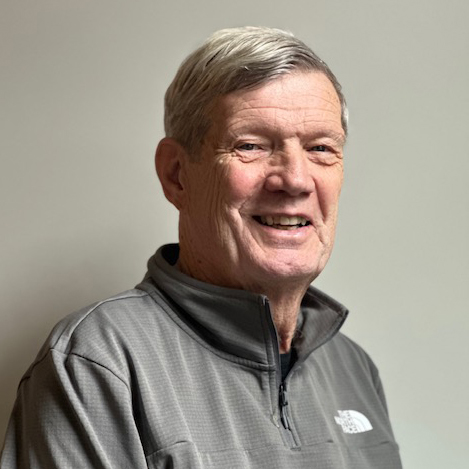
By Al Pearson
Justice Alito characterized his opinion in Louisiana v. Callais, 608 U.S. ___, 2016 WL 1153054(2026) as an “update” on Section 2 of the Voting Rights Act (VRA). It would be more accurate to describe Callais as a valediction – the last in a series of Supreme Court rulings curtailing federal oversight of elections in this country. Its voting rights jurisprudence has always been haunted by a paradox. How can you eradicate race discrimination without using race as a factor in fashioning the remedy? When does such a remedy become obsolete? The Callais decision brings those issues into sharp focus. While Section 2 of the VRA technically remains on the books, it is hard to visualize a winning scenario under Justice Alito’s “updated” version.
Callais arose from two separately litigated Section 2 cases. The first was filed after Louisiana drew its congressional map based on the 2020 census. This map included one majority black district. The plaintiffs successfully argued that Section 2 warranted an increase from one to two majority black districts. To avoid the imposition of a court drawn map, the State chose to include a second majority black district. This map was challenged as a racial gerrymander in violation of the Equal Protection Clause. A three-judge panel upheld the challenge, and the Supreme Court affirmed by a 6-3 vote.
Callais has unleashed a new, politically venomous phase in the nation’s electoral system.
Here are some noteworthy takeaways:
- The VRA was never conceived to be a permanent feature of federal election law. It has been reauthorized five times since 1965, each time with an expiration date. The current expiration date is 2032. An impatient Supreme Court majority believes that the VRA has outlived its usefulness and in Callais, the Court has done something about it in time for the upcoming round of redistricting in 2030 when the new census numbers are used.
- Justice Alito’s opinion in Callais is a “how to” manual for litigating Section 2 cases in the future. It is anchored on the principle that the Constitution prohibits purposeful race discrimination. In the vast majority of cases, such discrimination cannot survive analysis under the Court’s strict scrutiny standard. In the redistricting context, however, the Court has adopted a variant on this approach – the predominant intent Why? A legislative map requires approval by vote of a collective political body. Under the predominant intent standard, the racially motivated votes of individual legislators alone cannot invalidate a map. When it comes to fashioning a remedy, race is being used to target a map’s immediate and specifically identifiable effects. While patterns of race discrimination from the distant past remain relevant, Justice Alito makes clear that their evidentiary value is limited.
- Here the Callais opinion gets into the procedural weeds.
Today it is possible to generate thousands, if not millions, of computer-generated maps which comply with one person, one vote and also include a majority-minority legislative district. Justice Alito takes special note of the ease with which these maps have been used to enable Section 2 plaintiffs to repackage partisan gerrymandering claims into racial gerrymandering claims. This “reverse engineering” creates pressure on the states to yield to the adoption of maps not required by the VRA. Under Callais, that scenario no longer can occur. A Section 2 plaintiff now must submit one or more illustrative maps which respond to every non-racial justification for the enacted map, including the pursuit of partisan political goals such as protecting incumbents and preserving the core of existing legislative districts. The test is whether the plaintiff’s illustrative maps achieve “greater racial balance” than the enacted map if such a map is “possible.” The trial court must place them side-by-side and make the comparison. A Section 2 plaintiff has the burden of “disentangling” racial from partisan motives. From a causal standpoint, if race cannot be disentangled from politics, it cannot predominate as a matter of law and the challenged map stands. In Justice Alito’s words, if “it is hard to find pertinent evidence relating to present-day voting discrimination, that is cause for celebration.”
- Callais reminds us that the individual right to cast a vote is not the issue in a Section 2 case. The question is whether the plaintiff in exercising that right enjoys the same opportunity to participate in the electoral process as all other voters. The sobering reality is that racists do have the right to vote. The message in Callais is beat them at the polls and not in the courts.
- Among the Court’s recent voting rights decisions, Rucho v. Common Cause, 588 U.S. 684 (2019) is by far the most consequential and underappreciated. Callais elevated partisan redistricting which Rucho characterized as a political question not subject to judicial review to the status of a legitimate factor worthy of being considered in redistricting. This brings to mind Justice Harlan’s dissent in Kirkpatrick v. Preisler, 349 U.S. 526, 549 (1969) about the fallacy of the one person, one vote requirement:
[T]he Court’s exclusive concentration upon arithmetic blinds it to the realities of the political process . . . The fact of the matter is that the rule of absolute equality is perfectly compatible with ‘gerrymandering’ of the worst sort. A computer may grind out district lines which can totally frustrate the popular will on an overwhelming number of critical issues.
A similar observation might be made about Rucho; political partisanship is perfectly compatible with racial gerrymandering. Now, six decades after Baker v. Carr, 369 U.S. 186 (1962) was decided and the VRA was enacted, the administration of elections in this country is in disarray. The courts can’t, or won’t, fix the problems. Politicians don’t want to fix them. And the public is left on the sidelines with no credible solution in sight.
*Al Pearson Background:
- Vanderbilt Law School 1972
- Law Clerk U.S. Fifth Circuit Court of Appeals 1972-73
- Faculty Boston College Law School 1973-74
- Supreme Court Fellow – Washington D.C. 1987-88.
- Faculty Georgia Law School 1974-94
- Trial and Appellate Practice 1994-2016
- Areas of specialization: Evidence, Constitutional Law & Civil Rights


-

The Stephanie Miller Show
Weekdays at 10am
National morning drive radio and television star Stephanie Miller hosts The Stephanie Miller Show, reaching over six million listeners weekly on satellite and terrestrial radio, simulcast on FreeSpeech TV. A ratings powerhouse who dominated at KABC, KFI, and stations in New York and Chicago, she's been ranked on Talkers Magazine's "Heavy Hundred" for over a decade and won their Woman of the Year Award. Her sold-out Sexy Liberal Comedy Tour became the fastest-selling comedy tour in history, earning three Pollstar nominations and producing America's #1 comedy album. Praised by Rachel Maddow as "the high priestess of excellent liberal talk" and by Carol Burnett as "the Carol Burnett of radio," this Liberal icon—ironically the daughter of Barry Goldwater's 1964 VP running mate—is known as "The Voice of The Resistance."
close  From CBS News
- First midterm results start coming in as polls close in 6 states — live updates November 4, 2026Polls are now closed in six states and the first results of the 2026 midterm elections are coming in. Follow live updates here.
- See CBS News exit poll results for the 2026 midterm elections November 4, 2026Here's a national look at what's on voters' minds in the 2026 midterm elections as they cast their ballots.
- House election results as Democrats and GOP vie for control November 4, 2026Will Democrats or Republicans win control of the House in the 2026 election? Follow the midterm election results here, as polls begin to close.
- Trump says he could use "tremendous powers" if Democrats win November 3, 2026President Trump remained optimistic about GOP chances ahead of polls closing: "We have a good chance. But we're not going to be embarrassed."
- Tennessee murderer captured over a week after escaping prison November 3, 2026Jacob Morley was serving a life sentence at the Northwest Correctional Complex in Tennessee when he escaped by slipping through a fence on the property.
- Parts of jet that crashed in Palm Beach County found miles away, NTSB says November 3, 2026Nine people were killed when a Learjet 60 that departed Austin for the Bahamas crashed in Palm Beach County on Sunday.
- Oklahoma man charged with mailing hundreds of white-powder letters November 3, 2026An Oklahoma man faces federal charges after allegedly sending hundreds of letters containing white powder to public officials and media outlets ahead of the 2024 and 2026 elections.
- Google will block search access for schools that ban AI use November 3, 2026New York City Mayor Zohran Mamdani and other critics are accusing Google of trying to pressure U.S. schools to use AI.
- Cruise canceled after Coast Guard detains ship in Miami, officials say November 3, 2026MSC Cruises canceled the voyage for its MSC Poesia cruise ship after it was detained by the Coast Guard at the Port of Miami, the cruise line confirmed to CBS News.
- How to watch live election results on CBS News November 3, 2026With control of Congress on the line in House and Senate races around the country, here's how to watch the 2026 midterm election results on Tuesday, Nov. 3.
- First midterm results start coming in as polls close in 6 states — live updates November 4, 2026
Post comments (0)